












This article was written by Serge, MSc. Plant Biologist and Environmental Scientist with a BSc in Plant Biology and an MSc in Environmental Biology and Biogeochemistry. My background covers plant biochemistry, botany, and field research in forest and soil ecosystems. I write from real experience, not just literature.
Affiliate disclosure: This site has affiliate links, including Amazon. As an Amazon Associate I earn from qualifying purchases, at no extra cost to you.

There is a smell that hits you when you walk into a conifer forest on a warm day. Resinous, sharp, clean in a way that feels almost medicinal. That smell is monoterpenes, primarily alpha-pinene and beta-pinene, volatilising from resin ducts in the needles and bark. The trees are not making that smell for you. They are running continuous chemical defence operations and you happen to find the byproducts pleasant.
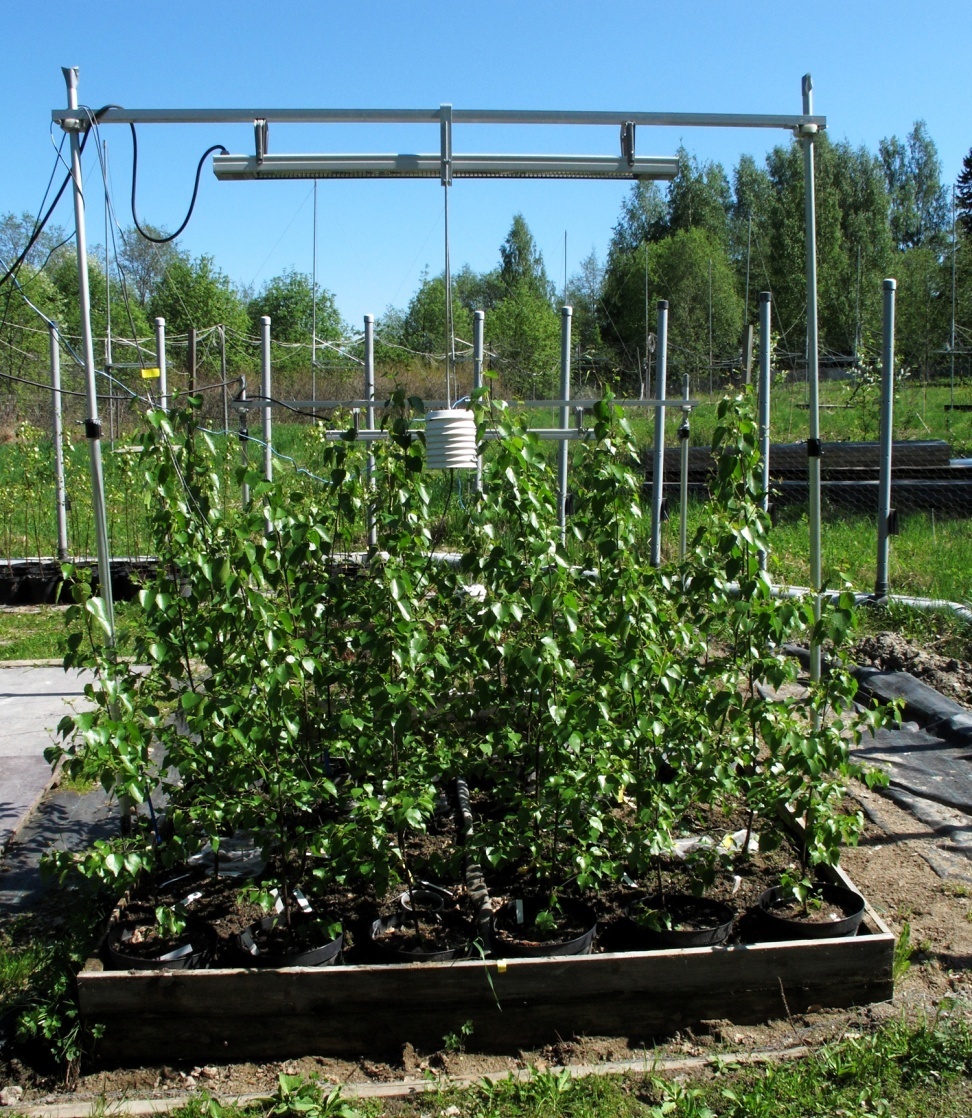
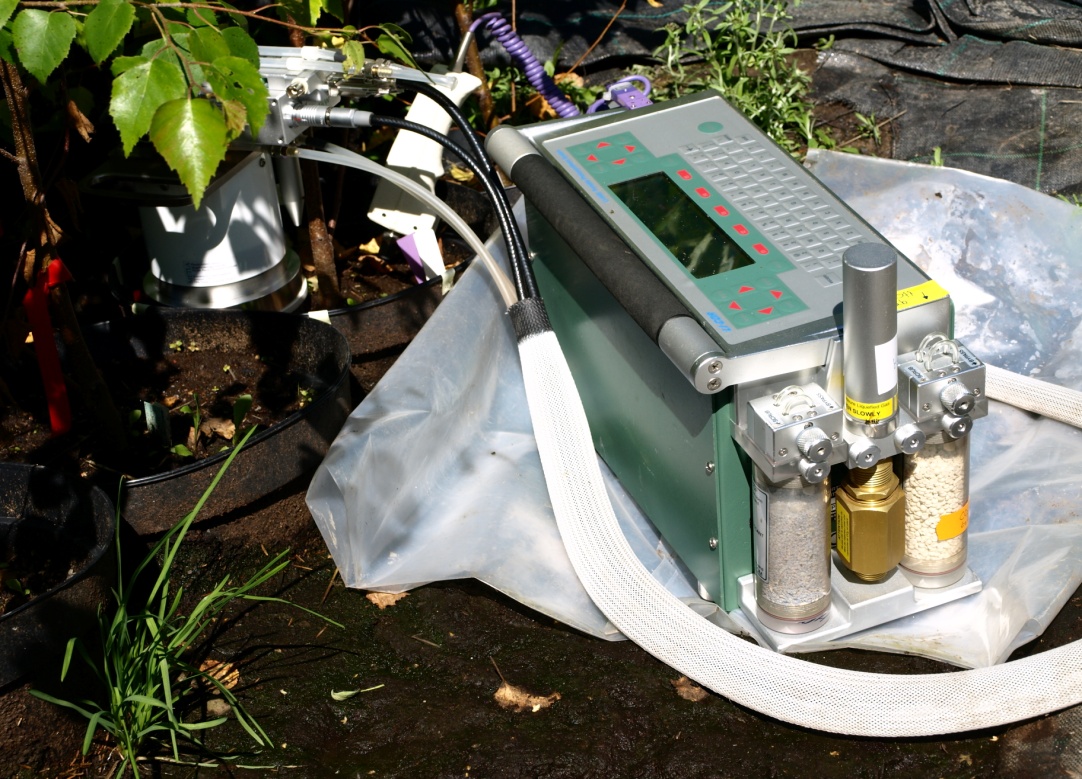
I worked at a field site in boreal forest where VOC dynamics from silver birch and aspen were being actively studied alongside my own measurements of soil carbon and plant growth responses. Watching researchers set up dynamic headspace sampling systems on birch branches, enclosing sections of canopy to capture the volatiles coming off them, gave me a concrete sense of how complex and variable plant VOC emissions are in real field conditions. The concentrations change hour by hour, with temperature, with light, with damage. Measuring them accurately in the field is genuinely difficult.
What comes off a plant into the atmosphere is not random. Every volatile compound has a biosynthetic origin, an ecological function, and consequences for atmospheric chemistry that extend far beyond the plant itself.
What Plant VOCs Actually Are
Volatile organic compounds from plants are secondary metabolites with sufficiently high vapour pressure to evaporate from plant tissue into the surrounding air at ambient temperatures. The definition is chemical rather than ecological. What makes a compound a VOC is its volatility, not its function.
Plant VOCs fall into several main chemical classes. Isoprene is a five-carbon compound produced through the MEP pathway in chloroplasts, emitted in enormous quantities by certain tree species, particularly broadleaved species like aspen, oak, and poplar. Monoterpenes are ten-carbon compounds produced through the same pathway, dominant in conifers and many aromatic herbs. Sesquiterpenes are fifteen-carbon compounds with lower volatility that tend to be emitted in smaller quantities but play important roles in long-distance plant signalling. Green leaf volatiles are C6 aldehydes, alcohols, and esters produced rapidly from fatty acid oxidation when plant tissue is damaged.
My plant biochemistry training covered the MEP and MVA pathways that build these compounds in detail. What struck me when I worked through the biosynthesis is how much carbon plants invest in these emissions. Globally, plants emit an estimated 1,000 teragrams of VOCs annually, roughly ten times the total human VOC emissions. That is an extraordinary metabolic investment. Plants are not doing this accidentally.
Why Plants Emit VOCs: The Ecological Functions
Defence against herbivory
When a caterpillar starts feeding on a leaf, the plant responds within minutes. Cell membrane fatty acids are oxidised to produce green leaf volatiles including cis-3-hexenal, trans-2-hexenal, and hexenyl acetate, released as a burst into the surrounding air. These compounds have direct toxic and deterrent effects on feeding insects.
More interestingly, they also function as signals. Neighbouring plants that detect these volatiles upregulate their own defence chemistry in anticipation of herbivory. The plant that is being eaten is effectively warning its neighbours. Whether this constitutes communication in any meaningful sense is debated in plant biology, but the ecological effect is documented and real. Neighbouring plants become less palatable before they are attacked.
I find this genuinely remarkable. A plant has no nervous system, no centralised coordination, no capacity for intentional signalling in any conventional sense. Yet through the chemistry of VOC release it achieves an outcome functionally equivalent to a warning system.
At the field site where I worked, the research running alongside my soil and growth measurements was examining exactly these herbivory-induced VOC responses in silver birch. The same trees I was measuring for carbon and growth responses were producing green leaf volatiles in response to geometrid moth larvae. The two research threads were looking at the same plants through completely different analytical lenses.
Defence against pathogens
Many plant volatiles have direct antimicrobial activity. Thymol and carvacrol in thyme and oregano, eugenol in cloves, and the monoterpenoids in pine resin all have documented antibacterial and antifungal activity at concentrations achievable in plant tissue. The volatile nature of these compounds means they can reach approaching pathogens through the air before physical contact with plant tissue occurs.
Thermoregulation and oxidative stress protection
Isoprene has a specific protective role that I find biochemically elegant. At high temperatures, reactive oxygen species accumulate in chloroplasts and can damage the photosynthetic machinery. Isoprene quenches these reactive species directly and stabilises chloroplast membranes against heat-induced disruption.
This explains the strong temperature dependence of isoprene emission. Emissions increase exponentially with temperature because that is exactly when the protective function is most needed. It is not a stress symptom. It is a stress response.
At the field site, research on European aspen alongside the silver birch work showed that warming enhanced isoprene emission significantly from aspen, which is consistent with this thermoprotective function. The trees were investing more in isoprene precisely because they needed it more under warmer conditions. Isoprene accounted for approximately 90 percent of total VOC emissions from the aspen under those conditions, which reflects just how central it is to their stress response chemistry.
The volatile terpenoids and phenylpropanoids responsible for floral fragrance evolved primarily to attract pollinators. Linalool in lavender, geraniol in roses, benzyl acetate in jasmine. All VOCs produced in petal epidermal cells specifically to guide pollinators to the flower. The same volatile compounds that attract pollinators enter the atmosphere and contribute to local VOC concentrations, interacting with atmospheric chemistry the same way defence volatiles do.
Plant VOCs and Atmospheric Chemistry
This is where plant VOC biology connects to my atmosphere-biosphere exchange training and to air quality in ways most people do not realise.
Isoprene and monoterpenes react with hydroxyl radicals and ozone in the atmosphere. These reactions produce secondary organic aerosols, particles that affect cloud formation, regional climate, and air quality. The blue haze that gives the Blue Ridge Mountains and many forested landscapes their characteristic appearance is secondary organic aerosol from monoterpene oxidation. You are looking at tree chemistry when you see that haze.
More significantly for air quality: isoprene reacts with nitrogen oxides in the presence of sunlight to produce tropospheric ozone. In areas with both high forest VOC emissions and significant nitrogen oxide pollution from vehicles and industry, the combination produces elevated ground-level ozone that damages plant tissue, reduces crop yields, and harms human respiratory health.
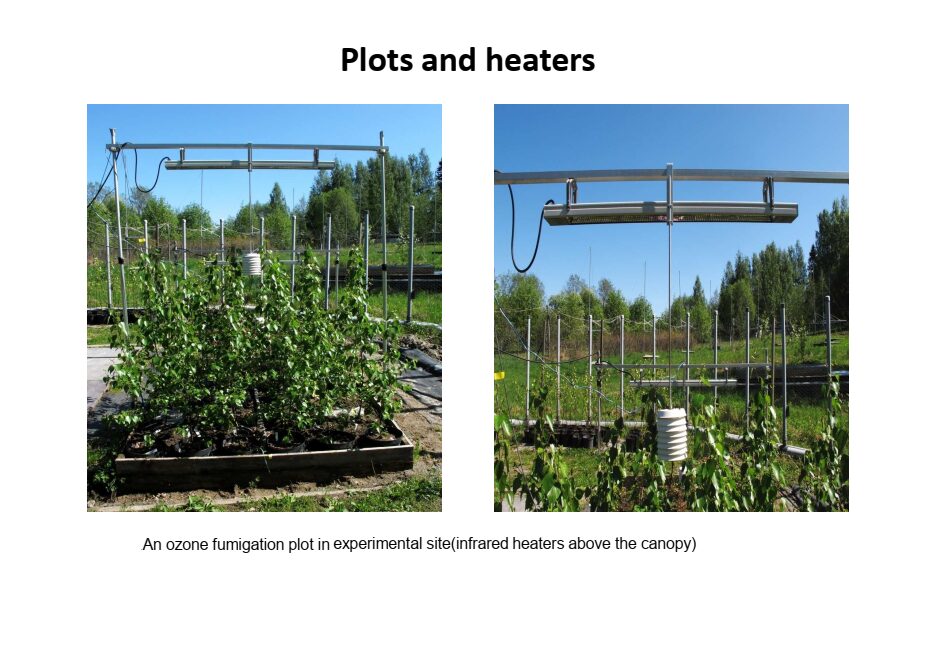
There is a feedback loop here worth understanding. Ozone damages plants, which causes them to emit more stress-response VOCs, which react with atmospheric nitrogen oxides to produce more ozone. The ozone fumigation experiments we were running at our field site, exposing silver birch to elevated ozone concentrations, were directly relevant to understanding how this feedback operates at the plant level. Studying plant responses to ozone is also studying how ozone affects the chemistry that plants use to respond to ozone. The system is circular in ways that make it genuinely complex to model.
Do Houseplants Remove VOCs Indoors
This question comes up constantly and the honest answer is more complicated than the marketing suggests.
The original NASA clean air study from 1989 showed that certain houseplants could remove VOCs from sealed chambers in laboratory conditions. This generated decades of marketing claims about air-purifying plants. The problem is that the conditions in that study bear little resemblance to a real room.
A real room has ventilation. Air exchange rates in typical buildings mean that VOC removal by plants, even if the plants are genuinely absorbing them, is negligible compared to the dilution effect of normal air exchange. You would need an implausible density of plants, estimates suggest hundreds to thousands per square metre of floor space, to achieve air quality improvements comparable to simply opening a window.
Plants do remove some VOCs through leaf uptake, stomatal absorption, and rhizosphere microbial degradation. These are real processes. The rates are just too slow to make a practical difference in air quality compared to ventilation.
What plants genuinely do indoors is add humidity through transpiration, introduce natural visual complexity that has documented psychological benefits, and in the case of aromatic species emit beneficial volatile compounds themselves. None of that is nothing. But it is not air purification in any meaningful sense.
Which Trees Emit the Most VOCs
Isoprene emitters include oak, aspen, poplar, willow, and eucalyptus. These species emit isoprene at high rates particularly on hot days. In urban tree planting decisions this matters. Planting high isoprene emitters in cities with significant nitrogen oxide pollution can contribute to ground-level ozone formation. This is a genuine consideration that urban planners increasingly take into account when selecting street tree species.
Monoterpene emitters are dominated by conifers. Pine, spruce, fir, and cedar emit monoterpenes continuously from resin ducts as constitutive defence. The characteristic smell of a pine forest is predominantly alpha-pinene and beta-pinene.
Silver birch, which I worked with directly in my field research, does not have large monoterpene storage structures. Its constitutive VOC emissions are relatively low. But its inducible emissions in response to herbivory can be substantial. The green leaf volatile burst that occurs within minutes of insect damage is ecologically significant even if the baseline emission rates are modest.
VOCs and Climate Change
The interaction between plant VOC emissions and climate change is actively researched and genuinely complex.
Warmer temperatures increase isoprene and monoterpene emissions from most species. Elevated CO₂ has the opposite effect on isoprene through effects on carbon metabolism in the MEP pathway. Drought stress reduces some volatile emissions while increasing others through shifted metabolic priorities.
What seems clear from field research in boreal forest environments is that VOC emission profiles are not static. They are dynamic responses to environmental conditions, and as those conditions change, the chemistry of what plants release into the atmosphere changes with them. The implications for regional air quality and atmospheric chemistry under projected climate change scenarios are significant and not fully understood.
FAQs
What are plant VOCs?
Volatile organic compounds produced by plants as secondary metabolites with sufficient vapour pressure to evaporate into surrounding air at ambient temperatures. The main classes are isoprene, monoterpenes, sesquiterpenes, and green leaf volatiles, each produced through specific biosynthetic pathways and serving distinct ecological functions.
Why do plants emit VOCs?
Multiple functions simultaneously: defence against herbivores and pathogens through toxic and deterrent activity, warning signals to neighbouring plants, thermoprotection and antioxidant functions in chloroplasts, and pollinator attraction through floral fragrance. The compounds serve whichever function is most relevant to the plant’s current ecological situation.
Do houseplants actually clean indoor air?
Not meaningfully in real-world conditions. Laboratory studies showing VOC removal by plants were conducted in sealed chambers with no air exchange. In a building with normal ventilation, plant VOC removal rates are negligible compared to dilution from air exchange. Opening a window is more effective than any number of houseplants for indoor air quality.
Are plant VOCs dangerous?
Plant VOCs themselves are generally not directly toxic at outdoor concentrations. The atmospheric chemistry they participate in can be problematic. Isoprene and monoterpenes reacting with nitrogen oxides produce tropospheric ozone, which harms respiratory health. The danger is indirect and depends on the presence of nitrogen oxide pollution rather than from the VOCs themselves.
Why do indoor VOC levels go up at night?
Indoor VOC sources including furniture, flooring, and cleaning products off-gas continuously. During the day ventilation dilutes these emissions. At night windows close, ventilation decreases, and VOCs accumulate. Plant transpiration changes with stomatal cycles but this is a minor contributor compared to building material off-gassing.
Are essential oils VOCs?
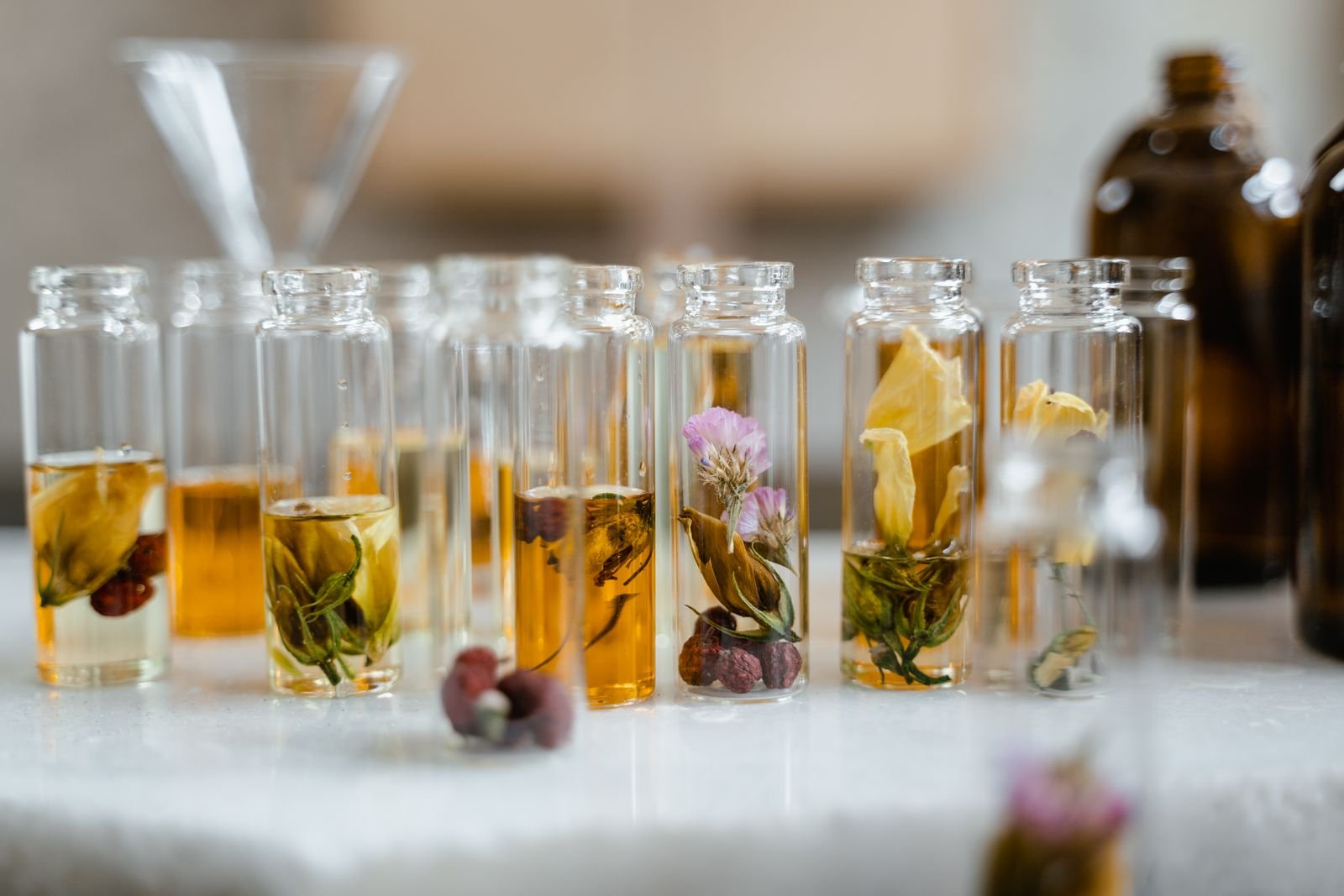
Yes. Essential oil compounds are by definition volatile. Their volatility is what allows steam distillation and what gives them their aromatic properties. Linalool, limonene, alpha-pinene, and menthol are all plant VOCs that happen to have therapeutic applications. The essential oil industry is essentially the commercial extraction and concentration of plant VOC chemistry.
How do plant VOCs affect atmospheric chemistry?
Isoprene and monoterpenes react with hydroxyl radicals and ozone in the atmosphere to produce secondary organic aerosols that affect cloud formation and regional climate. In the presence of nitrogen oxide pollution they produce tropospheric ozone. Plants emit roughly ten times more VOCs annually than all human sources combined, making them a major driver of atmospheric chemistry particularly in forested regions.

