









This article was written by Serge, MSc. Plant Biologist and Environmental Scientist with a BSc in Plant Biology and an MSc in Environmental Biology and Biogeochemistry. My background covers plant biochemistry, botany, and field research in forest and soil ecosystems. I write from real experience, not just literature.
Affiliate disclosure: This site has affiliate links, including Amazon. As an Amazon Associate I earn from qualifying purchases, at no extra cost to you.
I want to start with something that recalibrated how I think about soil entirely. During my biogeochemistry training we spent considerable time on soil organic matter decomposition and the microbial communities that drive it. The numbers were striking. A single teaspoon of healthy forest soil contains more microbial organisms than there are people on Earth. Not individual cells. Individual species of bacteria alone can number in the thousands per gram of soil.
That is not a metaphor for complexity. It is a literal description of what is happening under your feet when you walk across a garden bed. The soil is not dirt. It is a living system of extraordinary biological density, and almost everything that makes plants grow well depends on it functioning properly.
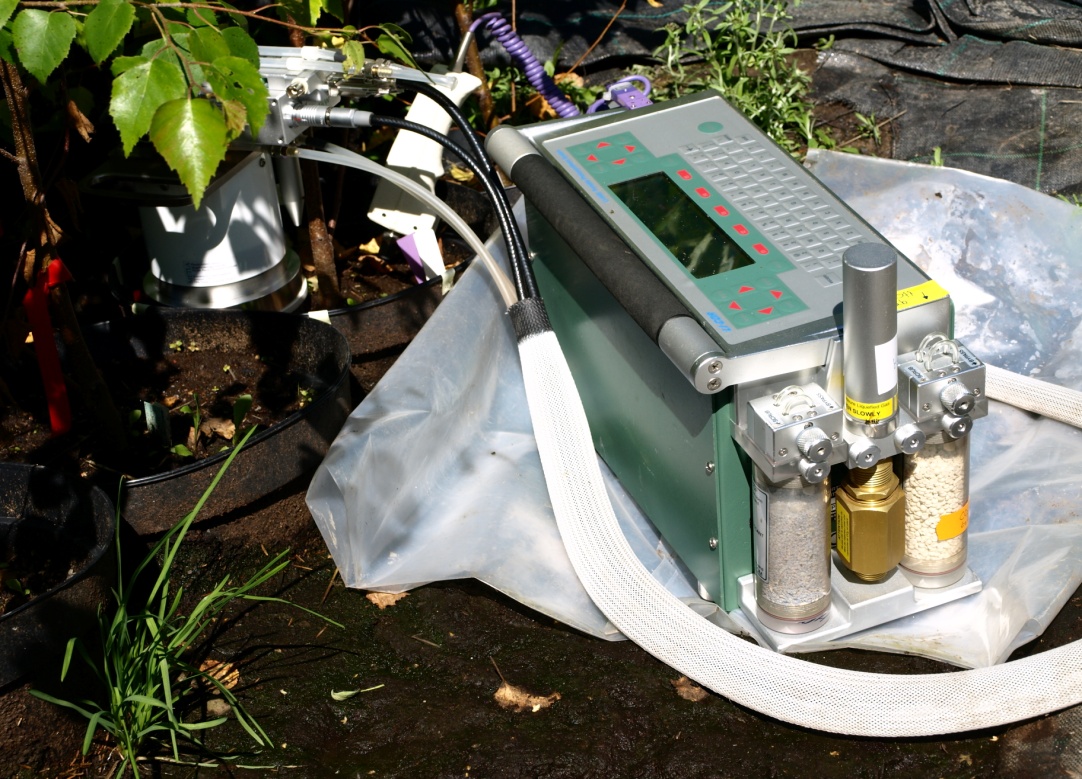
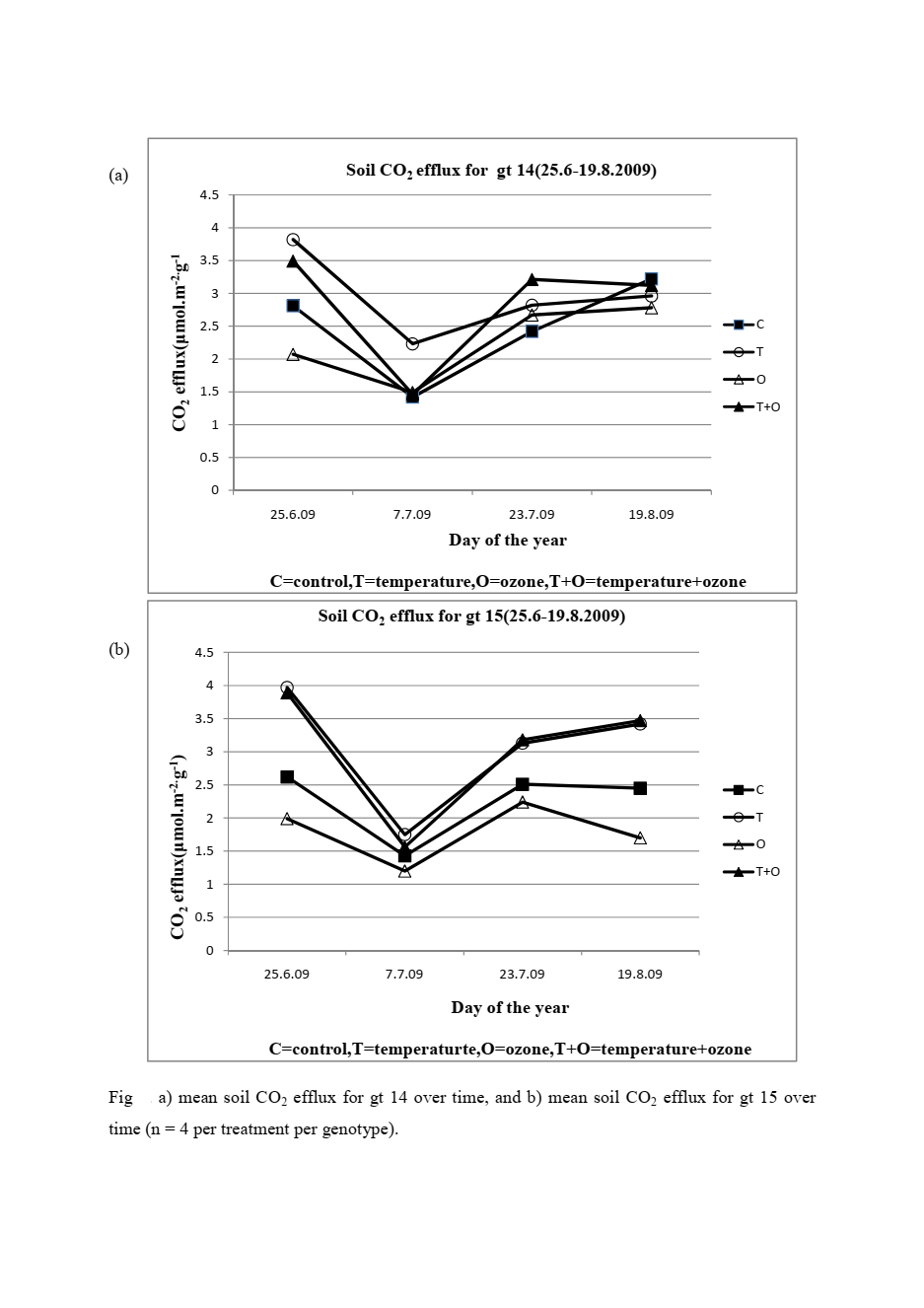
When I was measuring soil CO₂ efflux in my field research, what I was actually measuring was the combined respiratory output of that entire community. Roots respiring. Bacteria metabolising organic compounds. Fungi breaking down recalcitrant plant material. Protozoa consuming bacteria. Every breath of CO₂ from the soil surface represents biological activity from organisms most gardeners never think about.
What the Soil Food Web Actually Is
The soil food web is the network of feeding relationships between organisms living in and dependent on soil. It is not a metaphor. It is a literal description of who eats whom underground.
At the base of the web are the primary producers and decomposers. Plants fix carbon through photosynthesis and deliver a significant proportion of that carbon directly to soil through root exudates, compounds secreted from root tips that feed soil microorganisms. This is not accidental leakage. Plants actively invest carbon in feeding the soil community because the biological activity that investment drives returns nutrients to the plant in forms it can absorb.
Bacteria and fungi are the primary decomposers. They break down organic matter into simpler compounds, releasing nutrients in the process. Bacteria tend to dominate in disturbed, nitrogen-rich soils. Fungi dominate in undisturbed, carbon-rich soils. The bacterial to fungal ratio in a soil tells you a great deal about its management history and its suitability for different plant types.
Protozoa including amoebae, flagellates, and ciliates graze on bacteria. This grazing releases nitrogen that was immobilised in bacterial biomass into plant-available forms. Without protozoa, nitrogen cycles more slowly and plants access less of it even when total nitrogen content is adequate.
Nematodes are microscopic roundworms present in enormous numbers in healthy soil. Some are bacterial feeders. Some are fungal feeders. Some are predators of other nematodes. Some are plant parasites. The balance between these groups matters enormously. Healthy soil with an intact food web has predatory nematodes keeping plant-parasitic nematode populations in check naturally.
Microarthropods including mites and springtails fragment organic matter, distribute fungal spores through the soil, and regulate bacterial and fungal populations through grazing. Their physical movement through soil creates channels that improve aeration and water infiltration.
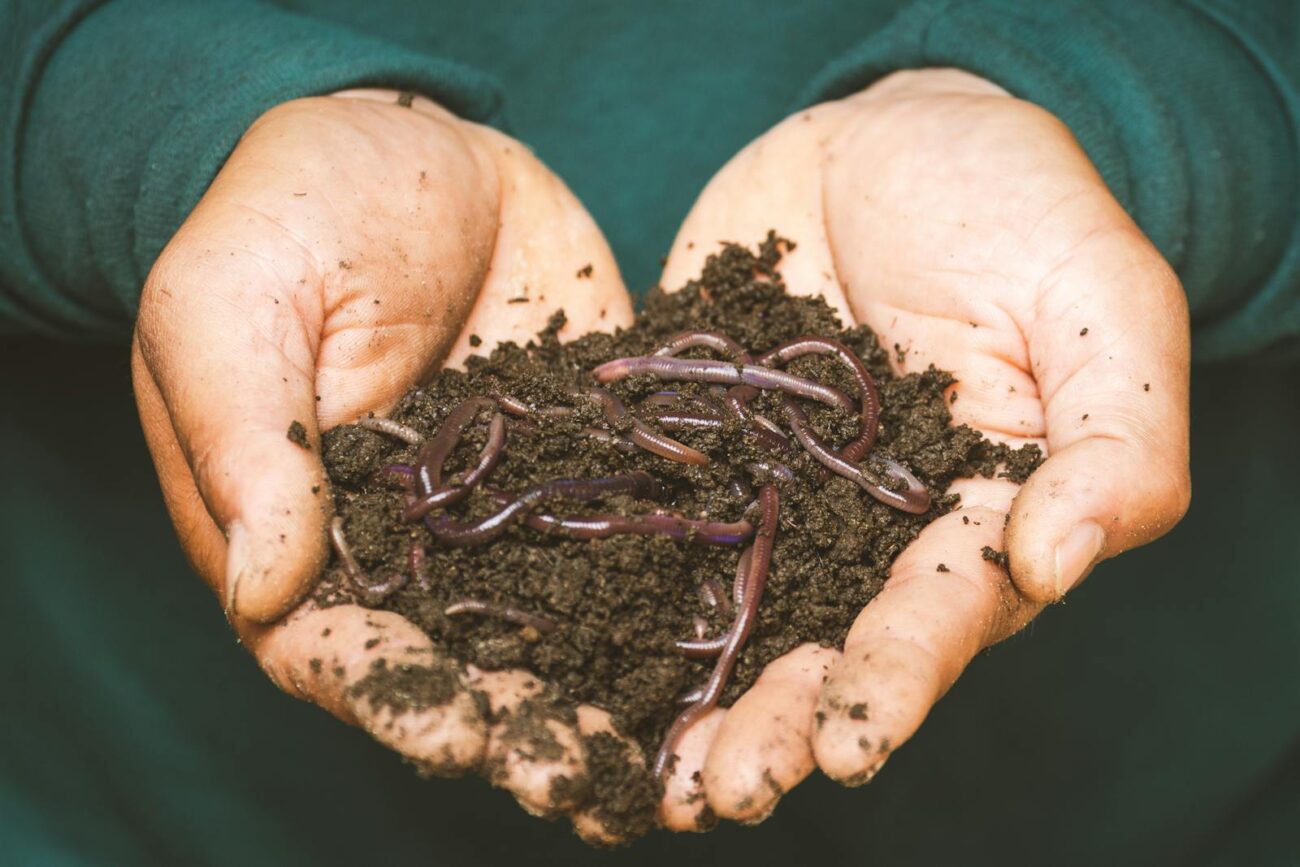
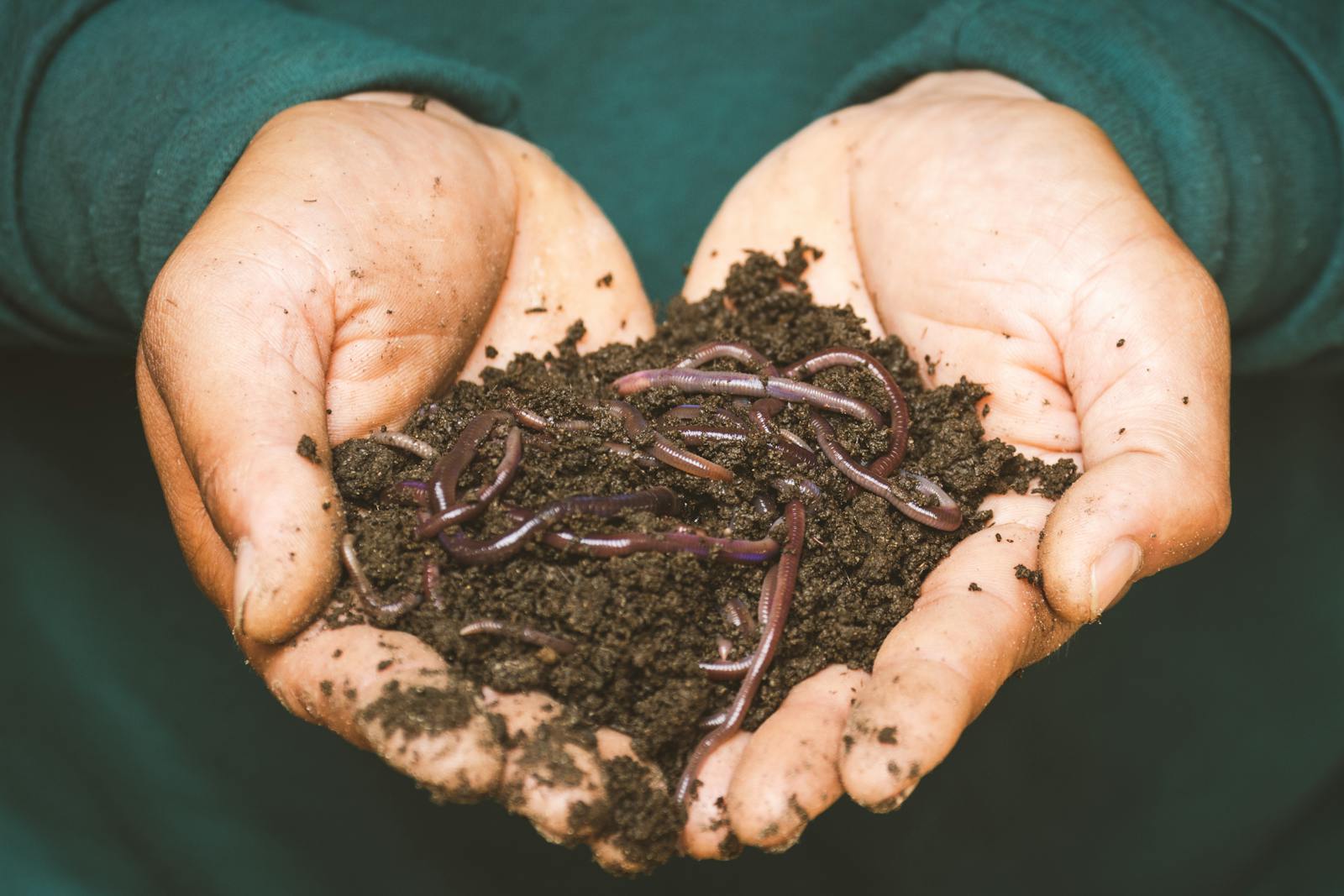
Earthworms are the most visible members of the soil food web and arguably the most important engineers of soil physical structure. They consume organic matter and mineral soil together, passing it through their gut and producing casts with dramatically higher bacterial populations, available nutrient concentrations, and water-holding capacity than the surrounding soil. Their burrowing creates macropores that allow water infiltration and root penetration into deeper soil layers.
How the Web Feeds Plants
The mechanism by which the soil food web feeds plants is more specific and more interesting than most gardening guides suggest.
Plants cannot directly absorb most of the nitrogen, phosphorus, and other nutrients present in soil organic matter. Those nutrients are locked in complex organic molecules that require biological processing before they become plant-available. The soil food web is the processing system.
When bacteria and fungi consume organic matter they immobilise nutrients in their own biomass. Those nutrients become available when the bacteria and fungi are consumed by protozoa, nematodes, and other grazers. The grazer excretes the excess nutrients it cannot use for its own growth, releasing them in inorganic forms that plants can absorb directly.
This is called the microbial loop and it is the primary mechanism of nutrient cycling in healthy soil. It is also why adding synthetic fertiliser to soil with a depleted food web is less efficient than growing in biologically active soil. The fertiliser delivers nutrients directly but bypasses the biological cycling that delivers nutrients where and when plant roots can access them most effectively.
I covered the carbon side of this in my no-till gardening article and my composting article. The nitrogen cycling operates through the same food web by the same basic mechanism. It is the same biological community doing both jobs simultaneously.
Mycorrhizal Fungi: The Network Beyond the Food Web
Mycorrhizal fungi deserve specific attention because their relationship with plants goes beyond the food web feeding relationships described above.
Approximately 90 percent of plant species form mycorrhizal associations. The fungus colonises root tissue and extends hyphae into soil volumes the root cannot reach. In exchange for carbohydrates from the plant, the fungus delivers water and mineral nutrients, particularly phosphorus, from distances and locations inaccessible to roots.
The hyphal network extends far beyond the root zone and connects multiple plants of the same and different species. Carbon can move through this network between plants. Stress signals can move through it. The network is not a passive conduit. It is an active biological system that responds to signals from the plants it connects.
What I find remarkable about mycorrhizal networks when I think about them from a biogeochemistry perspective is how they redistribute carbon through the soil system. Carbon that enters the network from one plant can be deposited as hyphal biomass at considerable distance from that plant’s root zone, contributing to soil organic matter formation in locations that the plant’s roots never reached.
Tillage physically severs these networks. High-phosphorus fertilisation suppresses colonisation because plants reduce their investment in fungal partnerships when phosphorus is artificially abundant. Both are reasons why heavily tilled, heavily fertilised soils have depleted mycorrhizal networks compared to undisturbed soils with minimal synthetic inputs.
What Kills the Soil Food Web
Understanding what damages soil biology helps explain why conventional garden management often produces diminishing returns over time.
Tillage is the most immediately damaging practice. Physical disruption severs fungal hyphae, collapses soil aggregates that provide microhabitat, and exposes protected organic matter to rapid aerobic decomposition. A single tillage event can reduce fungal biomass by 50 to 80 percent in the tilled layer.
Synthetic nitrogen fertiliser suppresses mycorrhizal associations as described above. It also shifts the bacterial to fungal ratio toward bacterial dominance because bacteria proliferate rapidly in high-nitrogen conditions. This shifts the soil food web toward a less stable, faster-cycling system that requires continued inputs to maintain.
Fungicides, including some used widely in vegetable gardens, directly damage fungal populations including mycorrhizal species. Systemic fungicides absorbed by plants reach the root zone and affect fungal colonisation even when applied to foliage.
Bare soil kills the food web through starvation. Soil organisms depend on plant root exudates and organic matter inputs from living plants. Bare soil between seasons removes these inputs and the food web collapses to a fraction of its active-season density.
Compaction reduces the pore space that soil organisms inhabit and move through. Heavily compacted soil has reduced oxygen availability in deeper layers which limits aerobic organism populations and shifts the community toward anaerobic processes that are less efficient for plant nutrition.
What Healthy Soil Contains: The Key Indicators
Gardeners ask what healthy soil looks like and contains. The biological answer is more informative than the chemical one.
Healthy soil smells like soil. The characteristic earthy smell is geosmin, a compound produced by Streptomyces bacteria. Strong geosmin production indicates active Streptomyces populations which are associated with healthy bacterial communities. Soil that smells of nothing or smells chemically has depleted bacterial populations.
Healthy soil has visible fungal threads, fine white strands visible when you pull apart a clump of soil from an undisturbed area. These are fungal hyphae and their presence indicates active fungal community development.
Healthy soil has earthworms. A handful of soil from a healthy garden bed should contain at least one or two earthworms. Soil with no earthworms visible after digging has a depleted macrofauna community.
Healthy soil has structure. It holds together in aggregates when compressed and breaks apart cleanly rather than smearing. Soil aggregate structure is created and maintained by fungal hyphae and bacterial biofilms that bind soil particles together. Structureless soil that smears or powders has lost this biological glue.
Healthy soil absorbs water quickly. Good infiltration reflects the macropore network created by earthworm burrows, fungal hyphae, and root channels. Water sitting on the surface of garden soil after rain indicates compaction and depleted biological community.
Recommended: Check how alive your soil is with my free Soil Life Scorecard, two simple checks with a printable log.
Building the Soil Food Web in Your Garden
The most important principle is that you cannot add the soil food web. You can only create the conditions for it to develop. The organisms are present as dormant spores, resistant life stages, and dispersing individuals throughout the environment. Provide suitable conditions and they establish.
Stop tillage or reduce it dramatically. Every time you till you restart the succession from the beginning. Undisturbed soil builds biological complexity over years. That complexity is the asset you are trying to develop.
Keep soil covered. Surface mulch feeds the food web from above through slow decomposition and maintains the moisture and temperature stability that soil organisms require. Bare soil loses biological activity rapidly.
Add organic matter to the surface rather than digging it in. Surface application feeds the decomposer community in the upper soil layers where most biological activity occurs. It also protects the soil surface from compaction by rainfall impact.
Maintain living roots in the soil as much of the year as possible. Cover crops between main crop seasons maintain the root exudate supply that feeds bacteria and mycorrhizal fungi during periods when main crops are absent.
Stop all fungicide use if supporting mycorrhizal networks is a priority. The trade-off between controlling specific fungal pathogens and maintaining beneficial fungal populations is real and worth thinking about explicitly.
FAQs
What is the soil food web?
The network of feeding relationships between organisms living in and dependent on soil. It ranges from bacteria and fungi as primary decomposers through protozoa and nematodes that graze on them, to larger invertebrates including earthworms and ground beetles at higher trophic levels. The web drives nutrient cycling, organic matter decomposition, and soil structure formation that underpin plant growth.
What organisms live in healthy soil?
Bacteria in billions per gram, fungi forming hyphal networks through the soil matrix, protozoa grazing on bacteria, nematodes at multiple trophic levels, microarthropods including mites and springtails, earthworms, and ground-dwelling insects and their larvae. Each group plays specific functional roles in nutrient cycling and soil structure maintenance.
What are soil food webs fuelled by?
Primarily by plant-fixed carbon. Plants deliver 20 to 40 percent of their photosynthetically fixed carbon to soil through root exudates, feeding the bacterial and fungal communities at the base of the food web. Dead plant material including leaf litter and root turnover provides additional organic matter inputs. The whole system ultimately runs on solar energy captured by plants.
Why is the soil food web important for composting?
Composting is an accelerated version of the same decomposition processes the soil food web drives in natural systems. The microbial community succession in a compost pile, mesophilic bacteria followed by thermophilic bacteria followed by fungi and then macrofauna, mirrors the succession that occurs in soil organic matter decomposition. Understanding the food web explains why turning a pile, adding carbon sources, and maintaining moisture all accelerate the process.
How do I know if my soil food web is healthy?
Strong earthy smell indicating active Streptomyces bacteria. Visible white fungal threads when soil clumps are pulled apart. Earthworms present when digging. Soil that forms stable aggregates rather than smearing or powdering. Rapid water infiltration rather than surface pooling. Plants that grow vigorously without heavy fertiliser inputs.
Does synthetic fertiliser damage the soil food web?
Synthetic nitrogen suppresses mycorrhizal colonisation because plants reduce investment in fungal partnerships when nitrogen is artificially abundant. High nitrogen input shifts the bacterial to fungal ratio toward bacterial dominance producing a less stable food web. Continued synthetic fertiliser dependency is partly a consequence of the food web suppression those fertilisers cause.
How long does it take to rebuild a depleted soil food web?
Bacterial populations recover within weeks to months of reduced disturbance and organic matter addition. Fungal community complexity takes years to rebuild because fungal networks develop slowly. Full mycorrhizal network development in previously tilled soil takes three to five years of consistent undisturbed management. Earthworm populations recover within one to two years if organic matter inputs are adequate.

