








This article was written by Serge, MSc. Plant Biologist and Environmental Scientist with a BSc in Plant Biology and an MSc in Environmental Biology and Biogeochemistry. My background covers plant biochemistry, botany, and field research in forest and soil ecosystems. I write from real experience, not just literature.
Affiliate disclosure: This site has affiliate links, including Amazon. As an Amazon Associate I earn from qualifying purchases, at no extra cost to you.
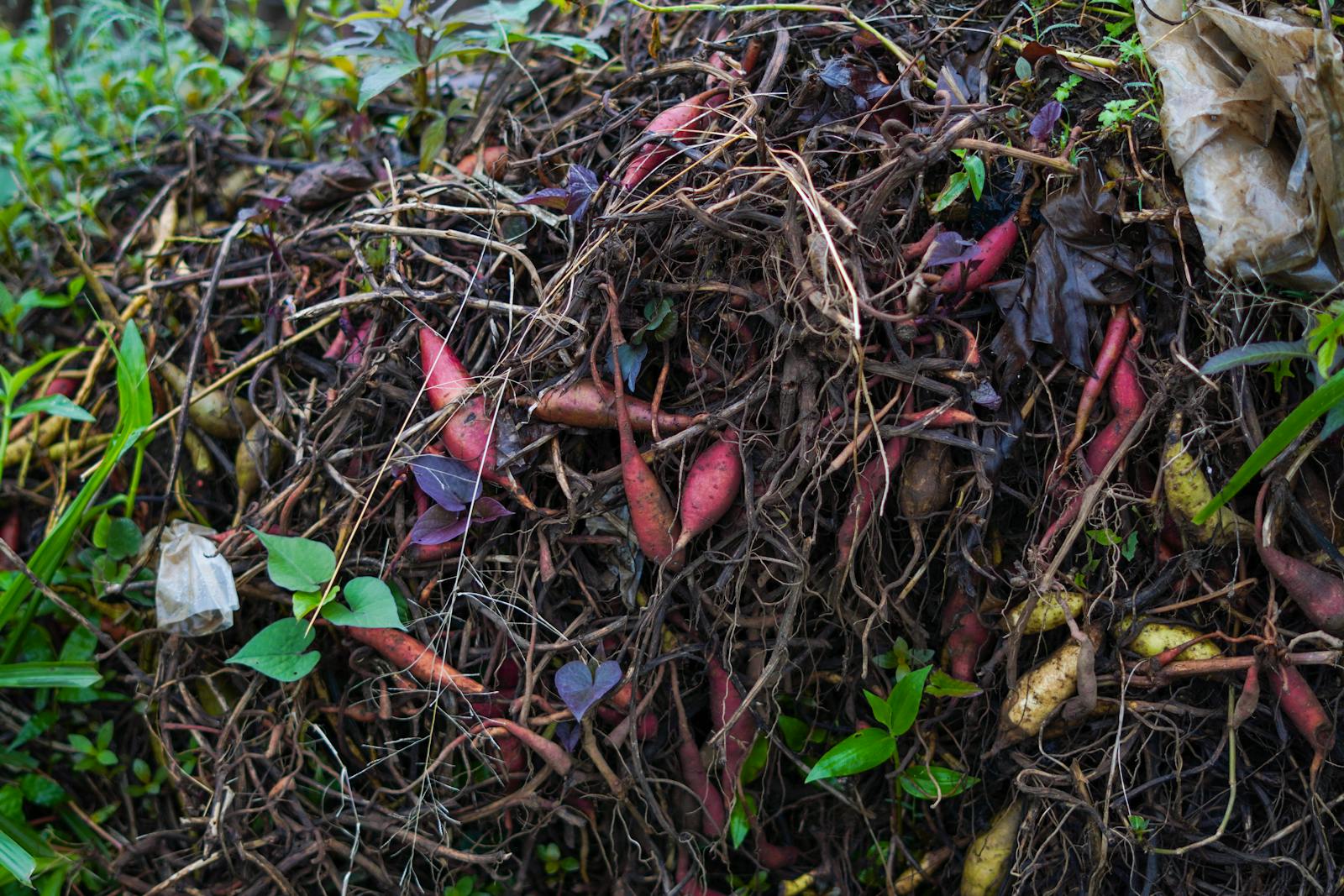
Most composting guides tell you to layer browns and greens, keep it moist, and turn it occasionally. That advice is not wrong. But it skips over what is actually happening inside the pile, which is one of the more fascinating microbial processes you can run in your garden.
I studied decomposition dynamics and carbon cycling in my biogeochemistry training. The same processes operating in your compost bin operate at landscape scale in forest floors, peatlands, and agricultural soils. Understanding them makes you a better composter and gives you a clearer picture of why certain practices matter and others are largely irrelevant.
What Composting Actually Is
Composting is accelerated aerobic decomposition. You are creating conditions that favour the microbial communities responsible for breaking down organic matter, then getting out of their way.
The end product, stable humus, is not just broken-down material. It is a chemically transformed substance with fundamentally different properties from the inputs. Fresh grass clippings decompose rapidly and contribute little to long-term soil structure. Finished compost resists further decomposition, improves soil water retention, supports mycorrhizal networks, and provides a slow-release nutrient source that synthetic fertilisers cannot replicate.
The transformation happens through successive microbial community shifts across several weeks or months. Each community changes the chemical environment in ways that favour the next community. It is not one process. It is a sequence.
The Microbial Sequence Nobody Talks About
Fresh organic material is first colonised by mesophilic bacteria and fungi, organisms that function at roughly ambient temperatures. These break down the most accessible compounds first: simple sugars, starches, proteins. Rapid microbial respiration generates heat. If the pile is large enough and has adequate moisture and aeration, the core temperature rises significantly within days.
This is where hot composting becomes interesting. As the core temperature climbs above 40 degrees Celsius the mesophilic community is replaced by thermophilic bacteria that thrive at high temperatures. These organisms break down more recalcitrant compounds including cellulose and some hemicelluloses. Temperatures in a well-managed hot compost pile can reach 55 to 70 degrees Celsius at the core.
That temperature range matters for two practical reasons. First, most weed seeds are killed at sustained temperatures above 55 degrees Celsius. Second, pathogens including those from food scraps are eliminated. Cold composting does neither. So the question of whether composting kills weed seeds has a direct answer: hot composting does, cold composting does not.
As the most accessible materials are consumed and microbial activity slows, the pile cools and mesophilic organisms return. Fungi become increasingly important at this stage, extending hyphae into the partially decomposed material and breaking down lignin, the structural compound in woody plant tissue that bacteria struggle with. Earthworms move in during the final stages, fragmenting material mechanically and mixing microbial communities through their gut.
The Carbon to Nitrogen Ratio: Why It Actually Matters
The brown and green layering advice exists because of carbon to nitrogen ratios. This is real biochemistry, not garden folklore.
Decomposer microbes need both carbon for energy and nitrogen for building proteins and cellular structures. The ideal carbon to nitrogen ratio for active decomposition is roughly 25 to 30 parts carbon to 1 part nitrogen. Fresh grass clippings have a ratio of around 15 to 1, too nitrogen-rich for efficient decomposition on their own. Dry autumn leaves have a ratio of 50 to 1 or higher, too carbon-rich.
Mix them and you approach the optimal ratio. The decomposer community has adequate energy and adequate nitrogen to function at maximum efficiency.
Too much nitrogen and the pile becomes slimy, smells of ammonia, and decomposition actually slows because the microbial community is limited by carbon availability. Too much carbon and decomposition slows because nitrogen limits microbial growth. Both directions produce the same result: a pile that sits there not doing much.
In my biogeochemistry training I studied nitrogen cycling in soil systems in detail. What strikes me about composting is how it mirrors the nitrogen dynamics in natural decomposition systems. Forest floor decomposition follows the same carbon to nitrogen constraints. The difference is timescale. A forest floor takes years to do what a well-managed compost pile does in weeks.
Should Compost Smell
This one causes unnecessary anxiety. The short answer is: a well-managed compost pile should smell like soil. Not unpleasant. Just earthy.
Ammonia smell means too much nitrogen and insufficient carbon. Add more browns and turn the pile.
Sulphurous or rotten egg smell means anaerobic conditions. The pile is too wet or too compacted and anaerobic bacteria are taking over. These produce hydrogen sulphide and other reduced sulphur compounds as metabolic byproducts. Turn the pile to introduce oxygen and add dry carbon-rich material to absorb excess moisture.
Compost that smells genuinely unpleasant is telling you something specific about its microbial chemistry. It is not random.
Should Compost Be Wet
Moisture is essential because decomposer microbes require water for all metabolic processes. But too much water drives out oxygen and creates anaerobic conditions.
The standard advice is that compost should feel like a wrung-out sponge. That is a reasonable approximation of 50 to 60 percent moisture content, which is the range that supports active aerobic decomposition while maintaining adequate pore space for oxygen movement.
In practice: squeeze a handful of compost. If water drips out it is too wet. If it falls apart and feels dry it needs water. If it holds its shape briefly and then crumbles it is about right.
Can Composting Attract Rats
Yes, under specific conditions. Cooked food, meat, fish, dairy, and oily foods attract rodents reliably. These materials also create anaerobic pockets and odours that disrupt the decomposition process.
Raw fruit and vegetable scraps attract far fewer rodents, especially when buried in the pile rather than left on the surface.
A properly managed hot compost pile with high core temperatures is less attractive to rodents than a cold pile because the heat and microbial activity alter the odour profile of the decomposing material.
If rats are a genuine concern use a closed bin with a solid base. Turning the pile regularly also disrupts any nesting activity.
What Composting Does to Soil
Finished compost added to soil does several things that synthetic fertilisers do not.
It increases soil organic matter, which improves water retention in sandy soils and drainage in clay soils. A one percent increase in soil organic matter roughly doubles the water-holding capacity of the top 30 centimetres of soil.
It feeds the soil microbial community. Compost contains both the organic substrates that soil microbes use as food and viable microbial populations from the composting process itself. Adding compost to depleted soil effectively inoculates it with a diverse microbial community.
It supports mycorrhizal networks. The organic matter and microbial activity in compost-amended soil create conditions that favour mycorrhizal colonisation of plant roots. I covered how important this network is for plant nutrient uptake in my no-till gardening article.
It provides slow-release nutrients as organic compounds continue breaking down in the soil. Unlike synthetic fertilisers which release nutrients rapidly and can be leached out before plants use them, compost releases nutrients gradually over months as microbial activity continues.
How Long Does Compost Take
Honestly it depends entirely on how much effort you put in.
Hot composting with regular turning and managed carbon to nitrogen ratio: 6 to 8 weeks for finished compost. This requires active management.
Cold composting where you add material and largely leave it alone: 6 to 12 months. Lower effort, longer wait.
Vermicomposting with worms: 2 to 3 months for kitchen scraps. The fastest method for small volumes of food waste. Worms process material mechanically and biochemically at rates that exceed passive decomposition.
The laziest effective method is simply piling material and waiting. It works. It just takes longer. The microbes do not need your help, they just work faster when conditions are optimised.
What Not to Compost
Meat, fish, dairy, and cooked foods, attract pests and create anaerobic conditions.
Diseased plant material, pathogens may survive cold composting temperatures. Hot composting kills most but not all plant pathogens.
Perennial weed roots and seed heads, only hot composting reliably kills these. Cold composting often spreads them.
Glossy paper, coated with clay or plastic compounds that do not break down.
Coal ash, contains sulphur compounds and heavy metals. Wood ash in small quantities is fine and contributes potassium.
Eucalyptus leaves, the question came up in the search data and it is worth addressing directly. Eucalyptus leaves contain allelopathic compounds including 1,8-cineole that inhibit germination of other plants. In large quantities they can slow composting. In small quantities mixed with other material they break down without causing problems.
FAQs
How does composting work scientifically?
Through successive aerobic microbial community shifts. Mesophilic bacteria colonise fresh material first, generating heat that raises pile temperature. Thermophilic bacteria replace them at elevated temperatures, breaking down more recalcitrant compounds. As accessible material is consumed the pile cools and fungi become dominant, breaking down lignin. Earthworms complete the process mechanically. The sequence transforms raw organic material into stable humus with fundamentally different chemical properties.
How long does compost take?
Hot composting with active management takes 6 to 8 weeks. Cold composting takes 6 to 12 months. Vermicomposting takes 2 to 3 months for kitchen scraps. The timeline depends almost entirely on how actively you manage temperature, moisture, and carbon to nitrogen ratio.
Should compost smell?
Finished compost should smell like soil. Ammonia smell indicates excess nitrogen. Sulphurous smell indicates anaerobic conditions from excess moisture or compaction. Both are correctable by adjusting the pile. Persistent unpleasant smell means something is chemically wrong with the microbial environment.
Will composting kill weed seeds?
Hot composting at sustained temperatures above 55 degrees Celsius kills most weed seeds. Cold composting does not reach these temperatures and weed seeds often survive. If weed seeds are a concern use hot composting methods with regular turning to ensure all parts of the pile reach killing temperatures.
Can composting attract rats?
Cooked food, meat, fish, and dairy reliably attract rodents. Raw fruit and vegetable scraps much less so when buried in the pile. A properly managed hot pile is less attractive than a cold pile because heat and active microbial activity alter the odour profile. A closed bin with a solid base eliminates most rodent access.
Is compost better than fertiliser?
For different purposes. Synthetic fertilisers deliver specific nutrients rapidly and predictably. Compost improves soil structure, feeds the microbial community, supports mycorrhizal networks, and provides slow-release nutrients. They are not equivalent. A garden managed with compost over several years develops biological capital that synthetic fertilisers cannot create.
Can composting help the environment?
Yes through two mechanisms. It diverts organic waste from landfill where it would decompose anaerobically and produce methane. And it returns carbon and nutrients to soil rather than losing them. At garden scale the environmental impact is modest. At municipal scale, composting programmes produce measurable reductions in landfill methane emissions and reduce the need for synthetic fertiliser production.

