






This article was written by Serge, MSc. Plant Biologist and Environmental Scientist with a BSc in Plant Biology and an MSc in Environmental Biology and Biogeochemistry. My background covers plant biochemistry, botany, and field research in forest and soil ecosystems. I write from real experience, not just literature.
Affiliate disclosure: This site has affiliate links, including Amazon. As an Amazon Associate I earn from qualifying purchases, at no extra cost to you.
The first time I used alcohol to extract pigments from plant material in a lab practical I was not expecting much. You crush the leaf, add the solvent, and suddenly the liquid turns this deep rich green. Chlorophyll coming out of the tissue. Then as you keep going a yellow layer starts to separate. Carotenoids. Two completely different compound classes, same leaf, pulled out by the same solvent.
That practical stuck with me because it made something abstract feel real. The chemistry was not in a textbook anymore. It was sitting in a glass jar changing colour in front of me.
You can do versions of this at home. Not with lab grade equipment. But with enough to actually see what your herbs contain and how potent they are. And once you start looking at herbs this way you cannot go back to treating them as interchangeable green stuff.
Why Herb Potency Varies So Much
Plants are not static. They react to light, temperature, water availability, soil quality, and stress from insects or disease. All of these factors influence what secondary metabolites the plant produces and in what concentrations.
Two batches of the same herb grown in different conditions can have genuinely different chemical profiles. A nettle (Urtica dioica) from a sunny exposed patch will likely accumulate different flavonoid concentrations than one from a shaded corner. A chamomile (Matricaria chamomilla) harvested at peak flowering carries more apigenin than one picked early or late.
This is not speculation. My plant ecological stress physiology coursework covered secondary metabolite production as a direct response to environmental pressure. The plant invests in defence chemistry when it needs to. Growing conditions write themselves into the chemistry of what you harvest.
What You Actually Need
Nothing complicated. Most of it is already in your kitchen.
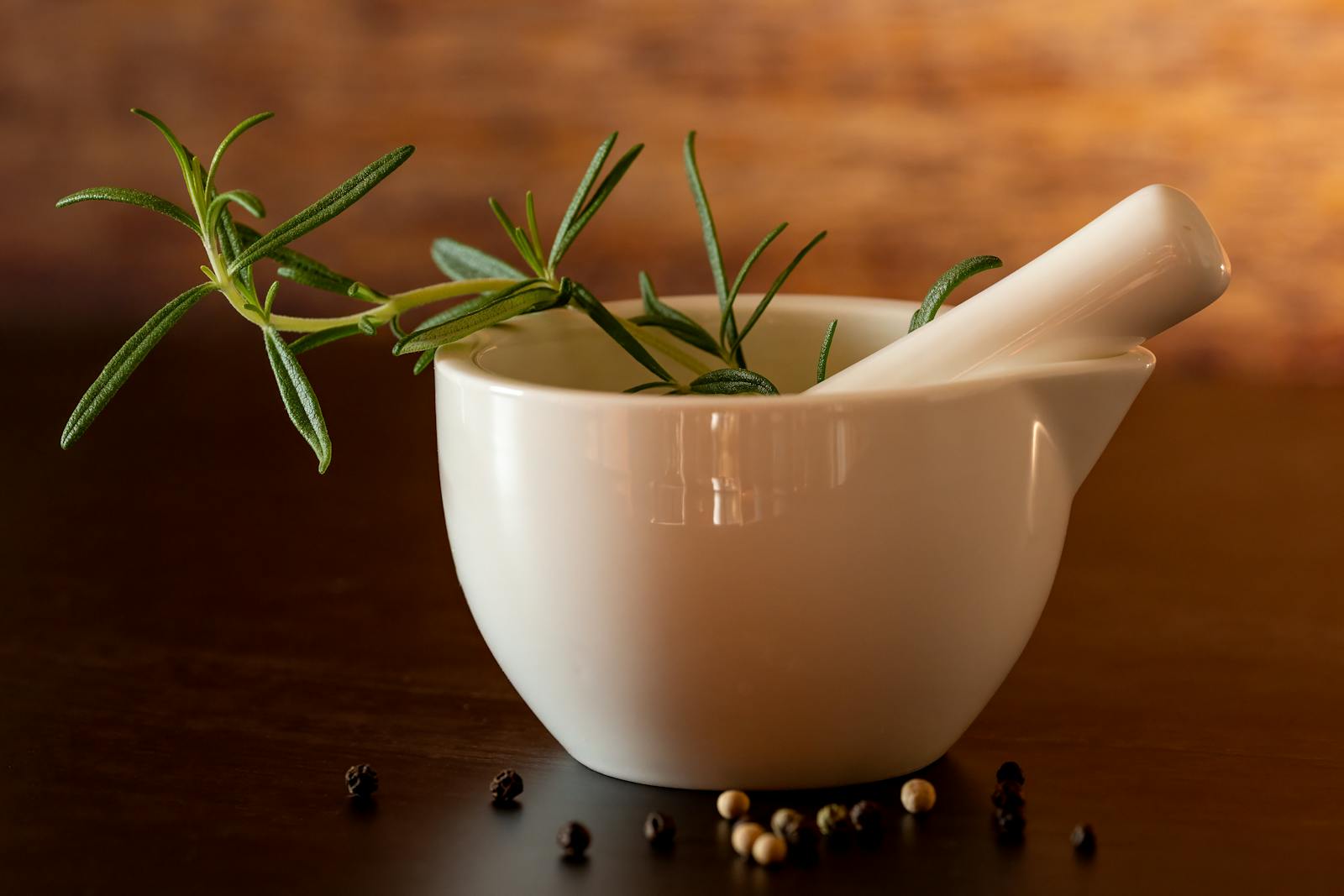
Glass jars or clear cups, a mortar and pestle, water, food grade alcohol like vodka, white vinegar, coffee filters or paper towels, pH strips if you want to go further, and a notebook.
That is it. The notebook matters more than anything else on that list.
Start With Pigment Extraction
This is where I would start because it gives you an immediate visual result.
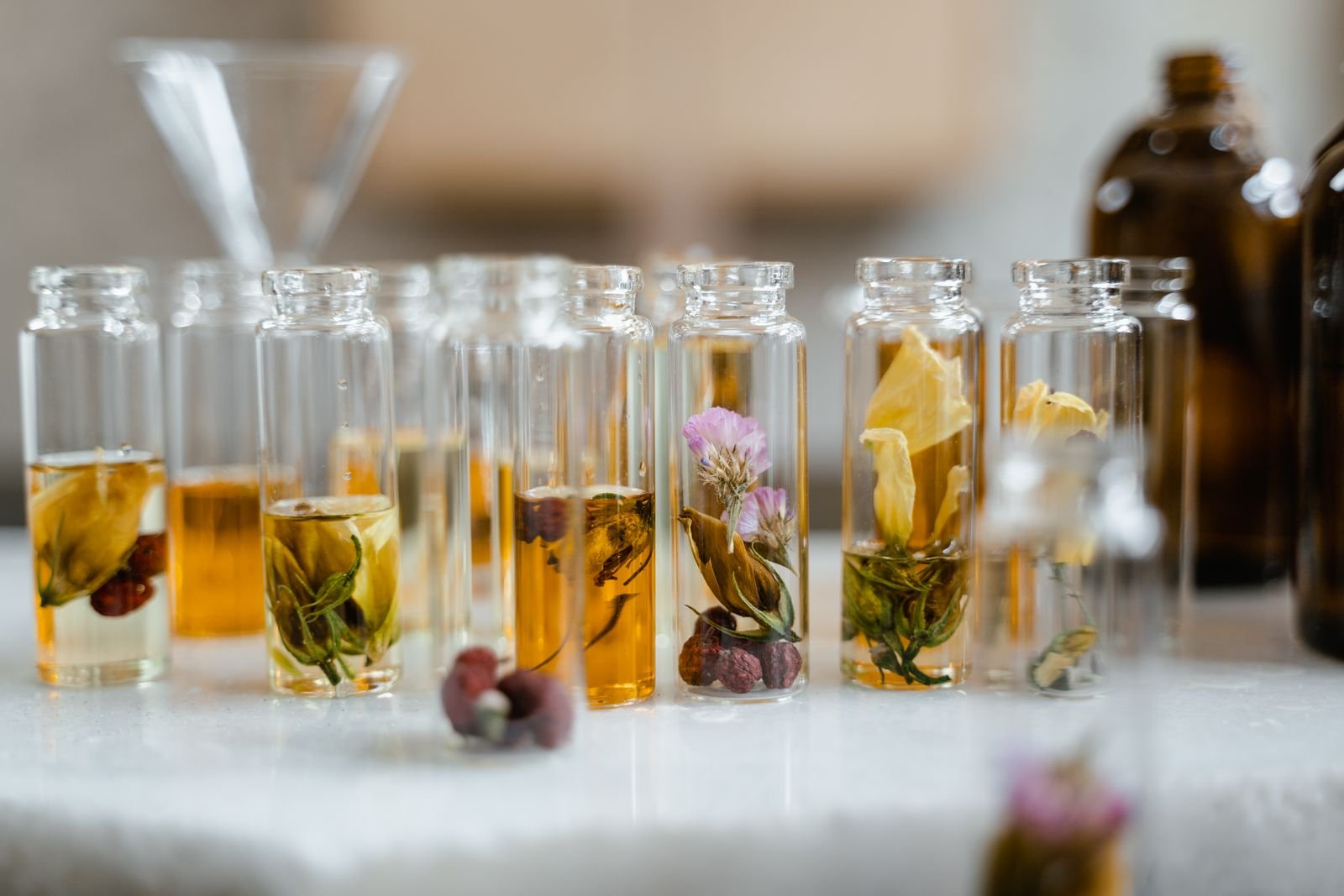
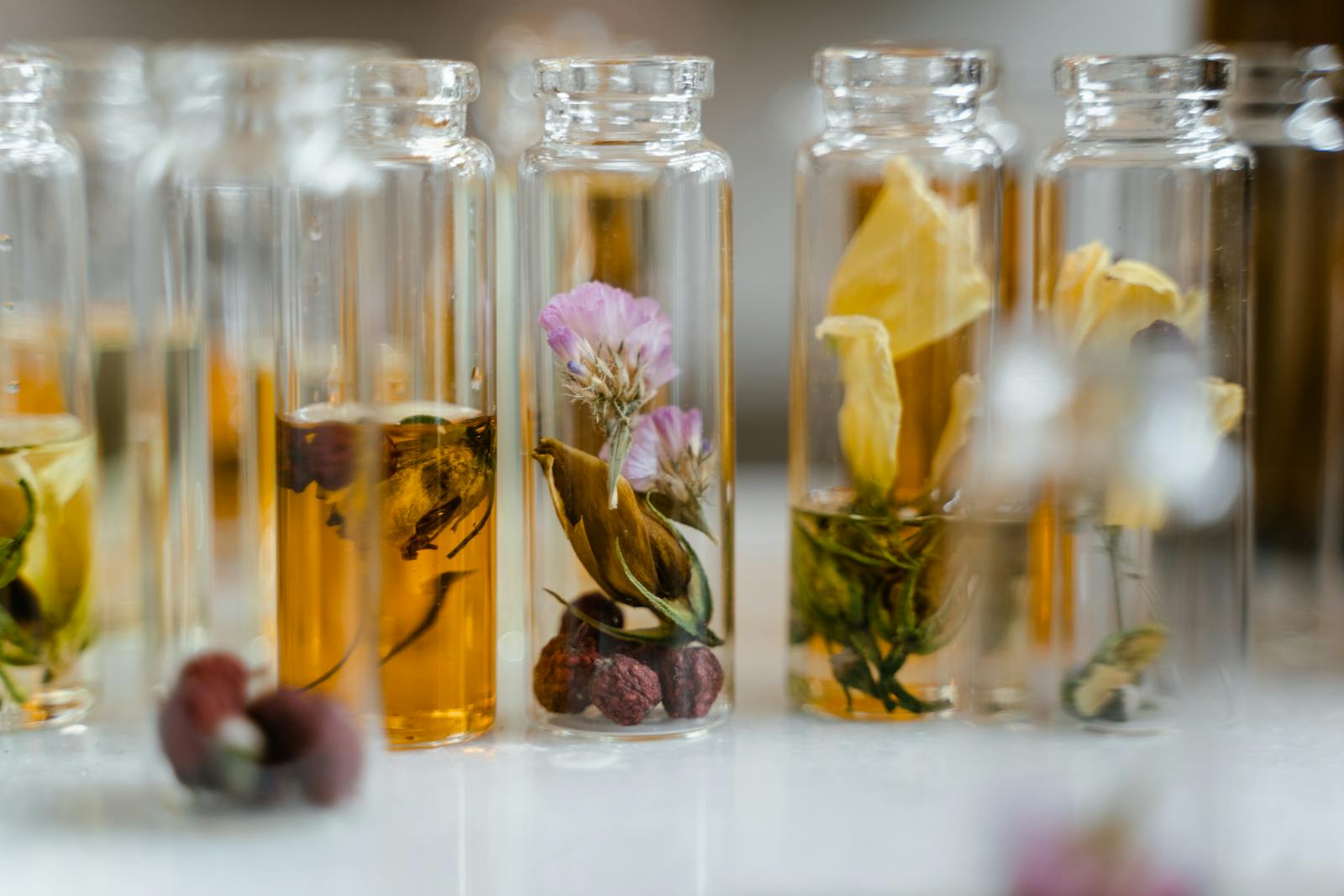
Crush a small amount of fresh herb leaf in your mortar. Add a splash of alcohol and let it sit for a few minutes. Then filter it through a coffee filter into a clear glass.
Watch the colour. Deep green means chlorophyll is present in good amounts. A yellow or orange tint alongside it means carotenoids are coming out too. These are fat soluble pigments and alcohol pulls them out efficiently, which is exactly why alcohol works better than water for this extraction.
Water pulls out different compounds entirely. Water soluble flavonoids, phenolic acids, some tannins. Try the same herb in hot water and compare the colour to your alcohol extract. They will look different because they are capturing different chemistry.
Chamomile (Matricaria chamomilla) gives a beautiful golden colour in hot water from its flavonoid content. Peppermint (Mentha x piperita) releases a pale green in water but releases menthol much more strongly in alcohol. That difference is not random. It tells you something real about which solvent matches which compound class.
Try a Simple pH Test
Some plant pigments change colour depending on acidity. This is one of the more visually satisfying home tests you can do.
Make an infusion of red cabbage in hot water. The liquid will turn purple. Add a few drops of vinegar and watch it shift toward red or pink. Add a pinch of baking soda and it moves toward green or blue. That colour shift is anthocyanins responding to pH change.
You can try the same with beetroot (Beta vulgaris), which contains betalains rather than anthocyanins but shows similar pH sensitivity.
Grab a pH strip and measure your herb infusions. Most will sit between pH 5 and 7. Acidic preparations like vinegar tinctures sit lower. This matters practically because some compounds are more stable at certain pH levels and extraction efficiency changes with acidity.
Watch How Compounds Dissolve
Put crushed herb in a jar and add water. Shake it and watch for bubbles that persist. Persistent foam means saponins are present. Soapwort (Saponaria officinalis) is the classic example but many herbs contain saponins at lower levels.
Notice whether the extract is cloudy or clear. Cloudiness often means tannins or starches are coming out. Sediment at the bottom tells you something is not fully soluble in your chosen solvent.
Lemon balm (Melissa officinalis) is a good one to test. In water it gives a pale extract with a delicate lemony aroma. In alcohol the aromatic oils come through much more strongly because volatile terpenoids are alcohol soluble. That difference explains why a lemon balm tincture behaves differently to lemon balm tea.
Keep a Proper Journal
Write down everything. Herb species and Latin name. Which part you used, leaf, root, flower, stem. Where it was harvested and when. Which solvent you used. What colours, aromas, bubbles, and sediments you observed. Taste if safe to do so.
Patterns emerge fast. You will start noticing that nettles (Urtica dioica) from one spot look and taste stronger than from another. That your chamomile varies batch to batch. That herbs harvested at peak flowering smell more intensely than those picked early.
This is observational plant science. It is exactly the kind of careful systematic observation that underpins proper field and laboratory research. You are training yourself to read plant chemistry through your senses and simple tools.
Herbs Worth Starting With
Nettles (Urtica dioica). Leaves packed with flavonoids, minerals, and chlorophyll. Good for pigment extraction comparison between sunny and shaded plants.
Chamomile (Matricaria chamomilla). Flowers rich in apigenin and other flavonoids. Beautiful golden colour in hot water extraction.
Peppermint (Mentha x piperita). Leaves loaded with menthol and rosmarinic acid. Perfect for comparing water versus alcohol extraction.
Dandelion (Taraxacum officinale). Roots and leaves contain bitter compounds and taraxacin. Root extracts taste noticeably different to leaf extracts.
Lemon balm (Melissa officinalis). Aromatic oils and rosmarinic acid. Good for demonstrating solvent polarity differences.
A Few Practical Safety Notes
Use food grade alcohol only. Do not ingest anything you are uncertain about. Do not harvest from areas that may have been sprayed or are near roads. Label every jar clearly. Start with small amounts and work methodically.
What This Changes
Once you start extracting and observing your herbs properly you stop treating them as interchangeable. You start understanding why one batch of an herb works better than another, why preparation method matters, why harvest timing affects potency.
The chemistry that makes herbs interesting is not invisible. It shows up in colour, aroma, taste, solubility, and behaviour in different solvents. You just need to start looking for it.
FAQs
Why does alcohol extract different compounds than water?
Alcohol and water have different polarities. Water pulls out water soluble compounds like some flavonoids, phenolic acids, and tannins. Alcohol pulls out fat soluble compounds like chlorophyll, carotenoids, and volatile aromatic oils. Using both solvents gives you a more complete picture of what a herb contains.
What does herb colour tell you about its chemistry?
Pigmentation reflects compound classes present in the plant. Deep greens indicate chlorophyll. Yellow and orange tones indicate carotenoids. Purple and red colours in berries and some flowers indicate anthocyanins. Pale golden colours in herb infusions often indicate flavonoids.
Why do some herbs foam when shaken in water?
Persistent foam usually indicates the presence of saponins, compounds that reduce surface tension in water. Saponins are found in many herbs including soapwort (Saponaria officinalis) and some legumes.
Does harvest time affect herb potency?
Yes significantly. Secondary metabolite concentrations in most herbs peak at specific growth stages. Flowering herbs tend to have higher concentrations of certain compounds at or just before peak flowering. Root herbs are often strongest when harvested after the growing season ends.
Why do tinctures feel stronger than teas for some herbs?
Because alcohol extracts a different and often broader range of compounds than water. Volatile aromatic oils, fat soluble compounds, and some alkaloids extract more efficiently into alcohol than into hot water.
Can you really see plant chemistry at home without lab equipment?
You can see the effects of plant chemistry through colour, aroma, taste, solubility, and pH response. You cannot measure precise compound concentrations without analytical equipment. But observational testing gives you genuinely useful information about relative potency and compound class presence.
Why does the same herb vary so much between batches?
Growing conditions directly influence secondary metabolite production. Soil quality, light levels, water availability, temperature, and pest pressure all affect what compounds the plant produces and in what concentrations. Two batches of the same species grown differently will have different chemical profiles.
Is vinegar a useful solvent for herb extraction?
Yes for certain compound classes. Acetic acid in vinegar can extract some alkaloids and minerals effectively. It is less useful for fat soluble compounds like essential oils and chlorophyll. Vinegar extractions also have a shorter shelf life than alcohol tinctures.
What is the best way to compare two batches of the same herb?
Use identical extraction conditions. Same solvent, same quantity of herb, same extraction time, same temperature. Then compare colour intensity, aroma strength, taste, and any visible differences in sediment or clarity. A simple side by side comparison in two clear glasses tells you a lot.

