








This article was written by Serge, MSc. Plant Biologist and Environmental Scientist with a BSc in Plant Biology and an MSc in Environmental Biology and Biogeochemistry. My background covers plant biochemistry, botany, and field research in forest and soil ecosystems. I write from real experience, not just literature.
Affiliate disclosure: This site has affiliate links, including Amazon. As an Amazon Associate I earn from qualifying purchases, at no extra cost to you.
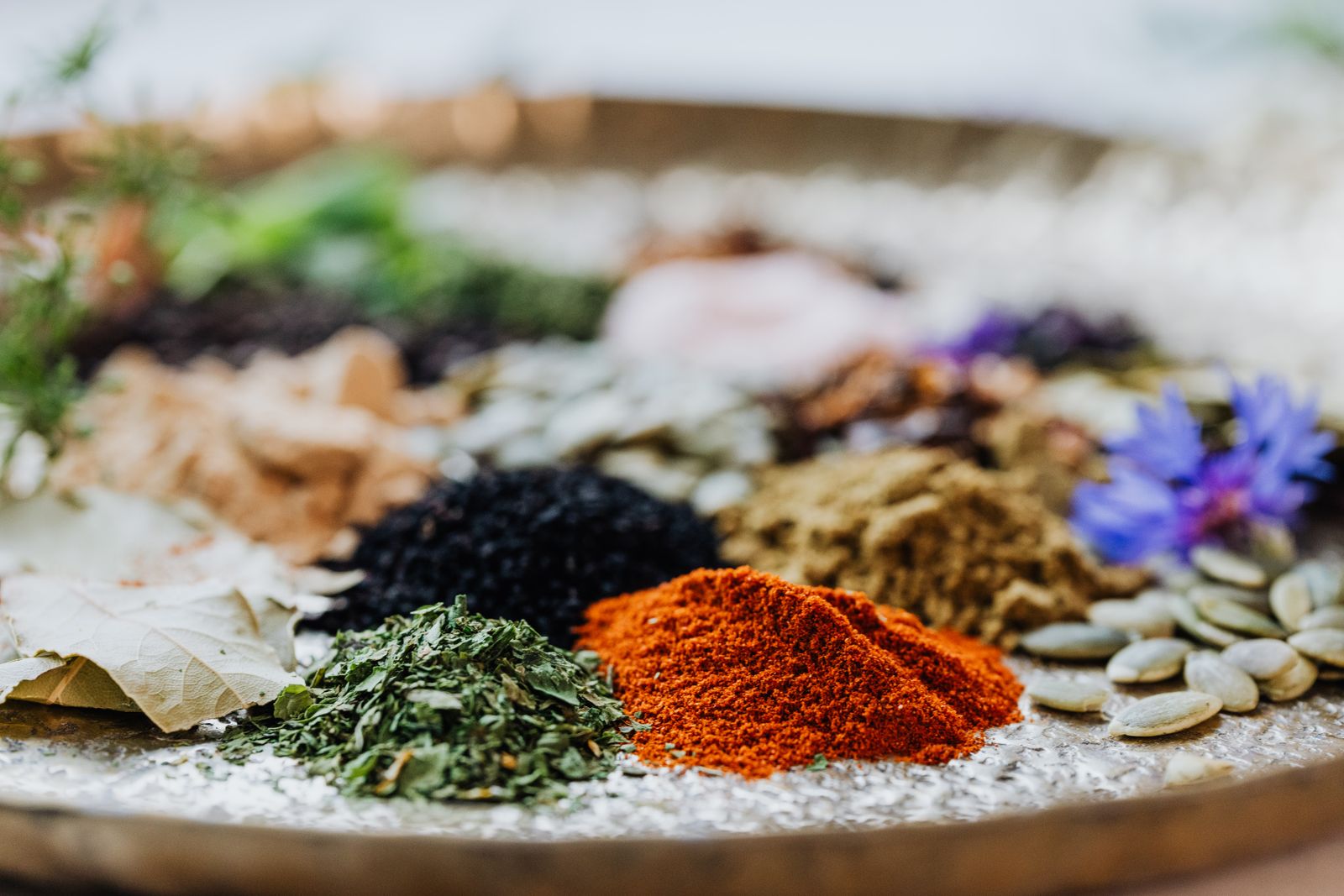
Crush a fresh peppermint leaf, Mentha × piperita, between your fingers and the smell that lifts off it is a chemical signal. That scent belongs to one family of plant compounds, and once you can place it, the long list of hard names on supplement labels and herb articles starts to sort itself out. Quercetin, caffeine, menthol, berberine, the catechins in green tea. They look like a pile of unrelated terms. They are not. Almost everything useful a plant makes, and that we borrow from it, falls into three broad families.
I studied how plants build these compounds during my biochemistry training, the actual pathways from a simple starting molecule through to the finished structure. That is what changed how I read a label. Once you know how a compound is made, you can guess a lot about how it behaves before you look up anything about it.
Here are the three families.
Flavonoids: the pigments and the protectors
Flavonoids are built through a route called the phenylpropanoid pathway. It starts from an amino acid and runs through a series of steps the plant uses to make a wide range of related compounds. Flavonoids are part of the larger group of plant phenolics, and they tend to share a few traits because of the way they are made.
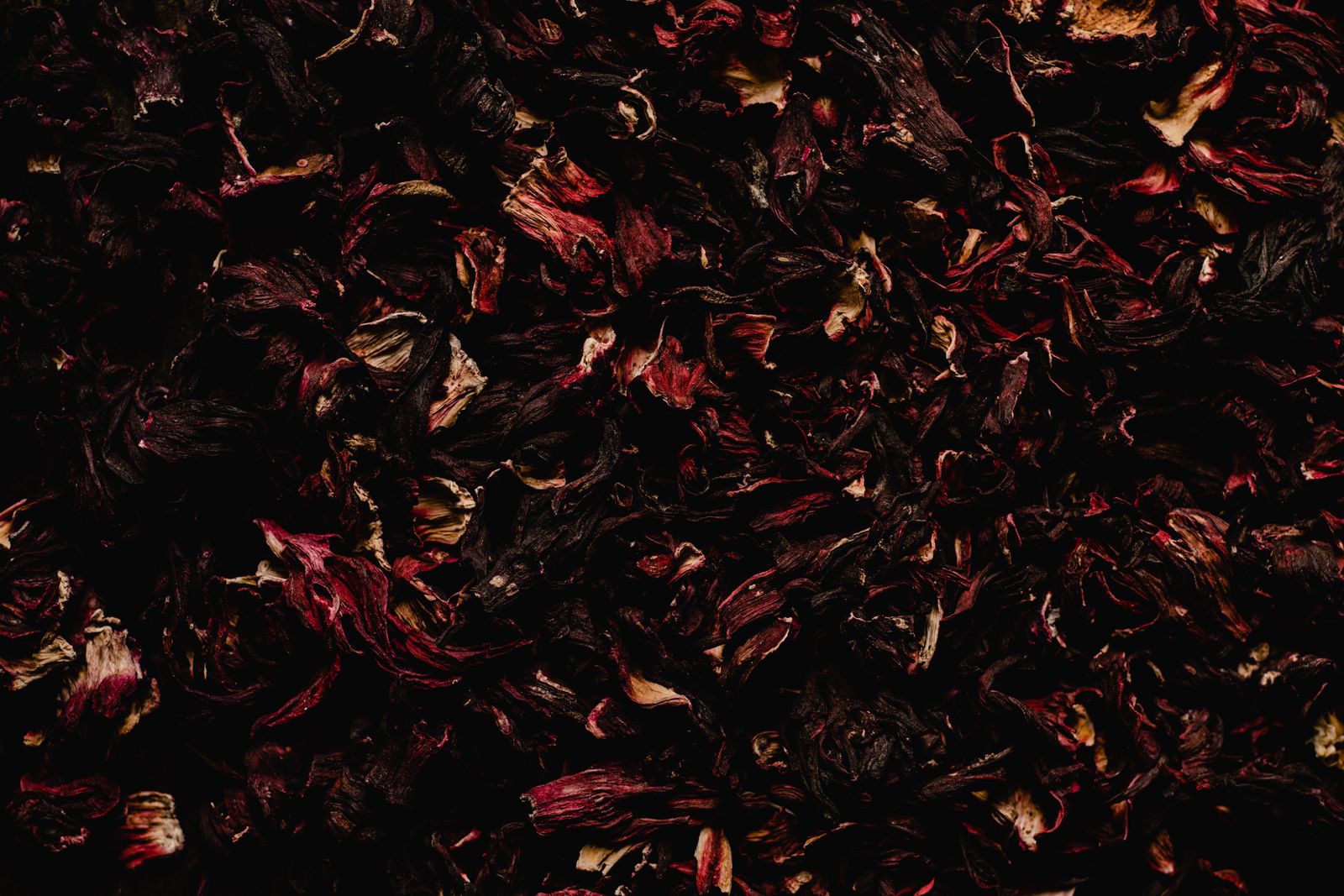
Most are water-soluble, which is why so many of them come out in a plain water infusion, and most travel through the plant with a sugar attached. They include a lot of plant colour. The deep reds in dried hibiscus, Hibiscus sabdariffa, come from anthocyanins, which are flavonoids. The catechins in green tea, Camellia sinensis, are flavonoids, and so is the apigenin in chamomile, Matricaria chamomilla. If a compound is a plant pigment in the red to blue range, or it gets sold on its antioxidant content, it is very often a flavonoid.
Alkaloids: the strong, nitrogen-carrying ones
Alkaloids are the family that carries nitrogen. The plant builds them from amino acids, so it spends nitrogen to make them, and a plant does not spend nitrogen lightly. That cost is a clue. Alkaloids tend to be the compounds a plant makes for serious defence, and they tend to be the strongest things in the plant.
This is the family that gave medicine many of its most powerful single compounds. Morphine from the opium poppy, Papaver somniferum, is an alkaloid. So is the caffeine in your tea and coffee, the berberine in barberry, and the nicotine in tobacco. Two signs point to an alkaloid: a bitter taste, and a strong effect from a small amount. The bitterness is not an accident. It is the plant warning off anything that might eat it.
Terpenoids: the smell of the plant
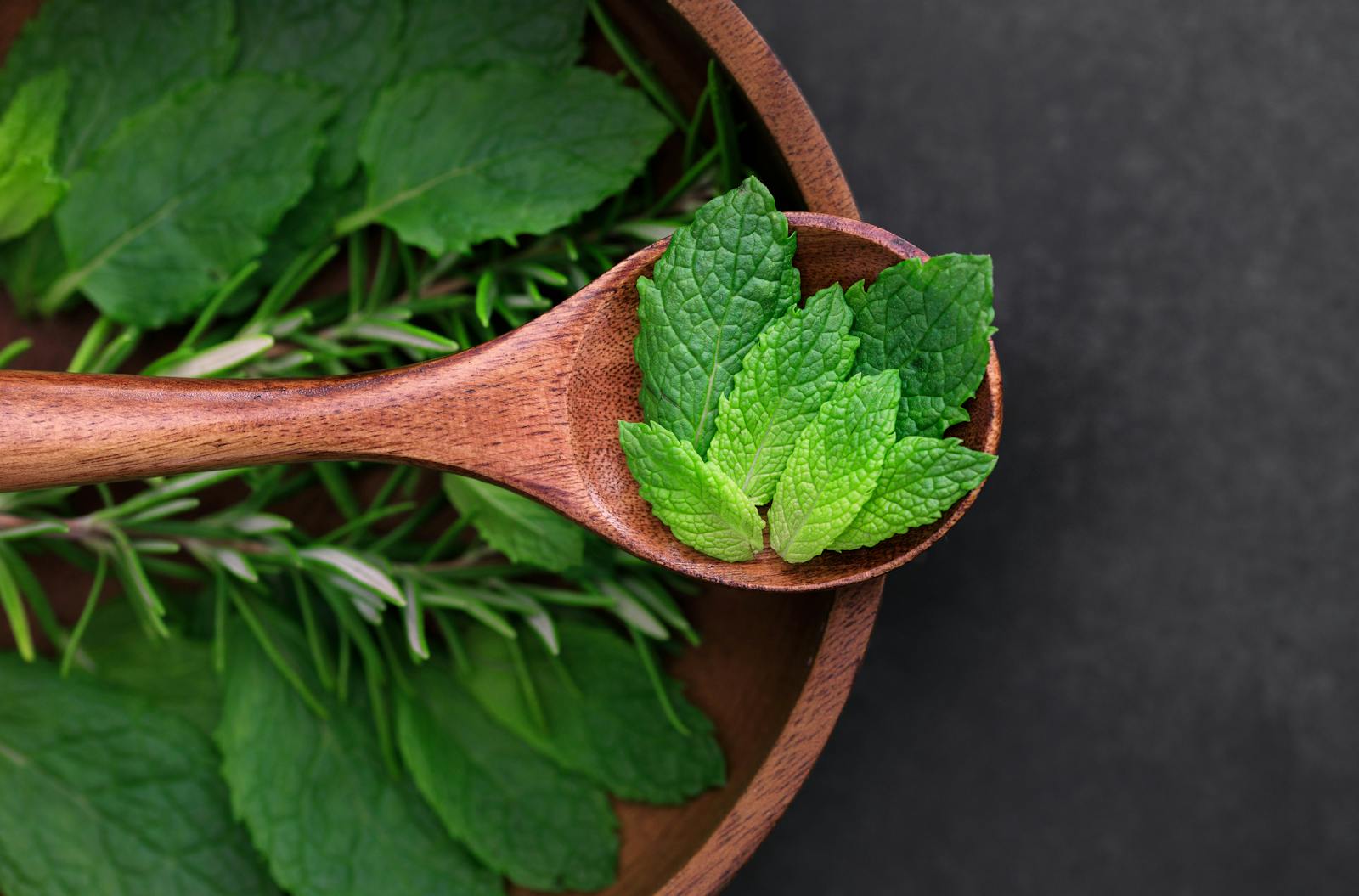
The peppermint from the opening sits here. Terpenoids are the biggest family of the three, and the plant builds them from a small five-carbon block that it joins together again and again, through two routes chemists call the MVA and MEP pathways, one in the cell fluid and one inside the chloroplast.
Terpenoids are the family you can usually smell. The scent of a herb crushed in your hand, the smell of a pine wood, the menthol in peppermint, the bisabolol in chamomile: terpenoids, nearly every time. They tend to be fat-soluble and many of them are volatile, which is why they drift into the air as smell, and why they gather in essential oils rather than in a watery tea.
Why the family tells you how it behaves
This is the part I use most in daily life. The three families give you a working guess about a compound before you research it. If you can smell it strongly, think terpenoid. If it is bitter and works in a small dose, think alkaloid. If it is a pigment, or sold on its antioxidant content, think flavonoid.
One plant usually holds members of more than one family at the same time, which is why a single herb can do several things. Chamomile is the one I reach for, because it is in my cup most evenings. Its apigenin is a flavonoid and sits in the water of the tea. Its bisabolol is a terpenoid and lives in the aromatic oil. Same flower, two families, two different behaviours. Took me a while to stop seeing these as a list to memorise and start seeing them as families, and the families are the part worth keeping.
The three-versus-four question
You will see some sources list four classes, or more, instead of three. They are not wrong, they are just slicing it differently. Some split the wider phenolics out from the flavonoids and count them on their own. Some add nitrogen and sulphur compounds, or glycosides, as separate groups. For making sense of the herbs and supplements in front of you, these three families do most of the work, and the rest are details on top.
The names on a label stop being a wall of jargon once you can sort them into these three families. A compound’s family is set by how the plant builds it, and that origin carries through to how it dissolves, how it tastes, whether you can smell it, and how strongly it acts. Learn the three families and you read the same labels with a map instead of a glossary.
Explore Herbs at Homegrown Herbalist →
Frequently Asked Questions
What are flavonoids, alkaloids, and terpenoids?
They are the three main families of plant secondary metabolites. Flavonoids are phenolic compounds, often pigments and antioxidants. Alkaloids carry nitrogen and tend to be strong and bitter. Terpenoids are the largest group, often aromatic and fat-soluble.
How many classes of plant secondary metabolites are there?
Most often three: flavonoids, alkaloids, and terpenoids. Some sources count four or more by splitting phenolics from flavonoids or adding groups such as glycosides and sulphur compounds. The three-family view covers the compounds you meet most in herbs.
Which compounds count as plant secondary metabolites?
Compounds a plant makes that are not part of its basic growth and survival chemistry. They include the three families here, plus smaller groups, and they handle jobs like defence, colour, and scent rather than core metabolism.
Are flavonoids the same as phytonutrients?
Not quite. Phytonutrient is a broad, casual term for helpful plant compounds in general. Flavonoids are one specific chemical family inside that wider group.
Which herbs and foods are highest in flavonoids?
Green tea, cocoa, onions, berries, citrus, and many brightly coloured fruits and flowers carry high flavonoid content. Hibiscus and dark berries are rich in the anthocyanin type in particular.
Is a flavonoid a phytochemical?
Yes. Phytochemical means any chemical made by a plant. A flavonoid is one class of phytochemical, alongside alkaloids and terpenoids.

