







This article was written by Serge, MSc. Plant Biologist and Environmental Scientist with a BSc in Plant Biology and an MSc in Environmental Biology and Biogeochemistry. My background covers plant biochemistry, botany, and field research in forest and soil ecosystems. I write from real experience, not just literature.
Affiliate disclosure: This site has affiliate links, including Amazon. As an Amazon Associate I earn from qualifying purchases, at no extra cost to you.
I remember the first time I cut open a fresh barberry root during my plant biochemistry work. The cross-section stained my fingers bright yellow instantly. That yellow is berberine, an alkaloid the plant produces specifically to kill the bacteria and fungi trying to colonize its root tissue. Nobody told the plant to make it. No external intervention. The plant just builds this extraordinarily effective antimicrobial compound from scratch, using nothing but carbon, nitrogen, and a series of enzyme-catalyzed reactions it inherited from millions of years of evolutionary pressure.
That moment stuck with me. It changed how I look at every plant I work with. What looks like a simple leaf or root is actually a chemical factory running continuous production of compounds we are still working to fully understand.
Primary vs Secondary Metabolites: The Distinction That Changes Everything
Before getting into defence chemistry it helps to understand a fundamental distinction in plant biochemistry that most people never encounter.
Plants produce two categories of compounds. Primary metabolites are the ones every plant needs to survive: sugars, amino acids, fatty acids, nucleotides. These are the building blocks of growth, reproduction, and cellular maintenance. Every living plant produces them in essentially the same forms.
Secondary metabolites are different. They are not directly involved in growth or reproduction. They are compounds plants produce for specific ecological purposes: deterring herbivores, killing pathogens, attracting pollinators, competing with neighbouring plants, or protecting against UV radiation. And unlike primary metabolites, secondary metabolite profiles vary enormously between species, between populations of the same species, and even between individual plants of the same population growing under different conditions.
This distinction was central to my plant biochemistry training. What made it click for me was realising that the compounds we value most in medicinal herbs, the curcumin in turmeric, the menthol in peppermint, the EGCG in green tea, are all secondary metabolites. They are not there for the plant’s basic survival. They are there because at some point in that plant’s evolutionary history, producing that specific compound gave it a survival advantage. We benefit from that chemistry, but we were not the reason it evolved.
The Three Main Classes of Plant Secondary Metabolites
Plant secondary metabolites fall into three broad chemical classes, each produced through different biosynthetic pathways and serving different ecological functions.
Alkaloids are nitrogen-containing compounds with strong biological activity. Berberine, caffeine, morphine, nicotine, and quinine are all alkaloids. They evolved primarily as defence against herbivores and pathogens. Most alkaloids are toxic or deterrent to insects and mammals at the concentrations found in plant tissue. Some of the most important pharmaceutical compounds ever discovered are alkaloids derived directly from plant secondary metabolism.
Terpenoids are the largest and most structurally diverse class of plant secondary metabolites. They are built from five-carbon isoprene units assembled into increasingly complex structures. Essential oils are largely terpenoids: linalool in lavender, menthol in peppermint, limonene in citrus peel. Carotenoids that give flowers and fruits their orange and yellow colors are terpenoids. So are the bitter compounds in hops and the resinous compounds in conifer bark. My plant biochemistry training covered terpenoid biosynthesis in detail, and what strikes me about this class is the sheer structural diversity achievable from the same basic five-carbon building block.
Phenolic compounds include flavonoids, tannins, lignin precursors, and phenolic acids. Anthocyanins that color berries and flowers, quercetin in onion skins, rosmarinic acid in rosemary and lemon balm, catechins in green tea, all phenolics. This class includes some of the most studied plant compounds for both ecological function and human health research. Phenolics are often the compounds responsible for the antioxidant activity measured in plant extracts.
These three classes are not rigid categories. Many plants produce compounds from all three simultaneously, and some compounds bridge the categories. But understanding which class a compound belongs to tells you something immediately about how the plant builds it, what it costs the plant to produce, and what ecological function it likely serves.
Why Plants Cannot Run Away
There is a simple reason plants invest so heavily in chemical defence: they cannot move.
An animal facing a predator can flee. A plant facing a herbivore, a pathogen, or a competing neighbour has to stand its ground chemically. Over hundreds of millions of years that constraint has driven the evolution of some of the most sophisticated chemical defence systems in biology.
I find this perspective genuinely useful when evaluating plant-derived compounds. Every time I read about a new plant extract with interesting biological activity, I ask myself: what was the plant using this for? What evolutionary pressure drove the production of this compound? The answer almost always tells you something useful about how the compound works and why it has the effects it does.
Berberine kills bacteria because it evolved to kill the bacteria attacking barberry roots. Capsaicin burns because it evolved to deter mammals from eating chili fruits, the birds that disperse chili seeds lack the pain receptor capsaicin activates. Caffeine is toxic to insects at concentrations found in coffee leaves. Tannins in unripe fruit make it unpalatable to animals before the seeds are ready for dispersal.
In every case the chemistry makes sense when you understand the ecological problem it evolved to solve.
How Environmental Stress Drives Secondary Metabolite Production
One of the most practically important things I learned during my plant ecological stress physiology training is that secondary metabolite production is not fixed. Plants regulate it dynamically in response to environmental signals.
Under higher herbivory pressure plants upregulate alkaloid and terpenoid production. Under higher pathogen pressure they increase phenolic and alkaloid synthesis. Under UV stress they increase flavonoid and anthocyanin production as photoprotective compounds. Under drought stress many aromatic herbs dramatically increase their essential oil content.
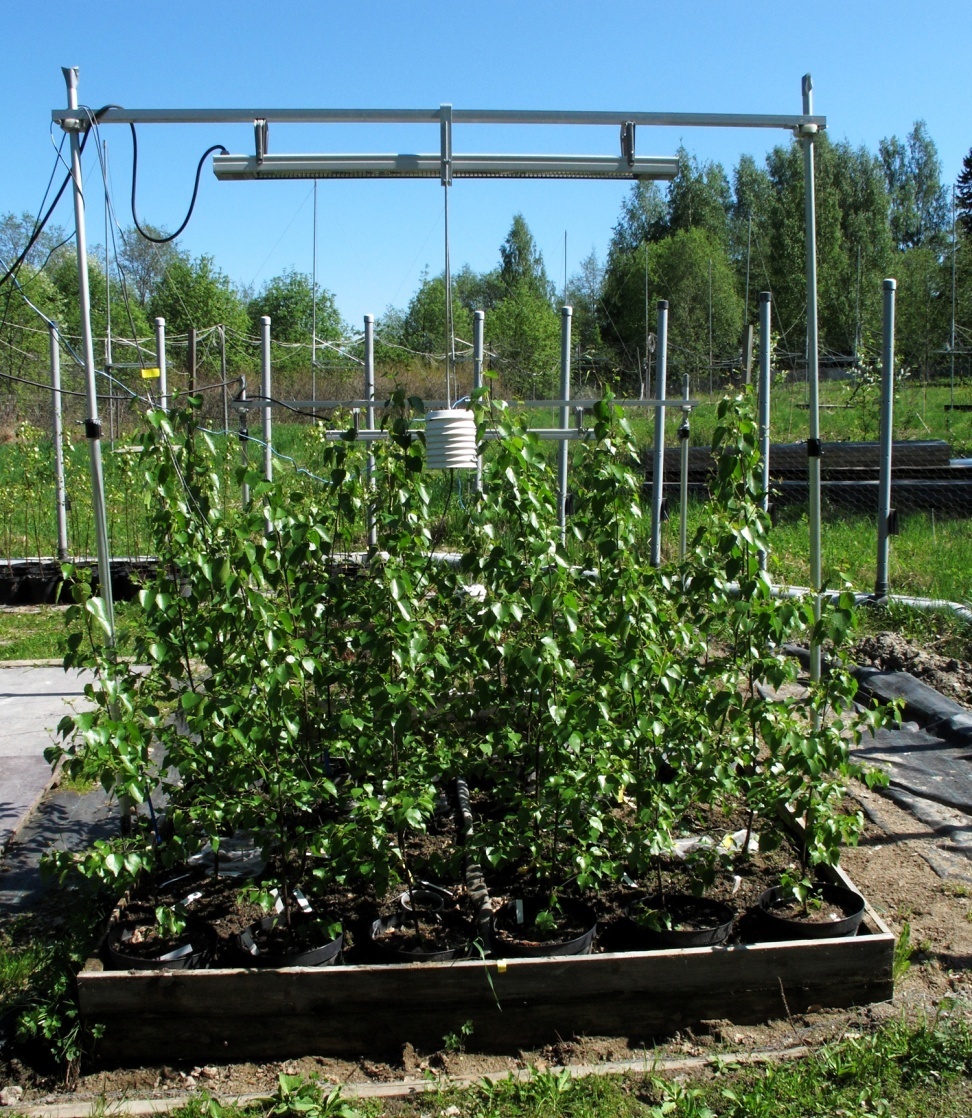
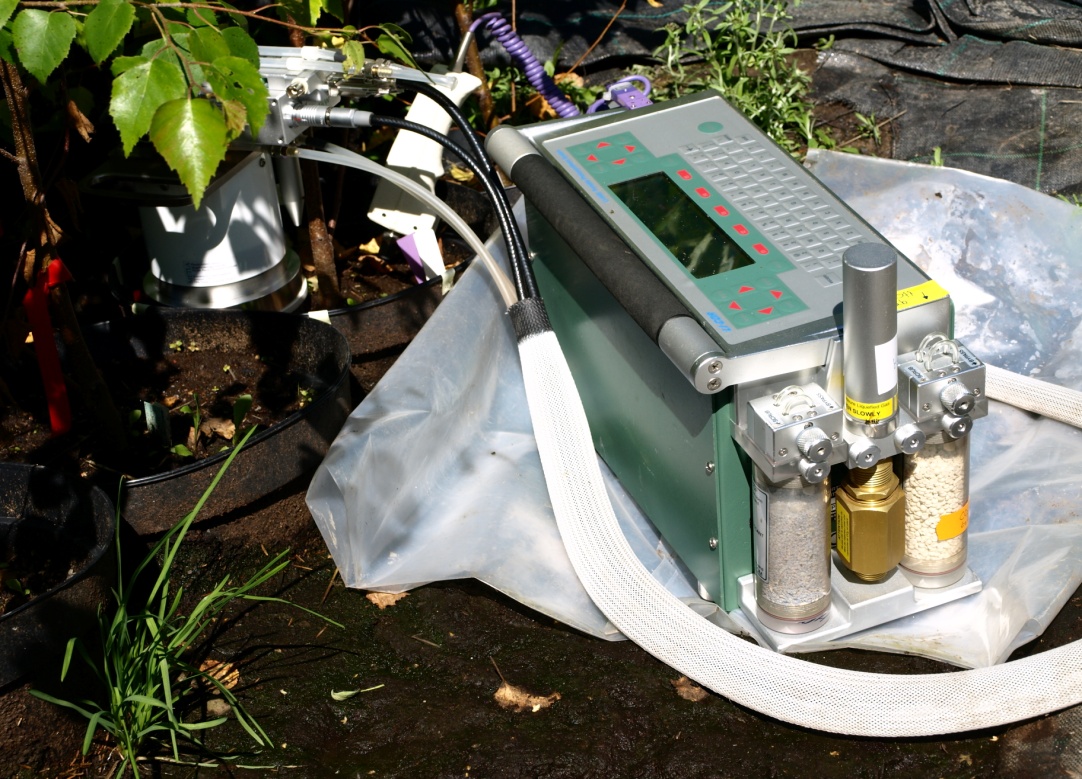
I observed this kind of dynamic resource allocation directly in my field research on silver birch. When I measured how temperature and ozone stress affected carbon allocation in the trees, one of the clear patterns was how environmental pressure shifted the balance between primary growth and secondary chemistry. The trees under stress were investing differently in their chemistry, not just growing more slowly.
The same principle applies to every herb you grow or buy. A lavender plant grown in rich moist soil with minimal stress produces lower essential oil concentrations than one grown in poor dry soil under high light. The stress is not damaging the plant. It is triggering increased investment in defence chemistry. Understanding this changes how you think about where herbs are grown and under what conditions.
Secondary Metabolites You Use Every Day
Most people interact with plant secondary metabolites constantly without realising it.
Coffee and tea contain caffeine and theanine, both secondary metabolites produced as insect deterrents in the plants that make them. The caffeine in your morning coffee evolved to protect coffee seeds from beetles and other seed predators.
Black pepper contains piperine, an alkaloid that evolved as an insect deterrent. The same compound dramatically increases the bioavailability of curcumin from turmeric by inhibiting the enzymes that break curcumin down in the gut.
The smell of fresh herbs in your kitchen, basil, rosemary, thyme, mint, is almost entirely volatile terpenoids released from glandular trichomes in the leaves. Those compounds evolved as herbivore deterrents. We find them pleasant. The caterpillar trying to eat the basil leaf does not.
Red wine contains resveratrol and anthocyanins, phenolic compounds produced by grapevines in response to fungal infection. The compound that has attracted decades of longevity research exists because grapevines needed to defend themselves against Botrytis and other mould pathogens.
The yellow color of turmeric, the blue of cornflowers, the red of poppies, the white of elderflower, all secondary metabolites. The bitterness of coffee, the heat of mustard, the astringency of unripe persimmon, all secondary metabolites. The fragrance of roses, jasmine, and lavender, all secondary metabolites.
Can a Plant Survive Without Secondary Metabolites?
In a highly controlled laboratory environment with no pathogens, no herbivores, no UV stress, and no competing plants, some plants can survive without producing secondary metabolites. In the real world the answer is effectively no.
Secondary metabolite-deficient mutant plants produced in laboratory research are invariably more vulnerable to pathogen attack, herbivory, and environmental stress than their normal counterparts. The compounds are not luxuries. They are the plant’s primary interface with its environment.
This has a practical implication I think about when evaluating both garden plants and herbal supplements. A plant that has never faced real environmental pressure has never been pushed to produce its full secondary metabolite profile. The chemistry we value in medicinal herbs develops under the same conditions that challenge the plant to defend itself.
What This Means for Herbs and Plant-Derived Products
Understanding secondary metabolite biology changes how you evaluate plant quality in a very practical way.
The organic label on a herb tells you about pesticide use. It says nothing about the plant’s secondary metabolite profile, which is what actually determines its aroma, flavor, and medicinal activity. A plant grown organically in rich soil under controlled conditions with minimal stress may have lower secondary metabolite concentrations than a conventionally grown plant that faced real environmental pressure during its development.
The most reliable indicators of secondary metabolite richness in herbs are things most labels never mention: the growing region and its natural stress conditions, the soil biology supporting the plant, the harvest timing relative to the plant’s developmental stage, and whether the plant faced real pathogen and herbivory pressure during growth.
I covered how soil microbiology specifically affects secondary metabolite production in my article on herbal terroir on this site. And I covered how harvest timing affects volatile compound concentrations in my article on herb potency and picking time. Both of those articles build directly on the secondary metabolite biology explained here.
FAQs
What are plant secondary metabolites?
They are compounds plants produce that are not directly involved in growth or reproduction. Unlike primary metabolites such as sugars and amino acids which every plant needs to survive, secondary metabolites serve specific ecological functions: defence against herbivores and pathogens, attraction of pollinators, competition with neighbouring plants, and protection against UV radiation.
What are the three main types of plant secondary metabolites?
Alkaloids, which are nitrogen-containing compounds including caffeine, morphine, and berberine. Terpenoids, the largest class, including essential oils, carotenoids, and resins. And phenolic compounds, including flavonoids, tannins, and anthocyanins. Each class is produced through distinct biosynthetic pathways and serves different ecological functions.
Can a plant survive without secondary metabolites?
In controlled laboratory conditions without pathogens, herbivores, or environmental stress, some plants can function without them. In natural environments the answer is effectively no. Plants lacking secondary metabolites are consistently more vulnerable to pathogen attack, herbivory, and abiotic stress than normal plants.
Why do plants produce toxic chemicals?
Plant toxins evolved as defence against herbivores and pathogens. Alkaloids like nicotine and berberine are toxic to insects and microbes at the concentrations found in plant tissue. The toxicity is not random. It targets the specific threats each plant faces in its natural environment.
What are two secondary metabolites you use in daily life?
Caffeine in coffee and tea is a secondary metabolite produced as an insect deterrent. Menthol in peppermint is a terpenoid produced in glandular trichomes as a herbivore deterrent. Both evolved to protect the plants that make them. Both are now among the most widely consumed plant compounds on Earth.
Why do plants produce such a wide variety of secondary metabolites?
Because they face a wide variety of ecological challenges. Different pathogens, different herbivores, different competitors, different UV environments, different soil chemistry. Each challenge favors different chemical solutions. Over millions of years this has produced an extraordinary diversity of secondary metabolite structures across the plant kingdom.
How do secondary metabolite concentrations change with growing conditions?
Plants regulate secondary metabolite production dynamically in response to environmental signals. Higher pathogen pressure increases alkaloid and phenolic production. Higher UV stress increases flavonoid and anthocyanin production. Drought stress increases essential oil content in many aromatic herbs. This is why growing conditions affect the aroma, potency, and medicinal activity of plant material far more than most labels acknowledge.
What chemicals do plants produce for defence against insects?
Alkaloids including nicotine, caffeine, and berberine are toxic to insects at leaf concentrations. Terpenoids including pyrethrins in chrysanthemum flowers and limonene in citrus peel deter and kill insects through different mechanisms. Phenolic compounds including tannins make plant tissue unpalatable and reduce digestibility. Many plants use combinations of all three classes simultaneously.
Are the chemicals in medicinal herbs the same as the defence compounds?
Yes, in most cases. The curcumin in turmeric, the EGCG in green tea, the rosmarinic acid in rosemary, the berberine in barberry, all evolved primarily as defence chemistry. Their value to humans is a byproduct of their ecological function in the plant. This is why understanding why plants make these compounds tells you something useful about how they work.

