







This article was written by Serge, MSc. Plant Biologist and Environmental Scientist with a BSc in Plant Biology and an MSc in Environmental Biology and Biogeochemistry. My background covers plant biochemistry, botany, and field research in forest and soil ecosystems. I write from real experience, not just literature.
Affiliate disclosure: This site has affiliate links, including Amazon. As an Amazon Associate I earn from qualifying purchases, at no extra cost to you.
The skincare industry runs on two things: genuine science and marketing dressed up as science. Telling the difference is harder than it should be, especially when plant-based products use the same Latin names and compound terminology whether the evidence behind them is solid or thin.
My plant biochemistry studies covered secondary metabolite biosynthesis in detail, including the flavonoid, terpenoid, and polyphenol pathways that produce most of the skin-active compounds in herbal preparations. That gave me a framework for reading a product ingredient list the same way I would read a chemistry paper, looking at which compounds are present, at what concentration, and whether the formulation allows them to reach the target tissue.
This is not dermatological advice. For skin conditions requiring medical attention, consult a dermatologist. What follows is plant chemistry applied to common skin concerns.
How Plant Compounds Interact With Skin
Skin has a layered structure. The outermost layer, the stratum corneum, is a lipid-rich barrier that resists water loss and limits penetration of most water-soluble compounds. Getting a plant compound from a preparation into the deeper dermis where it can interact with skin biology depends on the compound’s chemistry and the formulation it is carried in.
Lipophilic compounds, those with an affinity for fats, penetrate the stratum corneum more readily than water-soluble ones. This is why many of the most skin-active plant compounds are terpenoids and fatty acids rather than the water-soluble polysaccharides and organic acids. It is also why simple water infusions of most herbs have limited penetration compared to oil-based or properly formulated preparations.
Understanding this changed how I approach herbal skincare products. A product listing an impressive plant extract means little without knowing whether the extract is present at a concentration that delivers the active compound, and whether the formulation allows it to penetrate.
Herbs With Documented Skin-Active Compounds
Aloe, Aloe barbadensis
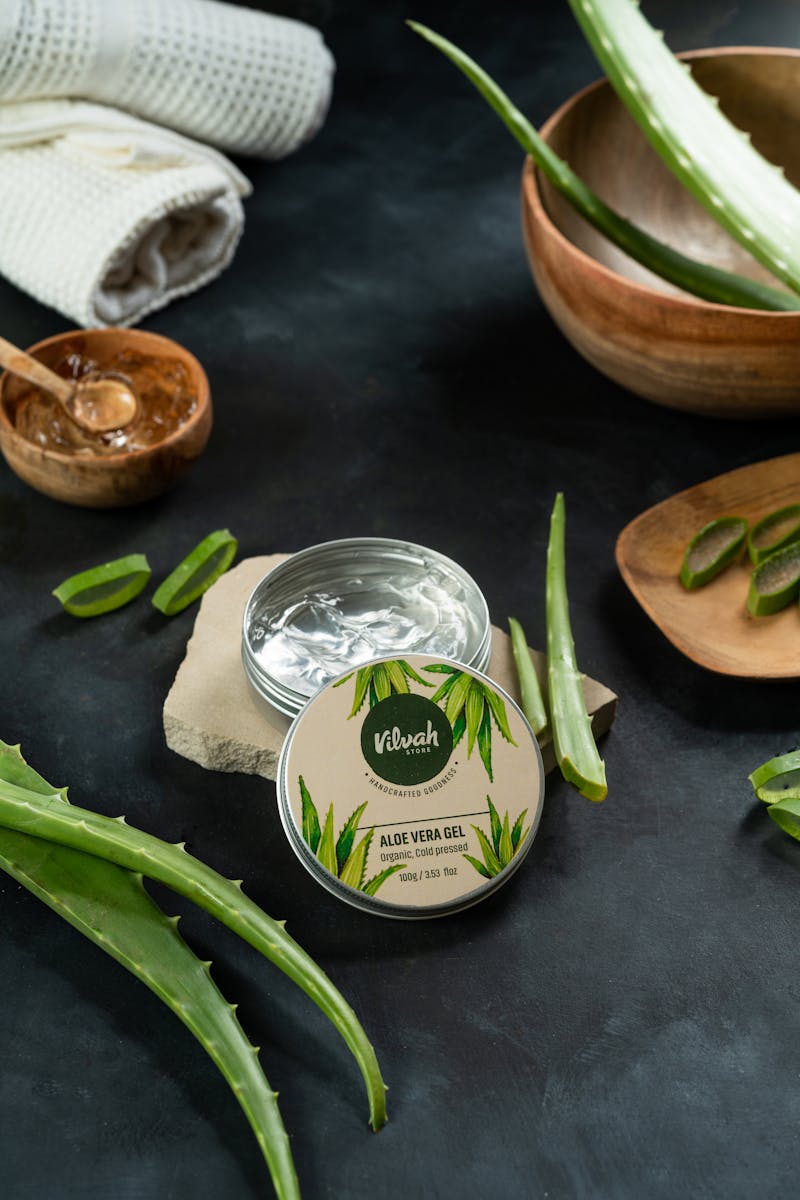
Aloe gel contains polysaccharides, particularly acemannan, that form a hydrating film on the skin surface and support moisture retention. Glycoproteins in the gel have documented anti-inflammatory activity and support tissue repair at the cellular level. The cooling sensation on application comes from the high water content and mild astringency of the gel rather than any single active compound.
Aloe is one of the better-studied topical plant preparations with solid evidence for wound healing support and skin hydration. I keep a pot on the kitchen windowsill. Whether it ends up as tea or on a burn, it earns its space.
Chamomile, Matricaria chamomilla
Alpha-bisabolol is the primary skin-active compound in chamomile. It penetrates the stratum corneum and reduces inflammatory signalling in dermal tissue. Apigenin, a flavonoid also present, has antioxidant activity and mild UV-absorbing properties. Topically, bisabolol works primarily through anti-inflammatory activity rather than the neurological pathways it engages when inhaled.
Calendula, Calendula officinalis
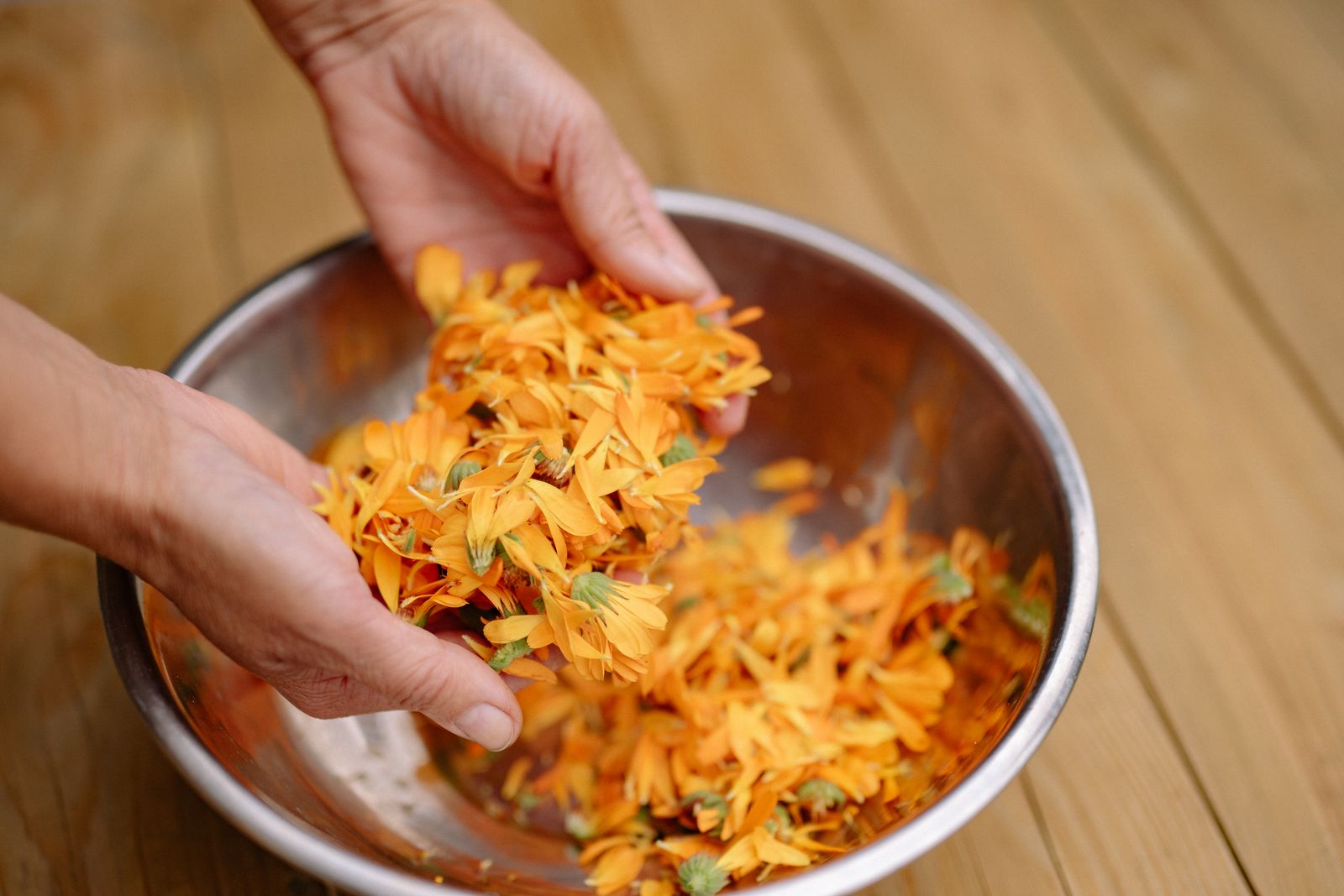
Calendula flowers contain flavonoids and triterpenoids including oleanolic acid glycosides. The triterpenoids specifically support tissue repair and have documented wound-healing activity in several controlled studies. Calendula preparations are among the most evidence-backed topical herbal remedies for skin irritation and minor wounds. This is one I would reach for before most commercial alternatives for minor skin irritation.
Turmeric, Curcuma longa
Curcumin inhibits tyrosinase, the enzyme responsible for melanin synthesis, which explains its traditional use for uneven pigmentation. It also inhibits NF-kB signalling and reduces pro-inflammatory cytokine expression in skin tissue.
Curcumin’s poor water solubility limits skin penetration from simple paste preparations. Formulations using lipid carriers improve penetration significantly and are worth looking for if you want the pigmentation benefits rather than just the colour.
Green Tea, Camellia sinensis
EGCG, the primary catechin in green tea, is a potent antioxidant that neutralises reactive oxygen species in skin tissue. It also has documented photoprotective activity, reducing UV-induced oxidative damage when applied topically. The polyphenol content of green tea makes it one of the most studied plant extracts for skin antioxidant applications. I drink it daily, but its topical chemistry is genuinely separate from its oral chemistry.
Herbs for Dry Skin
Marshmallow Root, Althaea officinalis
The mucilage polysaccharides in marshmallow root form a physical protective layer on skin surface, reducing transepidermal water loss and providing temporary relief from dryness. This is a physical rather than biochemical mechanism. The polysaccharides act as a barrier rather than interacting with skin biology directly, which is worth knowing because the effect is immediate but not lasting without reapplication.
Evening Primrose Oil, Oenothera biennis
Evening primrose oil is rich in gamma-linolenic acid, an omega-6 fatty acid that supports skin barrier lipid composition. GLA is incorporated into skin cell membranes and supports barrier function. There is moderate clinical evidence for its use in dry and sensitive skin conditions. This is one of the cases where the lipophilic chemistry works in the preparation’s favour since the fatty acid penetrates the stratum corneum readily.
Neem, Azadirachta indica
Neem leaves and seed oil contain limonoids including nimbin and nimbidin with documented antibacterial and anti-inflammatory activity. These compounds inhibit bacterial growth on skin surface and reduce inflammatory responses. Neem preparations are used traditionally for acne-prone and inflamed skin. The smell is distinctive and not for everyone, but the chemistry behind the anti-inflammatory claims is real.
Herbs for Skin Brightening
Licorice Root, Glycyrrhiza glabra
Glabridin, the primary isoflavan in licorice root extract, inhibits tyrosinase activity similarly to curcumin, reducing melanin synthesis and supporting more even skin tone. It is one of the more studied natural tyrosinase inhibitors with several controlled studies showing measurable effects on hyperpigmentation.
Sandalwood, Santalum album
Alpha-santalol, the primary sesquiterpene in sandalwood essential oil, has anti-inflammatory and mild vasodilatory activity in skin tissue. Improved microcirculation contributes to a more even skin tone appearance. Sandalwood is a slow-growing tree under significant conservation pressure. Sustainably sourced preparations are worth seeking, and the certification is worth checking since this is a category where greenwash is common.
Rose, Rosa damascena
Rose petals and rose water contain anthocyanins, flavonols, and organic acids. The organic acids provide mild exfoliating activity. Rose water has documented skin hydrating and mild anti-inflammatory properties from its flavonoid content. It is also one of the gentler options in this list, which makes it a reasonable starting point for sensitive skin.
What Makes a Quality Herbal Skin Preparation
Standardised active compound content where possible, appropriate preservation to prevent microbial contamination, and a suitable carrier formulation that allows active compounds to penetrate the skin barrier. These three criteria filter out a large proportion of the herbal skincare market, which relies heavily on the presence of a named plant extract regardless of concentration or formulation quality.
A water infusion of chamomile in a product is not the same as a standardised bisabolol preparation at a tested concentration in a lipid carrier. Both can be labelled chamomile extract. The chemistry tells you which one is likely to do something useful.
Herb and Compound Reference
Skin Concern / Herb / Active Compounds / Mechanism
Dryness: Althaea officinalis, Oenothera biennis / Mucilage polysaccharides, GLA / Barrier protection, lipid support
Inflammation: Azadirachta indica, Matricaria chamomilla / Limonoids, bisabolol / Anti-inflammatory enzyme inhibition
Antioxidant protection: Camellia sinensis, Calendula officinalis / EGCG, flavonoids / ROS neutralisation, UV protection
Pigmentation: Glycyrrhiza glabra, Curcuma longa / Glabridin, curcumin / Tyrosinase inhibition
Tissue repair: Calendula officinalis, Aloe barbadensis / Triterpenoids, glycoproteins / Wound healing, cellular repair support
Frequently Asked Questions
Are these herbs safe for sensitive skin?
Most are well tolerated but individual reactions vary. Patch testing on a small area before full application is sensible for any topical preparation. Neem and turmeric are the most likely to cause reactions in sensitive individuals due to their potency.
How long before effects are noticeable?
Hydration effects from aloe and marshmallow root are immediate. Anti-inflammatory effects from chamomile and calendula develop over days of consistent use. Pigmentation changes from glabridin and curcumin require weeks of consistent application.
Can herbal preparations replace medical skincare?
For general skin maintenance and mild concerns, plant-based preparations have genuine supporting evidence. For diagnosed skin conditions including eczema, psoriasis, acne requiring treatment, or suspicious skin changes, medical assessment is appropriate.
What makes a quality herbal skin preparation?
Standardised active compound content, appropriate preservation, and a carrier formulation that allows penetration of the stratum corneum. Simple water infusions have limited shelf life and variable potency compared to properly formulated preparations.
Does curcumin work topically for pigmentation?
Yes, through tyrosinase inhibition, but the formulation matters significantly. Curcumin is poorly water-soluble and penetrates poorly from simple paste applications. Lipid-based carrier formulations improve penetration and efficacy considerably.
Is rose water just marketing?
Not entirely. Rose water contains anthocyanins, flavonols, and organic acids with documented hydrating and mild anti-inflammatory properties. It is one of the gentler options in herbal skincare with real chemistry behind it, though its effects are mild compared to more potent preparations like calendula or chamomile.

