









This article was written and reviewed by Serge, MSc. With a solid background in Plant Biology, Environmental Biology, and Biogeochemistry, I focus on the science and logic behind the plants we grow, ecosystems we build, and experiments we conduct. My goal is to make research reliable and practical for readers.

These days, more people are pausing to think about how small choices, what we eat, what we buy, even what we wear, affect more than just themselves. They ripple out, touching animals, the planet, and even long-term health.
For some, going vegan feels like a natural next step. It’s not only about swapping foods on a plate; it’s more about choosing to live with a bit more care and compassion.
Sure, the change can feel awkward at first, but with the right kind of support it starts to make sense, and eventually, it feels rewarding in ways you don’t expect.
Click here now to use the Step-By-Step Video Guide and start a vegan diet!
Understanding Veganism.
Veganism isn’t complicated at its core, it’s just choosing not to use stuff that comes from animals. Food is the obvious part, sure, but it also stretches out into clothes, cosmetics, cleaning products, that sort of thing. Basically, it’s about trying to cause less harm and live in a way that feels lighter on the world.
People get into it for all sorts of reasons. Some do it because their body thanks them, better digestion, maybe lower cholesterol, or just more energy in the day. Others can’t ignore the environmental side anymore: farming animals takes up huge chunks of land and water, and it pollutes too.
And then, of course, there’s the ethical side. A lot of folks just don’t want their money supporting industries where animals suffer.
So veganism ends up being less about what you lose and more about what you gain, new foods to try, values that line up with your actions, and the feeling that your choices ripple out in a good way.

Planning a Balanced Vegan Diet
One of the first things people wonder about with a plant-based diet is health. “Will I get enough nutrients?” is a pretty common question, and the good news is yes, you can. It just takes a bit of planning, the same way any healthy diet does.
A few nutrients need a little extra attention:
Protein: You’ll get it from beans, lentils, tofu, tempeh, nuts, seeds, and whole grains. Basically, mix them up and you’re covered.
Vitamin B12: This one is trickier because plants don’t naturally make it. Most vegans take a supplement or get it from fortified foods.
Iron: Found in beans, chickpeas, spinach, and quinoa. Pairing those foods with something high in vitamin C (like bell peppers or oranges) makes it easier for your body to absorb.
Calcium: No need for dairy here, fortified plant milks, almonds, broccoli, and leafy greens work fine.
Omega-3s: Think chia seeds, flaxseeds, hemp seeds, and walnuts. Small amounts go a long way.
Vitamin D: Sunlight gives the best boost, but fortified foods or supplements can fill the gap.
Once you get used to it, meeting these needs is simple. A little planning keeps your energy steady and your health on track with a vegan diet.
Creating Sustainable Habits
Living vegan isn’t just a food swap, it touches daily routines too, which can feel weird at first. Old habits stick. But you don’t have to flip everything overnight. For some, it’s easier to swap milk in coffee first, then tackle cheese later. Small wins build confidence.
Meal planning helps, though not in a rigid “write every bite down” way. Just having a few easy go-to recipes stops you from grabbing whatever’s around. And experimenting with flavors (Indian curries, Mexican beans, a simple stir-fry) keeps meals fun instead of repetitive.
Shopping takes a bit more attention, labels matter. At first it feels like homework, later it becomes second nature. And support makes a difference, too. Online groups, local meetups, or even just a friend who’s curious can keep you motivated.
The change works better if you ease into it, test different things, and let it blend into your daily life instead of pushing too hard.
Click here now to use the Step-By-Step Video Guide and start a vegan diet!
Core Overview of Vegan Living
| Aspect | Vegan Approach | Practical Tips & Benefits |
|---|---|---|
| Food Choices | Eliminates meat, dairy, eggs, and honey | Focus on legumes, grains, vegetables, nuts, seeds; explore plant-based alternatives |
| Health Considerations | Balanced nutrition essential | Include protein-rich foods, vitamin B12, iron, calcium, omega-3s; monitor energy levels |
| Environmental Impact | Reduced carbon footprint and resource usage | Plant-based diets conserve water, reduce pollution, and support sustainability |
| Ethical Perspective | Avoids supporting animal exploitation | Choose cruelty-free clothing, cosmetics, and household products |
| Meal Planning | Requires planning for nutrition and variety | Prepare simple meals in advance, try new recipes, maintain hydration |
| Lifestyle Benefits | Promotes well-being, mindfulness, and compassion | Increased energy, alignment with values, positive impact on animals and the environment |
This table serves as a concise reference to understand the practical, ethical, and environmental aspects of adopting vegan living.
Meal Planning Tips
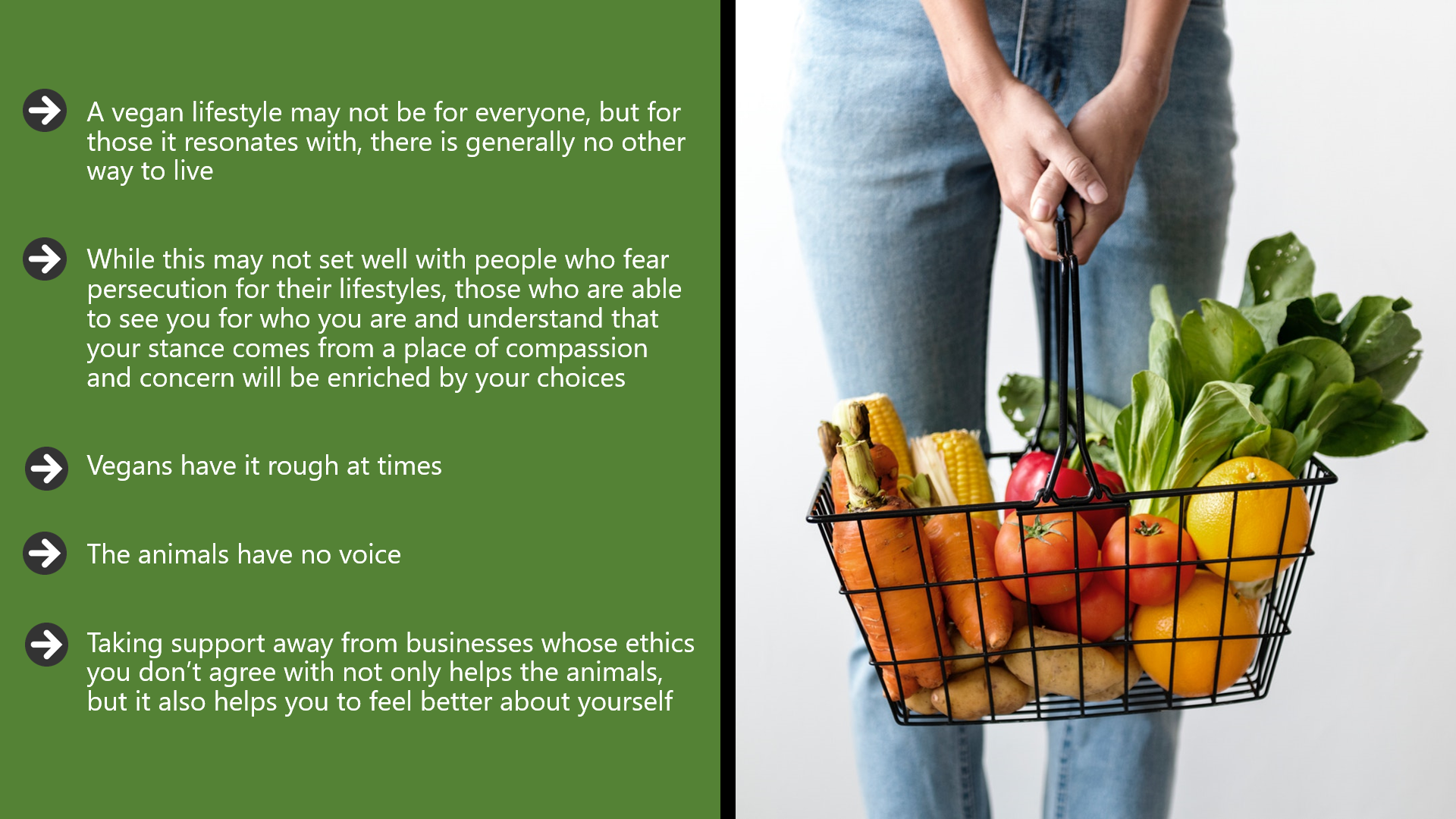
Planning ahead can really take the stress out of eating plant-based, but you don’t need a strict schedule or perfect system. One trick that helps is cooking a big batch of rice, beans, or roasted veggies, they last a few days, and you don’t have to slave over the stove all the time.
Another is keeping a few basics on hand, like canned beans, frozen broccoli or peas, and a bag of oats. They’re simple, cheap, and make throwing together meals way easier.
Mix it up: Stir-fries, soups, hearty salads, or grain bowls keep things from getting boring.
Keep snacks handy: A handful of nuts, fruit, hummus with crackers, or even roasted chickpeas can stop random cravings.
Don’t forget drinks: Water’s obvious, but herbal teas or water with a squeeze of lemon make staying hydrated less of a chore.
With habits like these, plant-based eating feels less like effort and more like a routine you actually enjoy.
Integrating Ethics and Sustainability
Veganism isn’t just about what’s on your plate, it seeps into the stuff you use every day. Clothes, soaps, cleaning products… it all counts. You don’t have to switch everything at once, honestly. Even small swaps here and there can make a difference, and sometimes that’s enough to start feeling like your actions match your values.
A few things that help (and won’t feel like a chore):
-
Waste less — grab a reusable bag, keep a water bottle nearby, or save containers for leftovers. It sounds tiny, but it really adds up.
-
Support brands that care — you know, the ones that actually think about animals or the environment and aren’t just putting out fancy ads.
-
Share casually — mention to a friend why you switched that shampoo, post a tip online, or just talk about what works for you.
It doesn’t all happen overnight, and honestly, some days it barely feels like you’re making a difference. But over time, these little choices stack up in a way you can actually see, and that’s what counts.

Frequently Asked Questions
1. Will I get enough protein?
Yes and honestly, it’s easier than many people think. Eating a mix of beans, lentils, grains, nuts, and seeds throughout the day usually covers all your protein needs. You don’t have to obsess over every gram.
2. Can I still enjoy desserts?
Totally! There are lots of plant-based sweets. Think fruit-based treats, dairy-free baked goodies, or chocolate alternatives. Using natural sweeteners like maple syrup or dates can make things interesting, too.
3. How do I handle social situations?
It can feel tricky at first. A few tricks: peek at restaurant menus ahead of time, let your host know what you eat, or bring a dish you like. More and more events now have plant-based options anyway.
4. Is veganism expensive?
Not really. Beans, rice, seasonal veggies and fruits are cheap, and you can mix them any way you like. Fancy vegan products are optional.
5. Will I feel weak or tired?
If you plan a bit, you’ll get enough calories and nutrients to stay energized. Most people actually report feeling more lively and healthier after switching.
6. How long does it take to adapt?
Everyone’s different. Some get used to it quickly, others take a few weeks. Small steps make the change easier.
Conclusion
Vegan living… it’s really about caring. For yourself, for animals, and, yeah, for the planet too. And honestly, it’s not just about the big stuff. Even the small things count.
Planning your meals, trying a few new plant-based foods, picking products that feel a bit kinder, all that adds up. Some days it feels like nothing’s changing, but later you realize it’s all becoming routine.
Every little choice matters, what you eat, what you buy, even tiny swaps here and there. This Step-By-Step Video Guide got tips, recipes, and advice to make going vegan less confusing and, well, actually doable.
Click here now to use the Step-By-Step Video Guide and start a vegan diet!
