
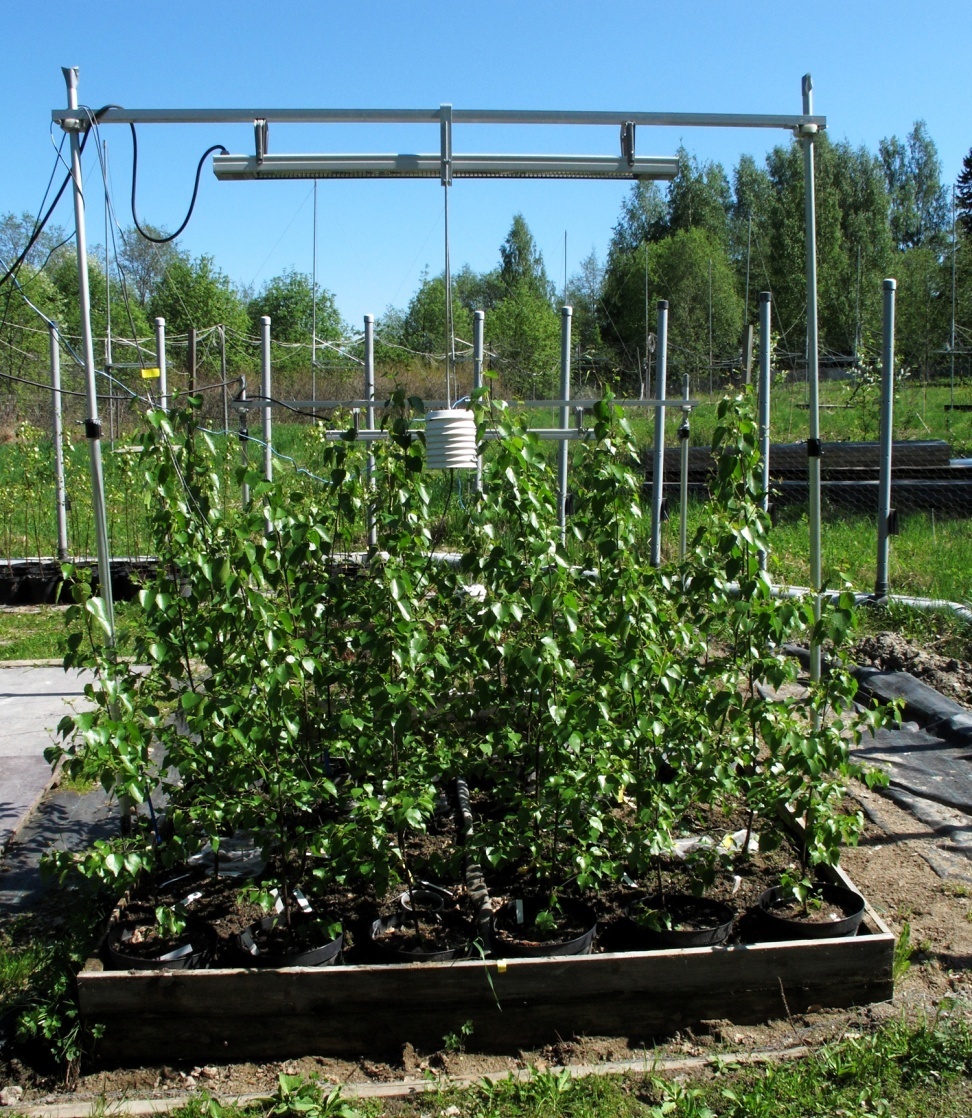













This article was written by Serge, MSc. Plant Biologist and Environmental Scientist with a BSc in Plant Biology and an MSc in Environmental Biology and Biogeochemistry. My background covers plant biochemistry, botany, and field research in forest and soil ecosystems. I write from real experience, not just literature.
Affiliate disclosure: This site has affiliate links, including Amazon. As an Amazon Associate I earn from qualifying purchases, at no extra cost to you.
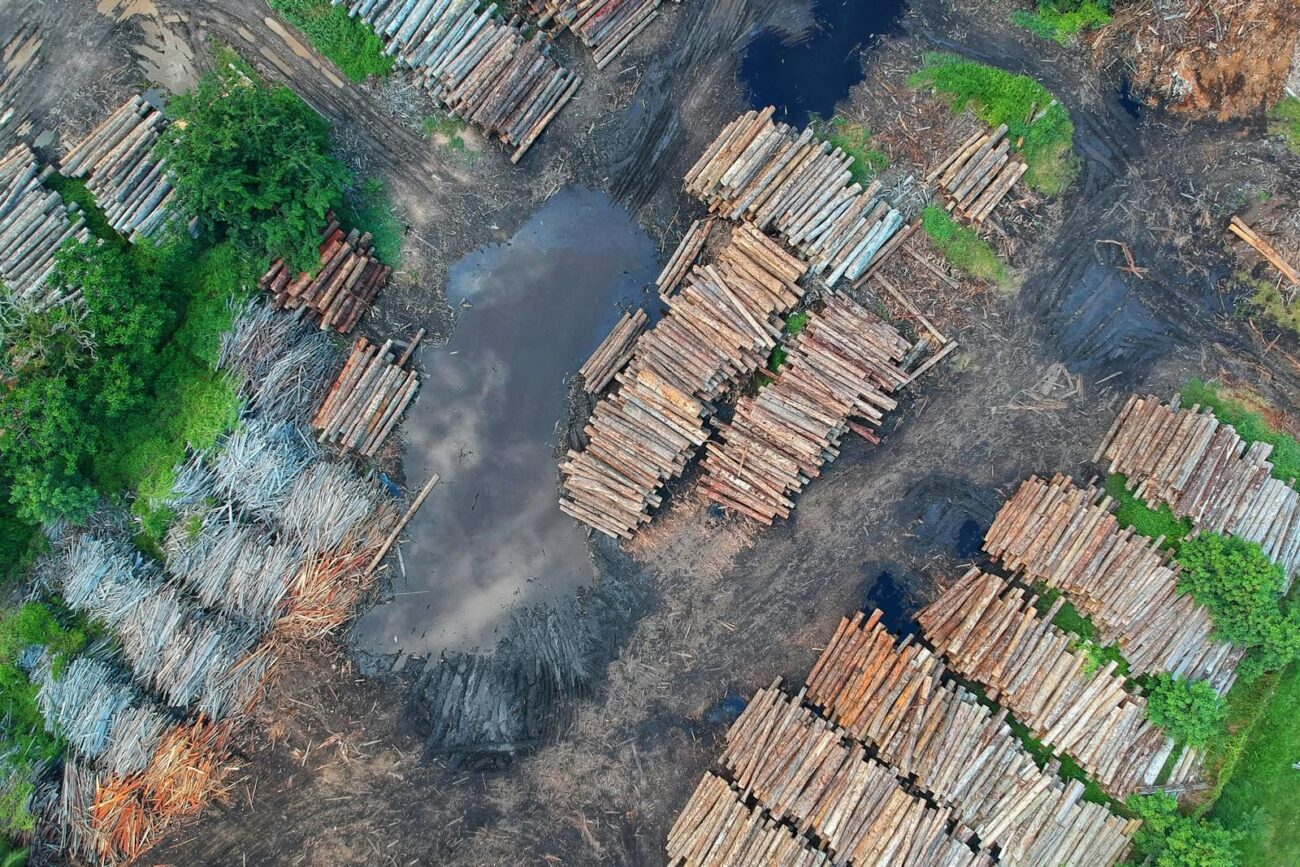
The Amazon rainforest generates its own rain. Not metaphorically, literally. Water evaporated and transpired by the forest forms what researchers call flying rivers, atmospheric moisture flows that travel thousands of kilometres and deliver rainfall to regions far beyond the forest itself. Remove enough of the forest and those flying rivers weaken. Rainfall patterns shift not just locally but continentally.
I studied the mechanisms behind this kind of atmosphere-biosphere water exchange during my postgraduate training in atmosphere-biosphere interactions. The physics of how forests drive regional water cycles is genuinely extraordinary, and understanding it changes how you think about land use decisions that might seem purely local.
What Forests Actually Do to Water
A mature forest is not a passive landscape feature. It is an active participant in the regional water cycle through three distinct mechanisms that most discussions of deforestation underemphasise.
Transpiration at scale
Individual trees transpire water through their stomata as a byproduct of photosynthesis. A single large tree can transpire several hundred litres of water per day during the growing season. Across a dense forest canopy, this adds up to water fluxes that rival large river systems in volume.
That transpired water does not disappear. It enters the atmosphere as water vapour, rises, cools, condenses, and falls as precipitation somewhere downwind. Forests are essentially pumping groundwater into the atmosphere and redistributing it as rainfall across landscapes. This process, sometimes called the biotic pump, means that intact forests actively maintain regional rainfall patterns rather than simply responding to them.
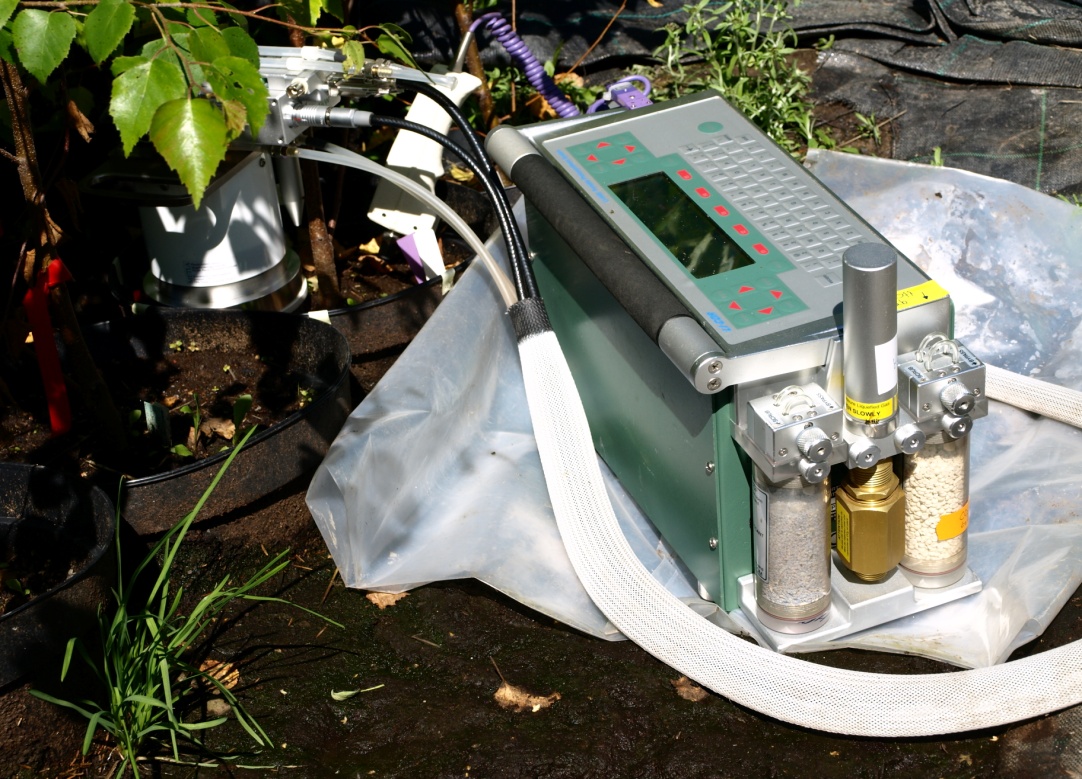
In my atmosphere-biosphere exchange training I studied how eddy covariance systems measure these water vapour fluxes directly. The data shows that forested landscapes have dramatically higher evapotranspiration rates than agricultural or degraded land, and that this difference has measurable effects on atmospheric moisture content over regional scales.
Interception and infiltration
Forest canopies intercept rainfall before it reaches the ground. Some evaporates directly from leaf surfaces. The rest drips or flows down stems to the forest floor, where it enters soil rather than running off the surface.
Forest soil structure, maintained by root networks and soil organisms, has high infiltration capacity. Water enters the soil profile, recharges groundwater, and moves slowly through the system rather than rushing across the surface. This slow movement regulates stream flow, maintains base flow in rivers during dry periods, and reduces flood peaks during heavy rainfall.
When forest is removed, infiltration capacity drops rapidly. The soil surface compacts without root disturbance and organic matter input. Rainfall that previously entered the soil now runs off the surface, carrying topsoil with it.
Albedo and energy balance
Forests have lower albedo, they absorb more solar radiation, than cleared land. This absorbed energy drives evapotranspiration, which cools the land surface and transfers energy to the atmosphere as latent heat rather than sensible heat. Cleared land heats up more, drives stronger convective air movements, and disrupts the atmospheric circulation patterns that forests help stabilise.
What the Data Shows About Deforestation and Rainfall
The Amazon is the most studied case and the numbers are striking. Research consistently shows that deforested areas in the Amazon receive measurably less rainfall than intact forest areas, with some studies showing reductions of 20 to 30 percent in seasonal rainfall over heavily deforested regions.
The mechanism is the biotic pump operating in reverse. As forest cover decreases, transpiration decreases, atmospheric moisture decreases, and rainfall decreases further. This creates a feedback where reduced rainfall makes reforestation harder, which reduces rainfall further.
Modelling studies suggest the Amazon has a tipping point somewhere around 20 to 25 percent total deforestation where the remaining forest can no longer maintain sufficient atmospheric moisture to sustain itself. Current deforestation rates in parts of the Amazon are approaching that threshold.
Boreal forests, the type most relevant to the environment where I conducted my field research, show similar but less dramatic patterns. Boreal forest transpiration contributes significantly to summer rainfall in continental interiors. Large-scale boreal forest loss would reduce this contribution and increase the continentality of inland climate, making summers drier and more extreme.
Soil Erosion and Water Quality
Beyond rainfall, deforestation fundamentally changes how water moves through the landscape in ways that damage water quality downstream.
In my Biogeochemistry training I studied how soil organic matter and structure regulate water movement. Intact forest soil is structured, porous, and biologically active. It functions as a filter, absorbing water, trapping sediment, and transforming nutrients as water passes through it.
Cleared soil compacts rapidly under rainfall impact. The biological community that maintains soil structure is disrupted. Infiltration drops and surface runoff increases. This runoff carries sediment, nutrients, and any agricultural chemicals applied to the cleared land directly into waterways.
Sedimentation increases turbidity, reduces light penetration in aquatic systems, smothers spawning gravels, and degrades aquatic habitat. The nutrient load, particularly nitrate and phosphate from agricultural land replacing forest, drives eutrophication in downstream water bodies. Rivers and lakes receiving runoff from deforested catchments consistently show poorer water quality than those in forested catchments.
Groundwater and Long-Term Water Security
The groundwater recharge function of forests is one of the least visible but most practically important consequences of deforestation.
Forest soil acts as a giant sponge, slowing water movement and allowing it to percolate into aquifers that supply drinking water and irrigation for millions of people. In many regions, the aquifers underlying agricultural areas were recharged by forests that no longer exist. They are being depleted faster than they are being replenished.
Reforestation of catchments above water supply reservoirs is one of the most cost-effective investments in long-term water security available. Cities in South America, Africa, and Asia that have invested in watershed forest protection consistently find it cheaper than equivalent engineered water treatment infrastructure.
Can Reforestation Fix It
Partially and slowly. Reforestation restores transpiration and infiltration functions as trees grow and root systems develop. Water quality improvements in streams can be measured within years of reforestation. Rainfall pattern recovery operates over decades to centuries as forest cover reaches the scale needed to meaningfully influence regional atmospheric moisture.
The asymmetry is the same as with peatland carbon. Deforestation effects are rapid. Recovery is slow. A forest cleared in a decade takes a century to restore equivalent ecosystem function, and some functions, particularly soil carbon and biodiversity, may take much longer.
This is not an argument against reforestation. It is an argument for prioritising prevention of deforestation over relying on reforestation as a remedy.
FAQs
How does deforestation reduce rainfall?
Through reduction of transpiration, the process by which forests pump groundwater into the atmosphere as water vapour which then falls as precipitation downwind. Large-scale deforestation reduces atmospheric moisture content over regional scales, measurably reducing rainfall in affected areas.
What is the biotic pump?
The mechanism by which forests actively drive atmospheric moisture transport through transpiration. Forests evapotranspire water that enters the atmosphere, travels downwind, and falls as rainfall. Intact large forest systems like the Amazon maintain regional rainfall patterns through this mechanism.
Does deforestation cause flooding?
Yes, through two mechanisms. Removal of forest canopy interception means more water reaches the ground during rainfall events. Compaction of cleared soil reduces infiltration, increasing surface runoff. Both increase flood peaks in rivers draining deforested catchments.
How does deforestation affect drinking water?
By reducing groundwater recharge as infiltration capacity drops in cleared land, and by degrading water quality through increased sediment and nutrient runoff into water supply catchments. Many cities dependent on reservoir-based water supplies have invested in upstream watershed forest protection specifically to maintain water quality and quantity.
Can reforestation restore water cycles?
Partially and over long timescales. Water quality improvements are measurable within years. Full restoration of transpiration and rainfall patterns requires forest at landscape scale and takes decades. Prevention of deforestation is far more effective than reforestation for maintaining water cycle function.
Why are tropical forests more important for water cycles than temperate forests?
Because of scale and intensity. Tropical forests have higher year-round transpiration rates due to continuously warm temperatures and high solar radiation. The Amazon alone transpires an estimated 20 billion tonnes of water per day during the wet season. Temperate and boreal forests have important regional water cycle roles but operate at lower intensity due to seasonal temperature constraints.
Related Articles:
Why plants produce secondary metabolites

