






This article was written by Serge, MSc. Plant Biologist and Environmental Scientist with a BSc in Plant Biology and an MSc in Environmental Biology and Biogeochemistry. My background covers plant biochemistry, botany, and field research in forest and soil ecosystems. I write from real experience, not just literature.
Affiliate disclosure: This site has affiliate links, including Amazon. As an Amazon Associate I earn from qualifying purchases, at no extra cost to you.
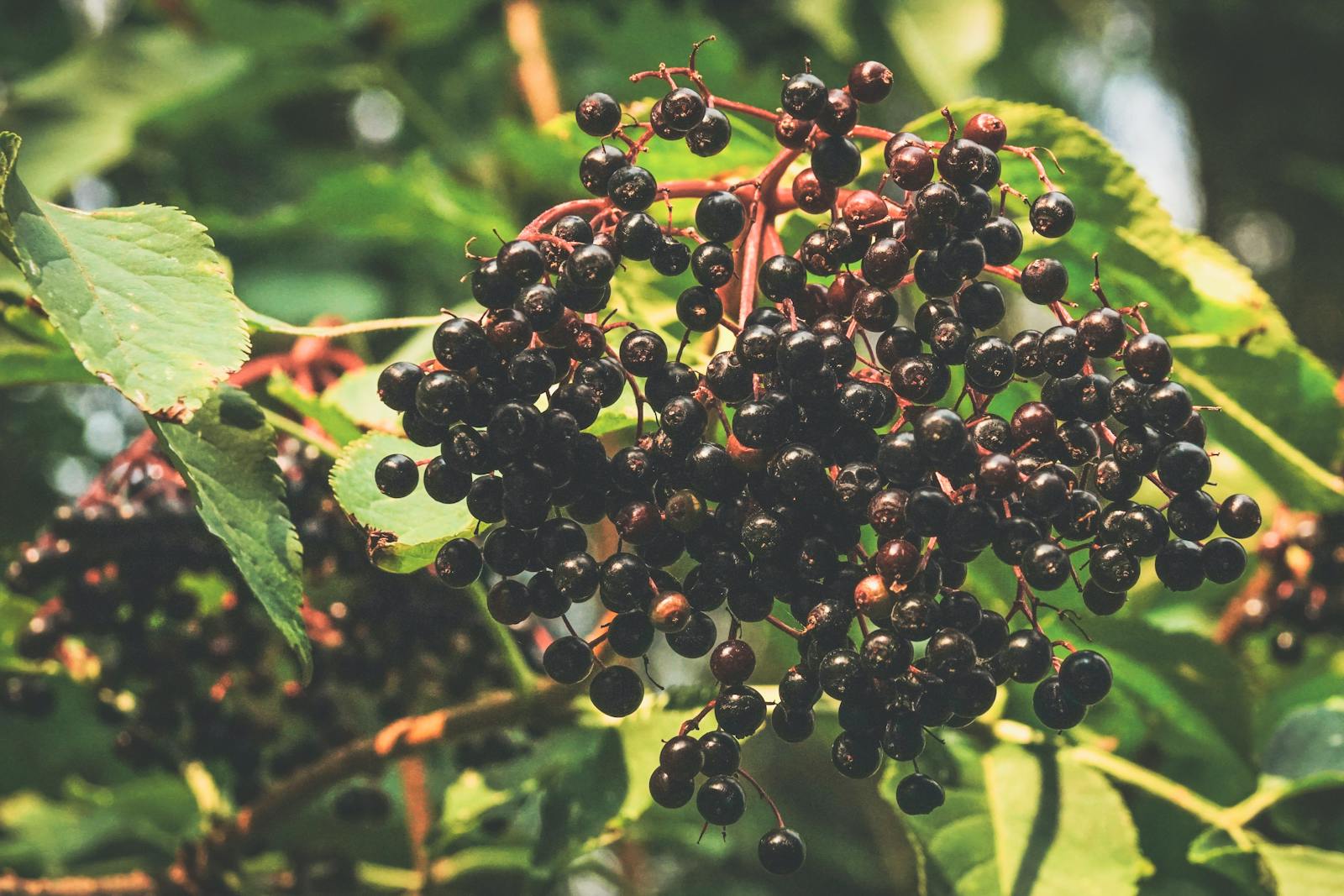
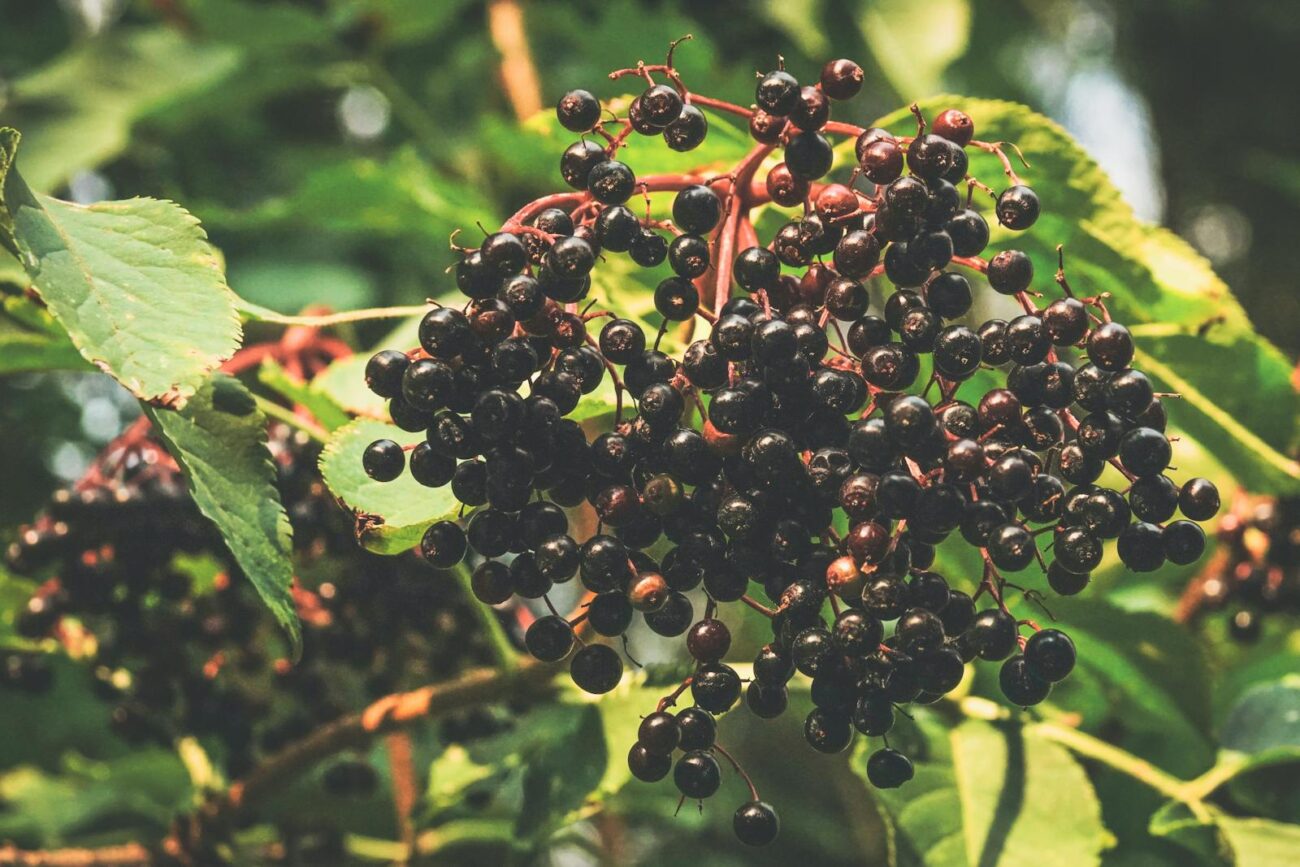
Elderberry grows everywhere in temperate Europe. Hedgerows, roadsides, woodland edges. It is a common plant that most people walk past without thinking twice.
I did too until I started looking at the chemistry behind those dark purple berries. There is something interesting happening there that most elderberry articles miss completely. And once you understand it the immune function research starts making a lot more sense.
First Thing: Raw Elderberries Will Make You Sick
Get this out of the way early because it matters.
Raw elderberries contain a compound called sambunigrin. It is a cyanogenic glycoside. When your body metabolises it, it releases hydrogen cyanide.
A handful of raw berries probably will not kill you. But they will make you seriously nauseous and you will regret it.
Cooking destroys sambunigrin completely. Properly made elderberry syrup, jam, juice, or commercially processed extracts are all safe. The heat takes care of the problem.
The leaves, bark, and roots have even higher concentrations. Leave those alone entirely.
Not being overly cautious here. Just real plant chemistry worth knowing before you do anything with fresh elderberries.
Why the Plant Makes Dark Purple Berries
The dark colour comes from compounds called anthocyanins. Specifically cyanidin-3-glucoside and cyanidin-3-sambubioside. These are flavonoid compounds produced through the phenylpropanoid pathway, something my plant biochemistry training covered in detail.
Here is what I find interesting about it ecologically.
When elderberries ripen, birds see that dark purple colour as a signal. Ripe fruit. Good food. They eat the berries and fly off, dispersing the seeds somewhere else. The plant evolved that deep colour specifically to attract birds as seed dispersal partners.
Earlier in the season those same anthocyanin compounds in leaves absorb UV radiation and deter insects from feeding.
Same compounds. Different jobs at different times. I keep noticing this pattern across medicinal plants and it always connects back to why the plant makes these compounds in the first place. Not for us. For its own survival.
What These Compounds Do When You Take Them
This is where most elderberry articles either overclaim or dismiss the evidence. I think the reality is more interesting than either position.
Elderberry anthocyanins interact with a protein called haemagglutinin on the surface of influenza viruses. Haemagglutinin is what the virus uses to attach to your cells. When anthocyanin compounds bind to it, the virus has a harder time getting inside.
Elderberry extracts also increase production of certain cytokines in immune cells. Cytokines are signalling molecules that coordinate immune responses. More cytokine activity means faster immune response to active infection.
Here is where I want to be careful though.
More immune activity sounds straightforwardly good. But in people with autoimmune conditions, where the immune system is already dysregulated, additional stimulation is not always desirable. My ecotoxicology training made it very clear that the same compound can help in one context and cause problems in another. Dose and physiological context matter enormously.
Does the Evidence Actually Support It
Multiple randomised controlled trials have looked at elderberry for colds and flu. I am not citing specific papers here without linking to them properly. But the pattern across the better designed trials is consistent enough that I take it seriously.
Elderberry reduces cold and flu duration. The effect is real, not marginal. Several days difference rather than hours. And the evidence is stronger for treating an infection you already have than for daily prevention.
That consistency puts elderberry in a different category from many herbal supplements where I find the evidence thin or all over the place. It genuinely earns its reputation.
Gummies vs Liquid Extracts
Quick practical point.
Gummy production involves heat, sugar, and binding agents that reduce anthocyanin content. A gummy might taste good and be convenient. But it typically delivers lower anthocyanin concentrations than a liquid extract or capsule.
If you want elderberry for the mechanisms above, look for standardised extracts that specify anthocyanin content on the label. Products that do not list standardised anthocyanin content are hard to evaluate because you genuinely do not know what you are getting.
Sambucus nigra is the species with the most research behind it. Stick with that.
Who Should Be Careful
People with autoimmune conditions. The cytokine stimulating mechanism is not ideal when immune activity is already dysregulated. Hashimoto’s, lupus, rheumatoid arthritis, any autoimmune diagnosis. Talk to your doctor before taking elderberry.
People on immunosuppressant medications. Same reason.
Pregnant women. Not enough safety data to say it is fine. Better to avoid it during pregnancy as a precaution.
FAQs
How does elderberry help with colds and flu?
Anthocyanin compounds bind to haemagglutinin on viral surfaces making it harder for viruses to enter your cells. Elderberry also increases cytokine production speeding up immune response to active infection. Multiple trials show consistent reductions in cold and flu duration.
Are elderberries poisonous?
Raw ones can make you seriously sick through cyanogenic glycoside activity. Cooking destroys the problem compound completely. Properly processed products are safe. Avoid the leaves, bark, and roots entirely.
Should I take elderberry every day?
The evidence is stronger for treating active infection than for daily prevention. Cycling makes more sense than continuous daily use based on the mechanisms involved.
Which elderberry is best?
Sambucus nigra with standardised anthocyanin content in liquid extract or capsule form. Gummies generally deliver lower active compound concentrations.
Who should avoid elderberry?
People with autoimmune conditions, those on immunosuppressants, and pregnant women should check with their healthcare provider first.
Does elderberry cause cytokine storms?
At normal doses in healthy people the evidence does not support this. The theoretical concern exists because elderberry does stimulate cytokine production. People with autoimmune conditions should be more cautious.

