












This article was written by Serge, MSc. Plant Biologist and Environmental Scientist with a BSc in Plant Biology and an MSc in Environmental Biology and Biogeochemistry. My background covers plant biochemistry, botany, and field research in forest and soil ecosystems. I write from real experience, not just literature.
Affiliate disclosure: This site has affiliate links, including Amazon. As an Amazon Associate I earn from qualifying purchases, at no extra cost to you.
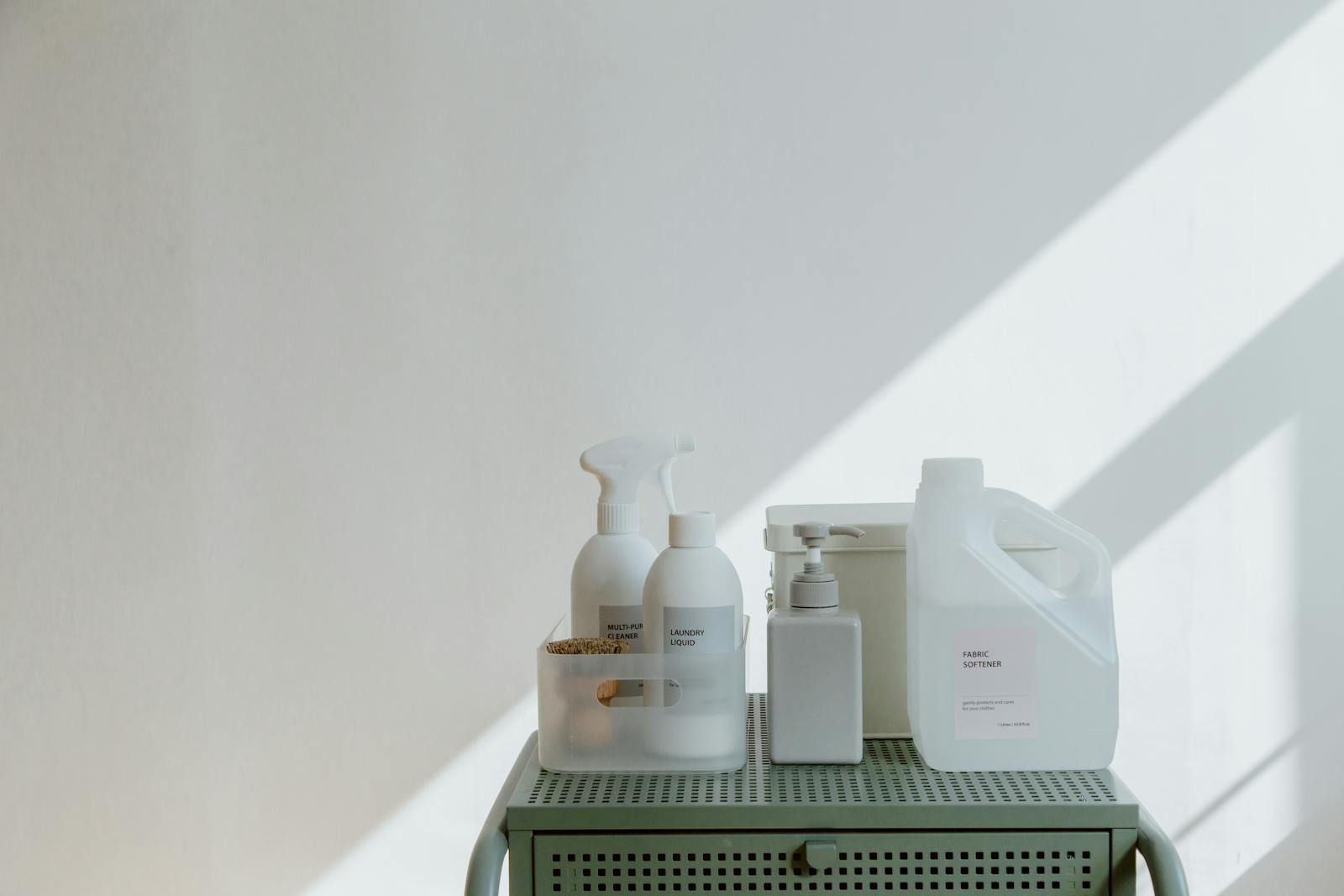
Cleaning the bathroom should make your home healthier. The irony is that many conventional cleaning products are one of the largest sources of volatile organic compounds in indoor air, and unlike the VOCs that off-gas slowly from building materials over months and years, cleaning products release them immediately and in concentrated bursts every time you use them.
During my indoor environment training I studied how indoor spaces are affected by the compounds that buildings and their contents release. Cleaning products came up repeatedly as a primary VOC source, not a secondary one. That surprised me because I had assumed the issue was mostly about building materials and furnishings. The research said otherwise, and once you understand the chemistry behind it, the case for switching becomes much clearer than any marketing claim.
What Conventional Cleaning Products Actually Release
Conventional cleaning products contain several compound classes that contribute to indoor VOC loading.
Glycol ethers are used as solvents in many spray cleaners, glass cleaners, and multi-surface products. They evaporate readily at room temperature and have been associated with respiratory irritation and haematological effects at higher exposures. They carry no obvious smell, which means their presence is not apparent to someone using the product.
Synthetic fragrances in cleaning products are a significant VOC source. A single fragrance formulation can contain dozens of individual compounds including terpenes, aldehydes, and musks. Some of these are direct irritants. Others, like limonene and linalool, are not harmful in themselves but react with indoor ozone to form secondary oxidation products including formaldehyde and ultrafine particles. The cleaning product makes the room smell fresh while simultaneously driving secondary chemistry that adds to indoor pollutant load.
Quaternary ammonium compounds, quats, are the active biocidal ingredient in many disinfecting cleaners and antibacterial surface sprays. They are effective antimicrobials. They are also respiratory sensitisers at higher concentrations, and there is growing evidence of links between quat exposure and occupational asthma in cleaning workers. At household use concentrations the risk is lower, but regular repeated exposure in enclosed spaces with limited ventilation is a different calculation from occasional use.
Chlorine-based bleach releases chlorine gas and chloramines, particularly when used in poorly ventilated bathrooms or when mixed with ammonia-containing products. Chloramine formation in the gas phase at indoor concentrations is well documented. This is the chemistry behind the advice never to mix bleach with ammonia-based cleaners.
Why Plant-Based Surfactants Change the Indoor Air Chemistry
The chemistry of plant-derived cleaning products is genuinely different from conventional formulations in ways that matter for indoor air quality.
Plant-derived surfactants like coco glucoside, decyl glucoside, and sodium coco sulfate are produced from coconut and corn glucose. Their biodegradation pathway in water systems is well characterised and rapid. They do not contribute to the persistent surfactant contamination in waterways that some conventional synthetic surfactants do.
From an indoor air perspective, the relevant difference is what they do not contain. Plant-based surfactant formulas typically omit the glycol ether solvents, synthetic fragrance compounds, and quaternary ammonium biocides that drive the VOC chemistry of conventional products. The surfactant does the cleaning work through physical action, reducing surface tension and lifting soil into solution, without needing solvent chemistry to assist.
Citric acid, used in many eco descaling and bathroom products, works through acid-base chemistry, dissolving calcium carbonate deposits from hard water scale and soap scum. It is a natural organic acid, biodegrades rapidly, and carries a far lower indoor air quality burden than solvent-based conventional descalers.
Enzymes, used in eco laundry detergents and some surface cleaners, break down specific substrate classes. Proteases target proteins, lipases target fats, amylases target starches. They are biological molecules that denature and deactivate rather than persisting in water systems, and they allow effective cleaning at lower wash temperatures.
What the Fragrance Chemistry Tells You
The fragrance question deserves its own section because it is where the gap between natural and synthetic matters most clearly.
Synthetic musks, widely used in conventional cleaning product fragrances, are lipophilic and persistent. They bioaccumulate in aquatic organisms and have been detected in human tissue samples. My ecotoxicology training covered how lipophilic compounds move through food chains and accumulate in biological tissue over time, which is exactly the profile synthetic musks fit. They are not classified as acutely toxic but their persistence and accumulation profile is a legitimate concern.
Essential oil-based fragrances biodegrade rapidly. The caveat is the ozone reaction chemistry already mentioned. Limonene and linalool are common essential oil components that react with indoor ozone to form secondary oxidation products. This is real chemistry that applies whether the fragrance is natural or synthetic, which is why ventilating during and after cleaning matters regardless of the product type.
The lowest indoor air chemistry burden comes from fragrance-free products entirely. The second lowest comes from essential oil fragranced products used with good ventilation. Synthetic fragranced conventional products consistently produce the highest indoor VOC and secondary reaction product loads.
What to Look For and Where to Find It
The chemistry this post describes points to a clear set of criteria: plant-based surfactants, no glycol ether solvents, no synthetic musks, fragrance-free or essential oil-based options with full ingredient disclosure, and biodegradable formulas across all household cleaning categories.
Truly Free Home produces a range of plant-based household cleaners covering laundry, bathroom, kitchen, and everyday surfaces. Their bathroom cleaner uses citric acid as the active descaling ingredient, which is exactly the chemistry this post describes for soap scum and hard water scale. Their formulas avoid the synthetic fragrance compound classes associated with indoor VOC loading and are available across the main household cleaning categories.
Shop Truly Free Home Cleaning Products Now! →
Common Questions
Do eco cleaning products work as well as conventional ones?
For routine cleaning yes. Plant-based surfactants clean through the same physical mechanism as synthetic ones. Citric acid descales as effectively as conventional acid cleaners. Enzyme-based laundry detergents handle most stains at lower temperatures. The performance gap is narrowest in routine use.
What VOCs do conventional cleaning products release?
The main compound classes are glycol ether solvents, synthetic fragrance compounds including terpenes, aldehydes, and musks, and in some products quaternary ammonium biocides. Fragrance compounds can also react with indoor ozone to form secondary products including formaldehyde.
Are natural fragrances in cleaning products safe?
Natural essential oil fragrances biodegrade rapidly and are generally lower risk than synthetic musks. The caveat is that terpene compounds like limonene and linalool react with indoor ozone to form secondary oxidation products. Ventilating during and after cleaning reduces this significantly.
What are quaternary ammonium compounds and should I avoid them?
Quats are effective biocidal compounds used in disinfecting cleaners. They are respiratory sensitisers at higher concentrations and there is evidence linking regular exposure to occupational asthma in cleaning workers. People with respiratory sensitivities or those cleaning frequently in small enclosed spaces have reasonable grounds to choose plant-based alternatives.
Why do eco laundry detergents work at lower temperatures?
Enzyme-based detergents use biological molecules that break down protein, fat, and starch stains through targeted chemistry at lower temperatures. This reduces energy use significantly over the lifetime of a washing machine.
Are eco cleaning products better for waterways?
Plant-derived surfactants biodegrade rapidly in water systems. Synthetic musks and some conventional surfactants are more persistent and accumulate in aquatic organisms. Phosphate-free formulas avoid the eutrophication that phosphate runoff drives in freshwater systems.
Can I make effective eco cleaners at home?
Citric acid solution descales bathroom surfaces effectively. White vinegar diluted with water cleans glass and stainless steel. Bicarbonate of sodium is a mild abrasive suitable for surface scrubbing. The limitation is that none of these are effective disinfectants at normal use concentrations, so for situations requiring genuine sanitisation a purpose-formulated product makes more sense.

