







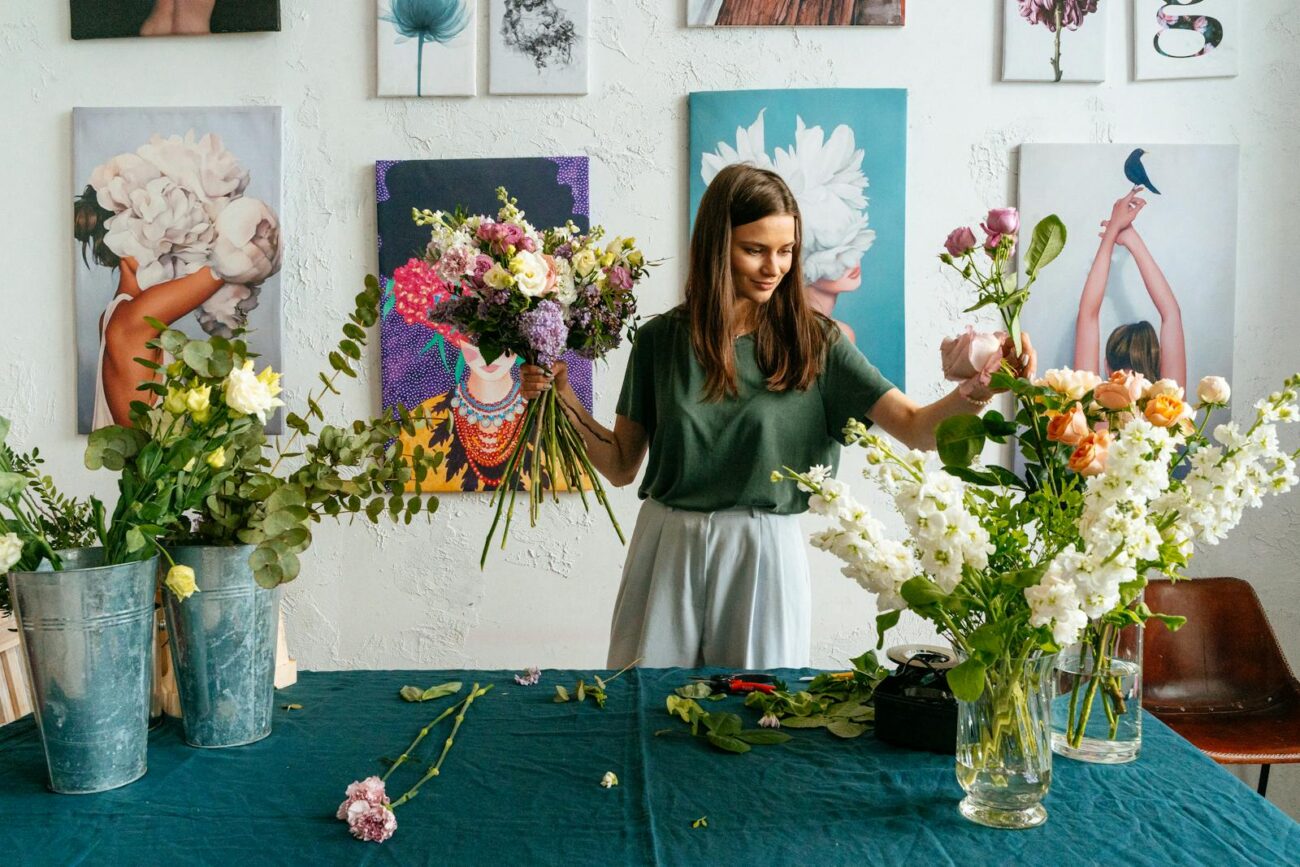
This article was written by Serge, MSc. Plant Biologist and Environmental Scientist with a BSc in Plant Biology and an MSc in Environmental Biology and Biogeochemistry. My background covers plant biochemistry, botany, and field research in forest and soil ecosystems. I write from real experience, not just literature.
Affiliate disclosure: This site has affiliate links, including Amazon. As an Amazon Associate I earn from qualifying purchases, at no extra cost to you.
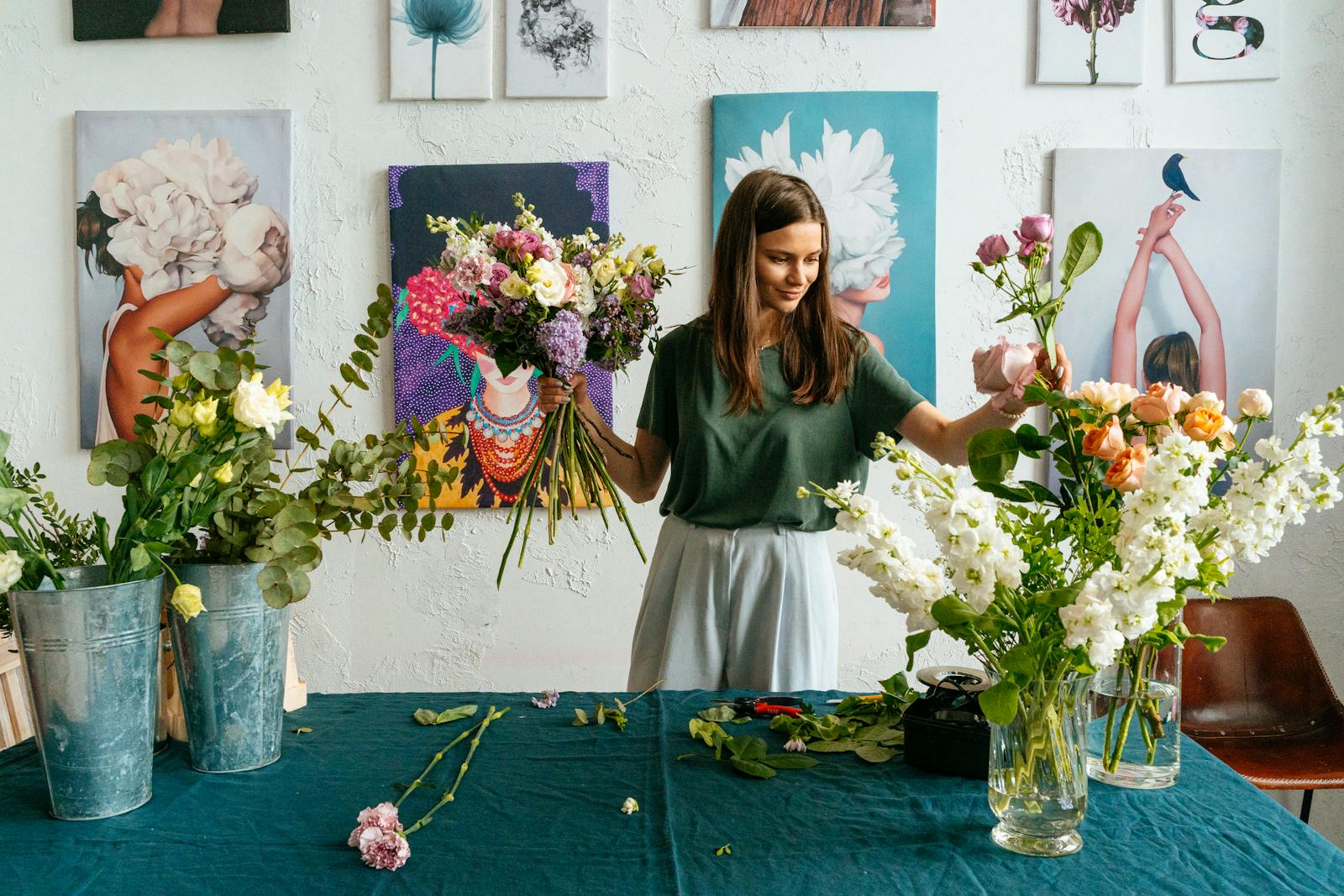
Flowers do something to a space that is hard to explain until you study the biology behind it. The fragrance of lavender triggers GABA-A receptor activity that measurably reduces anxiety. The yellow of sunflowers comes from carotenoids that also protect your retinal cells from UV damage. The spiral arrangement of rose petals follows the same Fibonacci mathematics as the seeds in a sunflower head. Once you understand what is actually happening in a flower, you see every arrangement differently.
I covered the secondary metabolite chemistry behind many of these flowers in detail in my flowering plants article on this site. This article takes that knowledge and applies it practically to floral design, explaining which combinations work, why greenery matters biologically, and how to create arrangements that deliver genuinely on their sensory promise.
What Floral Design Actually Is
Floral design is the arrangement of cut plant material to create compositions that work visually, aromatically, and structurally. The best arrangements balance three elements simultaneously: visual proportion and color, fragrance chemistry, and structural longevity.
Most guides focus only on the first. But fragrance chemistry determines whether an arrangement smells coherent or clashing, and structural biology determines how long it stays fresh. Understanding all three produces better results than aesthetic intuition alone.
The Chemistry of Flower Fragrance
Floral fragrance is produced by volatile secondary metabolites synthesized in epidermal cells or glandular trichomes of petals. These compounds evolved primarily to attract specific pollinators, not to please humans, though the evolutionary result serves both purposes remarkably well.
Roses produce geraniol and citronellol as their primary volatiles, both monoterpenoids. Lavender produces linalool and linalyl acetate through the same biosynthetic pathway. The structural similarity between these compounds explains why roses and lavender blend aromatically without clashing. Their volatiles are chemically compatible.
Eucalyptus produces 1,8-cineole, a monoterpenoid with a distinctly different character, fresh and penetrating rather than floral. Used as greenery in arrangements, eucalyptus provides aromatic contrast that prevents the sweetness of roses or lilies from becoming overwhelming. The contrast is biochemically predictable, not just aesthetically intuitive.
Understanding which volatile compound classes combine harmoniously gives you a framework for predicting fragrance compatibility before you ever pick up a stem.
Flower Combinations That Work and Why
Lilies produce linalool and other monoterpenoid volatiles. Roses produce geraniol and citronellol. Both are floral monoterpenoids with compatible aromatic profiles. Combined they reinforce each other’s floral character without clashing.
Structurally, lilies have strong stems and large flower heads that provide visual anchor. Roses fill the middle register with layered petal structure. Adding eucalyptus introduces aromatic contrast and linear stem structure that prevents the arrangement from feeling heavy.
Alternate lilies and roses so neither dominates visually. Add eucalyptus stems as the final layer to frame rather than fill.

Sunflowers and Daisies
Both are Asteraceae family composites. What appears to be a single flower is actually hundreds of individual florets arranged in a spiral pattern following Fibonacci mathematics. The outer ray florets are sterile visual attractants. The inner disc florets produce seeds.
The family relationship means their structural proportions are compatible. Sunflowers provide the bold visual anchor while daisies fill the middle register with smaller versions of the same composite structure. Adding fern fronds introduces a contrasting texture from a completely different plant lineage that prevents the arrangement from feeling repetitive.
Use a low container to let sunflower heads sit at their natural height without appearing top-heavy.

Lavender and White Roses
Lavender’s linalool and roses’ geraniol are both monoterpenoid alcohols from related biosynthetic pathways. They combine aromatically to produce a distinctly calming fragrance profile, which is biochemically coherent since both compounds have documented relaxing effects through the olfactory-limbic pathway.
Visually the contrast between lavender’s vertical spike structure and roses’ rounded form creates proportion without requiring additional structural greenery. Let lavender stems extend above the rose heads for height and the characteristic silhouette this combination produces.

Orchids and Ferns
Orchids produce extraordinarily complex volatile profiles, sometimes over 100 identified compounds. Their fragrance tends toward exotic and specific rather than broadly floral, which means they combine better with visually complementary but aromatically neutral material like ferns than with other strongly fragrant flowers.
Ferns are ancient plants, predating flowering plants by hundreds of millions of years. They produce no significant volatiles and contribute no fragrance competition. Against lush fern greenery, orchid fragrance and flower structure stand without interference.
Orchids require indirect light. Arrange them away from direct sun and the combination will maintain its elegance significantly longer than most cut flower arrangements.
Why Greenery Is Biologically Important in Arrangements
Greenery is not decoration. It serves three distinct functions in cut flower arrangements.
Structural function: Stem material from eucalyptus, salal, and similar plants provides physical support and spacing between flower heads, preventing them from crowding and improving air circulation that slows bacterial growth in the water.
Aromatic function: Fragrant greenery like eucalyptus introduces volatile contrast that balances sweet floral profiles. Without aromatic contrast, heavily fragrant arrangements can become cloying as volatiles concentrate in an enclosed space.
Visual function: Different leaf forms, textures, and shades of green provide the visual variety that makes flower colors appear more saturated by contrast. A rose against green foliage reads as more intensely colored than the same rose against other flowers.
Key greenery options:
Eucalyptus, 1,8-cineole volatile, aromatic contrast, airy linear structure. Best with roses, lilies, and lavender arrangements.

Ferns, no significant volatile, lush texture, visual depth. Best with orchids and tropical flowers.

Salal leaves (Gaultheria shallon), glossy evergreen, exceptional post-cut longevity, broad form fills structural gaps. Best as a base layer in any arrangement.

How to Extend Arrangement Longevity
Cut flower longevity is determined by how effectively the stem continues to take up water after cutting. Bacterial growth in the vase water blocks xylem vessels in the stem, reducing water uptake and accelerating wilting.
Cut stems at a 45-degree angle immediately before placing in water. The angled cut increases the surface area available for water uptake and prevents the stem end from sitting flat against the vase bottom where water movement is reduced.
Change water every one to two days. Add a small amount of sugar, approximately one teaspoon per litre, to provide carbohydrate fuel for continued cellular processes in cut tissue. A few drops of bleach inhibits bacterial growth without damaging plant tissue at low concentrations.
Remove leaves below the waterline. Submerged leaves decompose rapidly, accelerating bacterial growth and producing compounds that reduce vase life of other stems.
Keep arrangements away from direct heat sources, ripening fruit, and direct sunlight. Ripening fruit releases ethylene, a plant hormone that accelerates senescence in cut flowers. Heat and direct sun increase transpiration rates from petals, accelerating wilting.
Practical Arrangement Guide
Choosing containers: Tall narrow vases suit long-stemmed flowers like lilies and roses with strong vertical structure. Low wide containers suit dense compact arrangements with mixed heights. Opaque containers hide stem discolouration that becomes visible in glass after a few days.
Building the arrangement:
- Start with greenery to establish the overall volume and shape
- Add the largest flower heads as anchors at varied heights
- Fill the middle register with medium-sized flowers
- Add accent flowers and finishing touches last
- Step back and assess proportions from normal viewing distance
Seasonal considerations: Seasonal flowers are at peak secondary metabolite production during their natural flowering period. Out-of-season forced flowers often have weaker fragrance because the plant’s investment in volatile compound synthesis is lower outside its natural cycle. Choosing seasonal blooms produces arrangements with stronger fragrance for the same visual impact.
FAQs
Why do roses and lavender smell good together?
Because their primary volatile compounds are structurally related. Rose produces geraniol and citronellol. Lavender produces linalool and linalyl acetate. All four are monoterpenoid alcohols from related biosynthetic pathways. Their structural compatibility means they blend aromatically without clashing.
Why does eucalyptus work so well in flower arrangements?
Eucalyptus produces 1,8-cineole, a monoterpenoid with a fresh penetrating character that contrasts with sweet floral volatiles. This aromatic contrast prevents heavily fragrant arrangements from becoming overwhelming. It also provides linear stem structure and visual airiness that balances dense flower heads.
How do I make cut flowers last longer?
Cut stems at 45 degrees before placing in water. Change water every one to two days. Add a small amount of sugar and a few drops of bleach to the water. Remove submerged leaves. Keep away from direct heat, sunlight, and ripening fruit which releases ethylene that accelerates wilting.
Why do seasonal flowers smell stronger?
Plants invest most heavily in secondary metabolite production including volatile fragrance compounds during their natural flowering season. Out-of-season forced flowers produce lower concentrations of fragrance volatiles because the environmental and developmental triggers for peak production are absent.
What is the best greenery for flower arrangements?
Eucalyptus for aromatic contrast and airy structure. Ferns for lush neutral texture with orchids and tropical flowers. Salal leaves for structural support and exceptional longevity. Each serves different functions and the best choice depends on the flowers and fragrance profile of the arrangement.
Why do orchids pair better with ferns than with other fragrant flowers?
Orchids produce complex specific fragrance profiles that are easily overwhelmed or clashed with by other strongly fragrant flowers. Ferns produce no significant volatiles, allowing orchid fragrance to stand without competition. The visual contrast between orchid flower structure and fern foliage texture is also more striking than orchids against other flowers.

