







This article was written by Serge, MSc. Plant Biologist and Environmental Scientist with a BSc in Plant Biology and an MSc in Environmental Biology and Biogeochemistry. My background covers plant biochemistry, botany, and field research in forest and soil ecosystems. I write from real experience, not just literature.
Affiliate disclosure: This site has affiliate links, including Amazon. As an Amazon Associate I earn from qualifying purchases, at no extra cost to you.
During plant pigment extraction practicals in my BSc we used different solvents to pull different compounds out of the same leaf material. Acetone dissolved chlorophyll readily. Petroleum ether pulled carotenoids. Water got neither effectively.
That practical stuck with me because it made solubility principles completely concrete. Same plant. Same tissue. Completely different compounds depending on which solvent you used. The chemistry was visible right there in the separating funnel.
Years later I made my own nettle root tincture at home using vodka I picked up from a local shop. Chopped dried Urtica dioica root, covered it in vodka, left it for four weeks, pressed and filtered it. The result was a dark amber liquid with a distinctly earthy character that smelled nothing like nettle tea.
That difference in character between the vodka extract and a water-based tea is not random. It is exactly what the pigment extraction practicals predicted. Different solvent. Different compounds. Different preparation.
What a Tincture Is
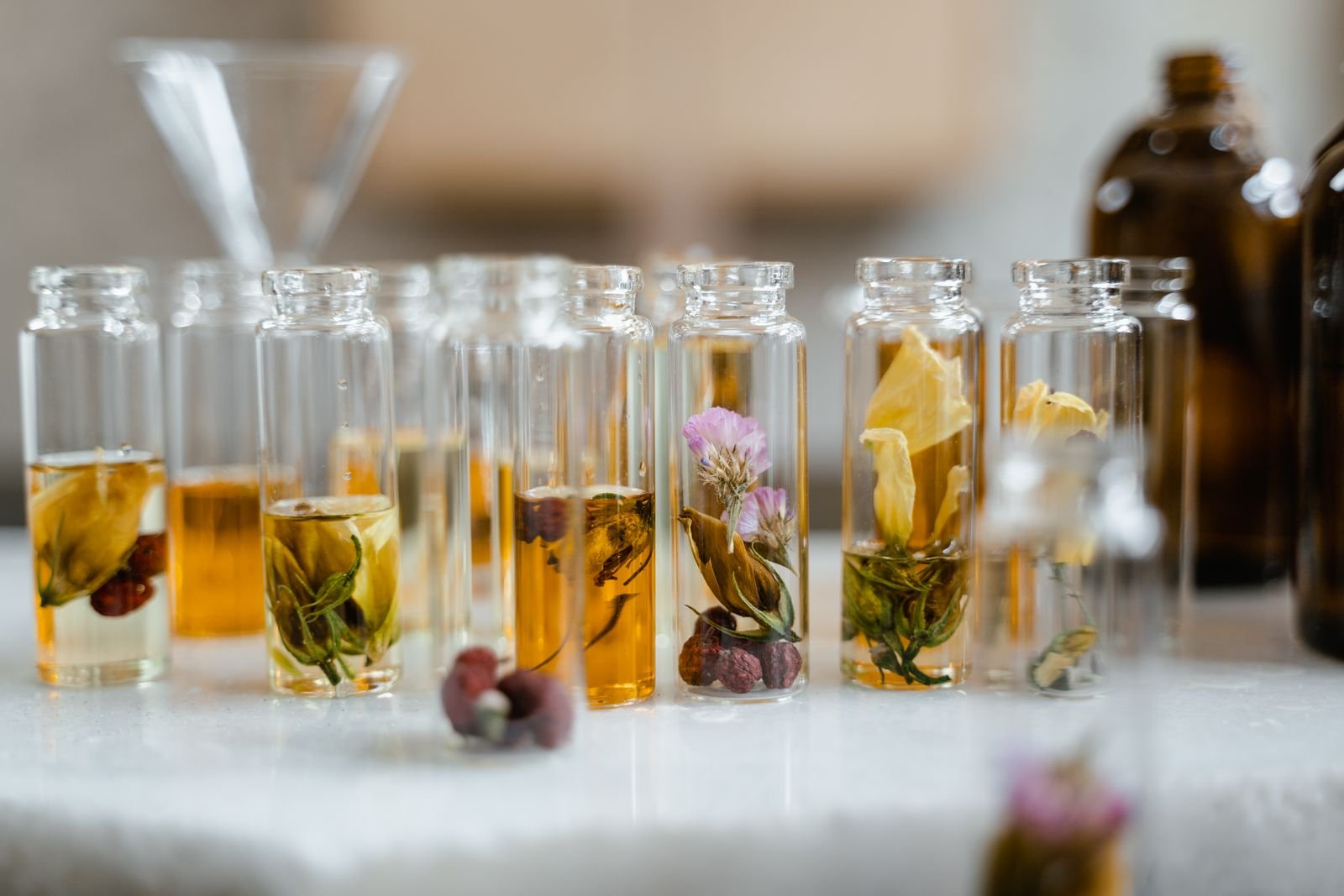
A tincture is a concentrated liquid extract of plant material in a solvent, typically ethanol. The plant material is macerated in the solvent for an extended period, usually two to six weeks. The solvent penetrates plant cell walls, dissolves the active compounds, and carries them into solution. The plant material is then pressed and filtered out leaving a concentrated liquid extract.
The result delivers higher active compound concentrations per dose than a tea, absorbs faster into the bloodstream especially when taken sublingually under the tongue, and has a shelf life measured in years rather than hours.
Why Vodka Works and Water Does Not for Some Compounds
This is the same principle I observed in those pigment extraction practicals scaled down to a kitchen preparation.
Water is a polar solvent. It dissolves polar and ionic compounds efficiently. Flavonoids, phenolic acids, and water-soluble glycosides all extract well into water. This is why herbal teas work for chamomile apigenin, lemon balm rosmarinic acid, and elderberry anthocyanins.
Ethanol is both polar and non-polar simultaneously. It dissolves water-soluble compounds just as water does but also dissolves lipophilic compounds that water cannot touch. Resins, essential oil terpenoids, fat-soluble alkaloids, and many glycosides that water extracts poorly all dissolve readily in ethanol.
For nettle root specifically the lignans I was after, including 3,4-divanillyltetrahydrofuran with its documented sex hormone binding globulin affinity, have meaningful lipophilic character. Water extracts them poorly. Vodka at roughly 40 percent ethanol extracts them far more efficiently.
The same logic applies across medicinal herbs. Valerian root valerenic acid is a sesquiterpene with significant lipophilic character. A valerian tincture delivers meaningful valerenic acid concentrations. A valerian tea delivers substantially less of the same compound despite using identical plant material.
In those pigment practicals I watched chlorophyll stay stubbornly in the acetone fraction while petroleum ether pulled the carotenoids clean. The principle scales directly. Like dissolves like. Solvent polarity determines what you extract.
How Ethanol Gets Into Plant Cells
Plant cell walls are complex structures built from cellulose, hemicellulose, pectin, and lignin. The active compounds are either stored in vacuoles inside the cells or associated with cell wall components.
Ethanol penetrates cell walls more effectively than water alone. It partially disrupts cell membrane lipid bilayers and loosens the cell wall matrix allowing better compound extraction. This is why maceration time matters. The longer the plant material sits in ethanol the more complete the cell wall penetration and compound extraction becomes.
When I made my nettle root tincture I left it for four weeks, shaking the jar every few days. The colour deepened noticeably over the first two weeks as compounds continued extracting into the vodka. By week four the liquid was a deep amber and the root material had lost most of its colour, a visible sign that the extraction was substantially complete.
The alcohol concentration of the solvent determines which compound classes extract most efficiently. Higher alcohol concentrations extract more lipophilic compounds. Lower concentrations favour water-soluble compounds. Standard vodka at 40 percent ethanol covers a broad range of compound polarities simultaneously which is why it works reasonably well as a home tincture solvent even if pharmaceutical grade ethanol at 60 percent would extract certain compound classes more completely.
Sublingual Absorption: Why Tinctures Work Faster
When you hold a tincture under your tongue for 30 to 60 seconds before swallowing the compounds absorb directly through the sublingual mucosa into the bloodstream without passing through the digestive system first.
This bypasses first-pass metabolism in the liver. Many plant compounds including some alkaloids and terpenoids are significantly metabolised during first-pass processing before they reach systemic circulation. Sublingual absorption delivers compounds directly into the bloodstream before the liver can break them down.
The result is faster onset and in some cases higher effective bioavailability than the same compounds taken in capsule or tea form.
My Quality Control of Chemical and Environmental Measurements training covered the gap between what an analytical method measures in a preparation and what actually reaches its biological target. Bioavailability is that gap. A tincture with lower compound concentration than a capsule can still deliver more active compound to target tissues if the absorption route is more efficient. That principle applies directly here.
Alcohol-Free Options
Vegetable glycerin tinctures use glycerol as the solvent instead of ethanol. Glycerin is a polyol with intermediate polarity that extracts water-soluble and some moderately lipophilic compounds reasonably well. The extraction efficiency for highly lipophilic compounds is lower than ethanol but the preparation is alcohol-free with a naturally sweet taste.
Apple cider vinegar tinctures use the acetic acid solution as solvent. The acidic environment improves extraction of alkaloids specifically. ACV works reasonably well for alkaloid-rich herbs but less effectively for resins and lipophilic terpenoids.
Neither alternative matches the broad-spectrum extraction efficiency of ethanol across the full range of plant secondary metabolites. If the compounds you want are significantly lipophilic, glycerin and ACV preparations are genuine compromises in extraction completeness.
Shelf Life and Storage
Ethanol is a natural preservative. At concentrations above 25 percent it inhibits microbial growth effectively. Properly prepared tinctures stored in dark glass bottles away from heat and light last three to five years or longer.
This is a significant practical advantage over teas which should be consumed within hours and over many capsule preparations where active compound degradation begins after processing.
The dark glass bottle matters. UV radiation degrades many plant secondary metabolites including flavonoids and terpenoids. Amber or dark green glass blocks UV while still allowing visual checking of clarity and colour.
Refrigeration is not necessary for ethanol-based tinctures. Room temperature dark storage is optimal. Glycerin tinctures have shorter shelf lives of one to two years because glycerin provides less antimicrobial protection than ethanol.
Are Tinctures Better Than Capsules
It depends entirely on the compounds you are targeting and the herb in question.
For lipophilic compounds like valerenic acid in valerian root, withanolides in ashwagandha, and resins in many aromatic herbs, ethanol tinctures extract and deliver these compounds more efficiently than standard capsule preparations unless the capsule uses a specific lipid-based formulation.
For water-soluble flavonoids like apigenin in chamomile or rosmarinic acid in lemon balm the extraction advantage of ethanol over water is less dramatic. A well-made aqueous extract capsule performs comparably.
For standardised preparations where consistent active compound content is the priority, capsules standardised to specific compound percentages with third party testing verification are more reliable than non-standardised tinctures where batch-to-batch compound concentration varies.
Neither format is universally superior. The right preparation depends on the specific herb and the compound class you want to extract.
FAQs
How do herbal tinctures work?
Ethanol extracts active compounds from plant material by penetrating cell walls and dissolving both water-soluble and lipophilic compounds that water cannot reach. The concentrated extract absorbs sublingually or through the digestive system with sublingual delivery bypassing first-pass liver metabolism for faster onset and potentially higher bioavailability.
Are herbal tinctures better than capsules?
For lipophilic compounds ethanol tinctures often deliver better extraction and faster absorption than standard capsules. For standardised preparations with verified compound content quality capsules may be more reliable. It depends on the specific herb and compound class.
Do herbal tinctures contain alcohol?
Traditional tinctures use ethanol at concentrations typically between 40 and 60 percent. The alcohol content per dose in a standard tincture serving is very small. Alcohol-free alternatives using vegetable glycerin or apple cider vinegar exist but with lower extraction efficiency for lipophilic compounds.
How long do herbal tinctures last?
Ethanol-based tinctures stored in dark glass at room temperature last three to five years or longer. Glycerin tinctures last one to two years. The preservative effect of ethanol is one of the primary practical advantages of tinctures over other preparations.
How fast do herbal tinctures work?
Sublingual administration produces onset within 15 to 30 minutes for most compounds. Swallowed tinctures absorb through the digestive system with onset typically 30 to 60 minutes. Sublingual delivery is meaningfully faster because it bypasses digestive processing entirely.
Why are tinctures made with alcohol?
Ethanol’s intermediate polarity dissolves both water-soluble and lipophilic plant compounds simultaneously. No other commonly available solvent matches this broad-spectrum extraction capability at safe consumption concentrations. Ethanol also preserves the preparation and penetrates plant cell walls more effectively than water alone.
Should tinctures be refrigerated?
Ethanol-based tinctures do not require refrigeration. Room temperature dark storage is preferable as refrigeration can cause resinous compounds to precipitate. Glycerin tinctures benefit from cooler storage to extend shelf life.
Can you make tinctures at home?
Yes. The basic method involves macerating dried or fresh plant material in vodka or food grade ethanol for two to six weeks, shaking regularly, then pressing and filtering the liquid. I made a nettle root tincture this way using dried Urtica dioica root and standard vodka. The result is a functional preparation though pharmaceutical grade ethanol at higher concentrations extracts certain compound classes more completely than standard 40 percent vodka.

