












This article was written by Serge, MSc. Plant Biologist and Environmental Scientist with a BSc in Plant Biology and an MSc in Environmental Biology and Biogeochemistry. My background covers plant biochemistry, botany, and field research in forest and soil ecosystems. I write from real experience, not just literature.
Affiliate disclosure: This site has affiliate links, including Amazon. As an Amazon Associate I earn from qualifying purchases, at no extra cost to you.
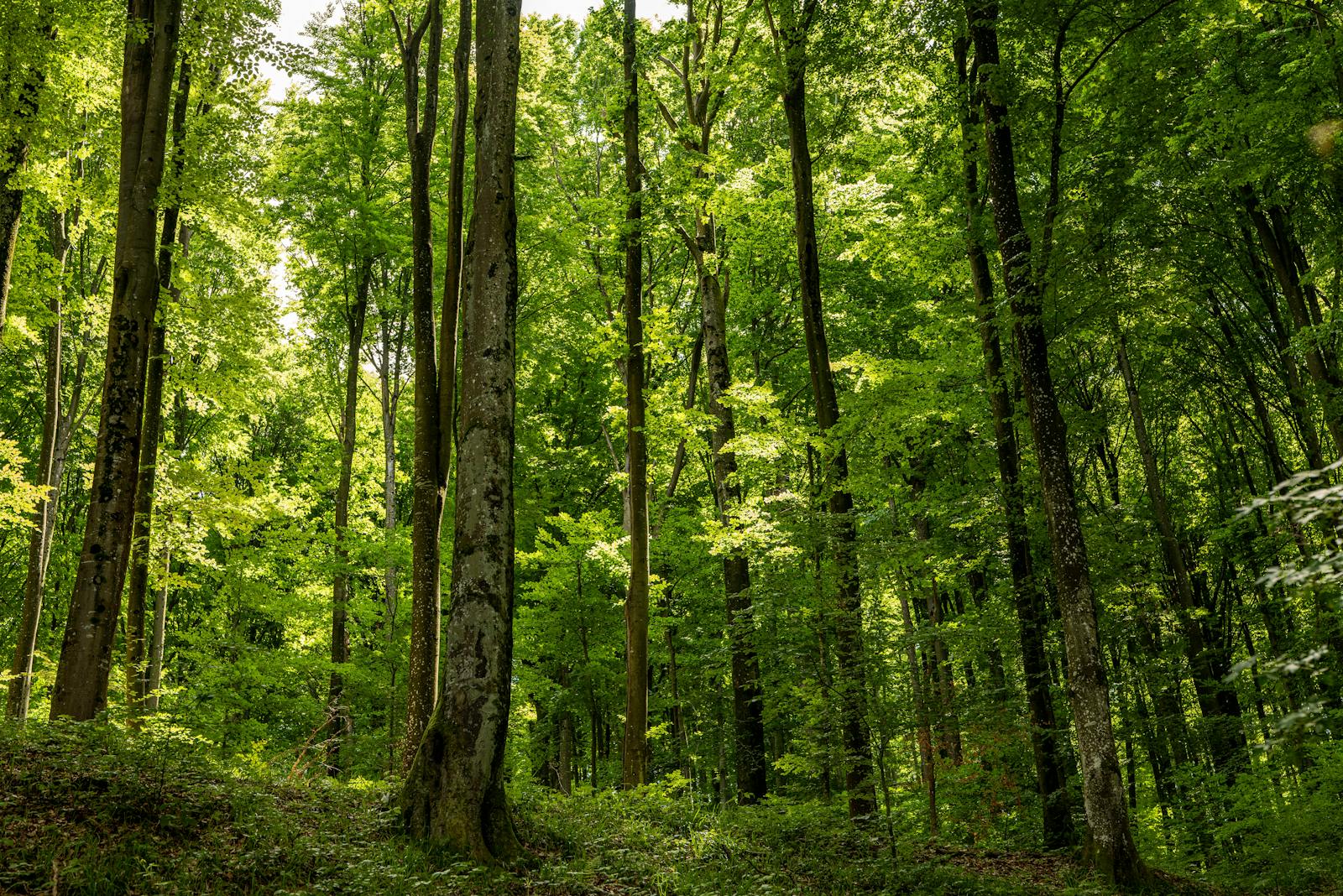
I sometimes use this thought experiment when explaining why ecosystem biology is worth taking seriously. Remove every plant from Earth simultaneously. Not gradually, not partially. Everything. Every tree, every grass species, every marine alga, every moss on a rock face. What happens?
The answer is not just “we run out of food.” The cascade is faster and more total than most people realise, and understanding why requires thinking about what plants actually do in Earth’s systems rather than just what they provide to us directly.
Oxygen: The Immediate Crisis
Plants and photosynthetic algae produce the oxygen in Earth’s atmosphere. Not all of it historically, the original oxygen came from cyanobacteria over billions of years, but all of the oxygen being actively replenished right now.
Atmospheric oxygen is approximately 21 percent of air by volume. That percentage is maintained by the balance between photosynthetic oxygen production and consumption by respiration and combustion. Remove photosynthesis entirely and oxygen levels begin dropping immediately.
The rate of decline depends on how fast remaining organisms consume oxygen. With all vegetation gone and the decomposition of dead plant material accelerating microbial respiration globally, oxygen consumption would outpace anything remaining to replenish it. Human survival at significantly reduced oxygen concentrations becomes untenable within years to decades depending on the rate of decline.
But oxygen shortage would not be the first crisis. Food would be.
The Food System Collapses Immediately
Every terrestrial food chain begins with photosynthesis. Herbivores eat plants. Carnivores eat herbivores. Humans eat across multiple trophic levels but ultimately depend on plant-fixed carbon at the base of every chain.
Marine food chains depend on phytoplankton, which are photosynthetic. Remove marine algae alongside terrestrial plants and the ocean food web collapses simultaneously.
Grain stores would last months. Livestock would begin dying within days without pasture or feed crops. The agricultural system that feeds eight billion people requires not just growing plants but the entire infrastructure built around plant cultivation. Without plants that infrastructure has nothing to process.
This is not a slow decline. It is a simultaneous global failure of every food system at once.
Carbon Cycling Breaks Down
In my biogeochemistry training I studied how carbon moves through Earth’s systems. Plants are the primary mechanism by which atmospheric carbon enters terrestrial ecosystems. Through photosynthesis they fix CO₂ into organic compounds that then cycle through soil, animals, decomposers, and back to the atmosphere.
Remove plants and atmospheric CO₂ rises rapidly. The decomposition of dead plant biomass globally, billions of tonnes of organic matter suddenly without any photosynthetic uptake to balance it, would release enormous quantities of CO₂ and methane. The greenhouse effect would intensify at rates that dwarf anything in the current climate change trajectory.
I measured how sensitive soil carbon dynamics are to environmental conditions in my field research. Even small changes in temperature significantly shifted soil respiration rates. The global decomposition of all plant biomass simultaneously would drive atmospheric chemistry changes on a geological rather than human timescale.
Water Cycles Fail
Plants are active participants in the water cycle, not passive features of the landscape. Through transpiration they move enormous volumes of water from soil to atmosphere. Forests effectively pump groundwater into the air and redistribute it as precipitation across continental distances.
I covered the biotic pump mechanism in detail in my deforestation and water cycles article. The principle applies here at total scale. Remove all plant transpiration and continental rainfall patterns collapse. Areas that depend on forest-driven precipitation for their water supply experience rapid desertification.
Soil structure depends on root networks and soil organisms supported by plant organic matter inputs. Without roots holding soil and without organic matter feeding the biological community that creates soil structure, erosion accelerates dramatically. Rainfall, now uninterrupted by canopy interception and no longer absorbed by structured soil, runs off the surface carrying whatever topsoil remains.
The Biodiversity Cascade
Plants provide habitat structure, food resources, and ecological relationships for the majority of terrestrial species. Birds nest in trees. Insects feed on leaves, nectar, and pollen. Fungi form symbiotic relationships with roots. Soil organisms depend on plant organic matter inputs.
Remove plants and these relationships collapse simultaneously. The cascading extinctions would be the most rapid in Earth’s history. Not the gradual background extinction rates we currently observe, but essentially instantaneous collapse of terrestrial ecosystem structure.
The dilution effect I covered in my biodiversity loss article, where high biodiversity reduces disease transmission rates, would reverse completely. Simplified ecosystems with few remaining species would concentrate pathogen transmission in whatever organisms survived.
What Technology Cannot Replace
Hydroponics, lab-grown proteins, artificial photosynthesis, closed-cycle life support systems. These could theoretically support small numbers of humans for limited periods in controlled environments.
None of them replicate what plants do at planetary scale. No technology currently exists or is conceivable that could replace the carbon cycling, water cycling, oxygen production, soil formation, and biodiversity support functions that plants provide globally. These are not engineering problems with technological solutions. They are emergent properties of planetary-scale biological systems that took hundreds of millions of years to develop.
The thought experiment is useful precisely because it makes the dependency concrete. We do not need to imagine a world without plants to understand why ecosystem health is not an abstract environmental concern. It is the foundation of every physical system that makes Earth habitable.
FAQs
How fast would humans notice if all plants disappeared?
Food scarcity within weeks as supply chains failed without crops and livestock died without feed. Atmospheric oxygen decline over years to decades. Accelerating CO₂ rise and climate destabilisation beginning immediately as decomposition of plant biomass proceeded without photosynthetic uptake to balance it.
Which plants are most critical?
Marine phytoplankton produce roughly half of Earth’s oxygen and form the base of ocean food chains. Terrestrial crops including Zea mays, Triticum aestivum, and Oryza sativa feed the majority of the human population directly. Tropical forests drive continental rainfall patterns through transpiration. No single plant group is most critical, the system requires all of them functioning together.
Can technology replace what plants do?
For small numbers of humans in controlled environments, partially and temporarily. At planetary scale, no. Carbon cycling, water cycling, oxygen production, soil formation, and biodiversity support are emergent properties of planetary biological systems that no current or foreseeable technology can replicate.
Would oceans survive without terrestrial plants?
No. Marine phytoplankton would also need to be removed in this scenario since they are photosynthetic. Without phytoplankton the ocean food web collapses as completely as terrestrial food webs. The ocean would not be a refuge.
How does this connect to current conservation priorities?
We are not facing total plant loss but we are facing accelerating losses of specific plant communities and the ecosystem functions they provide. Deforestation reduces transpiration and rainfall in affected regions. Soil degradation reduces carbon cycling capacity. Biodiversity loss reduces ecosystem resilience. The thought experiment clarifies why these are not marginal concerns.
Related Posts:
Deforestation and water cycles
Biodiversity loss and human health
Wetlands carbon
Plant secondary metabolites

