




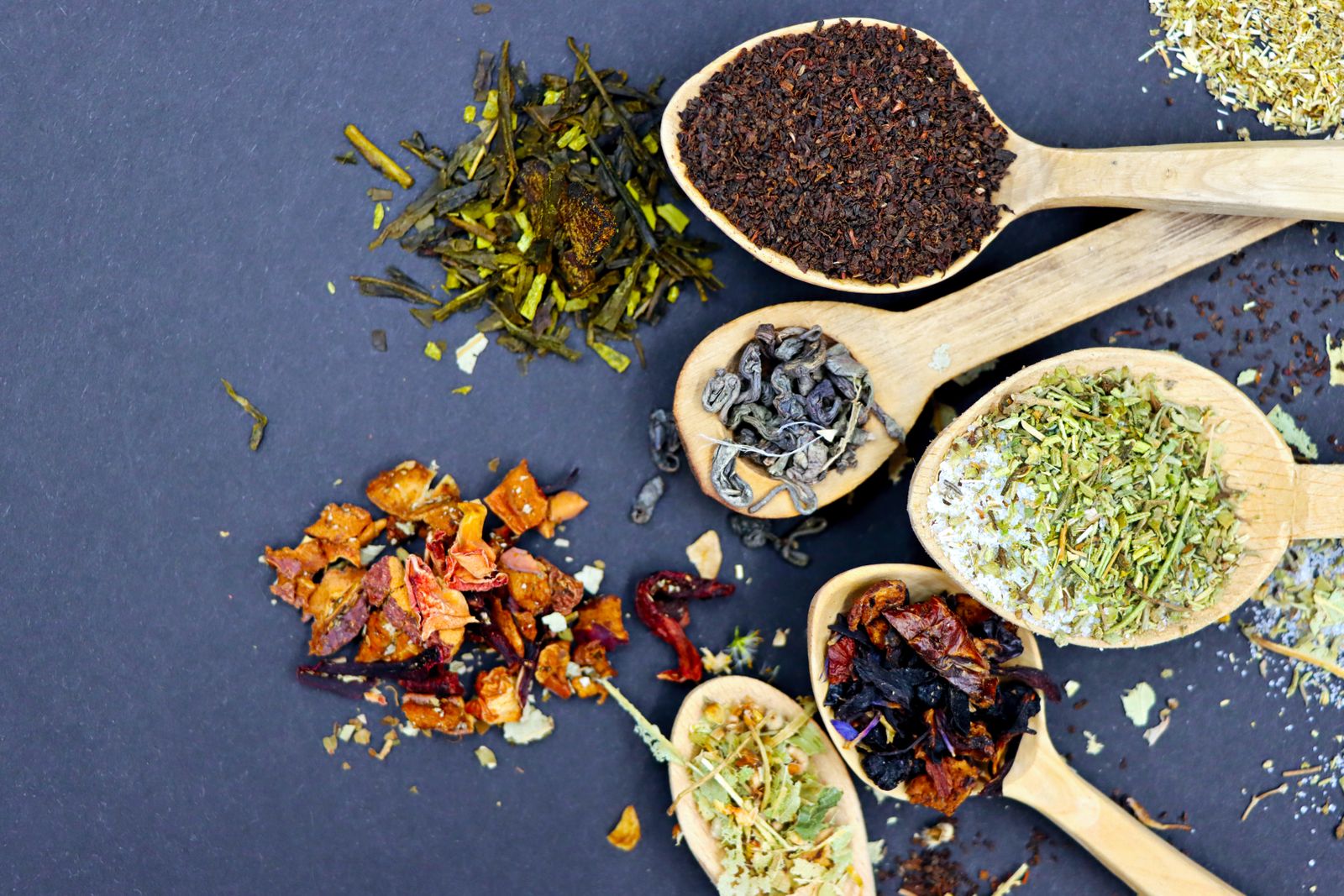


Blend a Balanced Herbal Tea Every Time
Turn a total amount into base, supporting and accent herbs in grams and teaspoons.
This tool was built by Serge, MSc., a plant biologist and environmental scientist with a BSc in Plant Biology and an MSc in Environmental Biology and Biogeochemistry. My research focused on how climate warming affects soil carbon cycling in boreal forest ecosystems. These tools are for educational purposes and give practical guidance, not professional advice.
A good herbal tea is built, not thrown together. Herbalists blend in parts: a gentle base herb that makes up the bulk, one or two supporting herbs that give the blend its character, and a small accent that lifts the flavour or aroma. Choose a blending style and tell the tool how much blend you want to make, and it splits that total into each role in grams and teaspoons.
Please enter a total amount above zero and choose a blending style.
How this works
Blending by parts keeps a recipe consistent at any size. The classic ratio is three parts base to two parts supporting to one part accent, six parts in all, so the tool gives the base half the total, the supporting third a third of it, and the accent a sixth. The two-part style suits a simple blend of one main herb and one flavouring, and the even trio gives three herbs equal billing. Teaspoon figures use the common guide that a teaspoon of dried leafy herb weighs roughly two grams.
Choosing your herbs
Pick a mild, pleasant base such as rooibos, nettle or oatstraw, since it carries the cup. Let the supporting herbs set the theme, for example chamomile and lemon balm for an evening blend, or peppermint and ginger for digestion. Keep the accent small but characterful, such as a little rose, lavender, licorice or citrus peel, because a strong accent quickly takes over. Brew about one teaspoon of the finished blend per cup for five to ten minutes.
Important note
Herbs are active, not just flavour. Some interact with medications, some are unsuitable during pregnancy or breastfeeding, and some are not meant for daily long-term use, so identify every herb correctly and check it against a reputable source before drinking it regularly. This tool handles the proportions of a culinary-style blend; it does not recommend herbs for treating any condition.
Scientific basis
The base, supporting and accent (or catalyst) framework for formulating herbal teas is a long-standing method taught in herbalism, for example by the Chestnut School of Herbal Medicine. Dried-herb weight per teaspoon follows common culinary measure.
Explore my other free tools
Measure fresh against dried herbs with the Dried-to-Fresh Herb Converter, dilute an aromatic blend with the Essential Oil Dilution Calculator, and make a balm with the Salve & Balm Ratio Calculator.
Disclaimer: This calculator gives general educational guidance on blend proportions only. It is not medical advice, and herbs should be identified and checked for safety before use.
