












Fit the Right Number of Plants in Your Bed
Turn your bed size and spacing into the exact number of plants it will hold.
This tool was built by Serge, MSc., a plant biologist and environmental scientist with a BSc in Plant Biology and an MSc in Environmental Biology and Biogeochemistry. My research focused on how climate warming affects soil carbon cycling in boreal forest ecosystems. These tools are for educational purposes and give practical guidance, not professional advice.
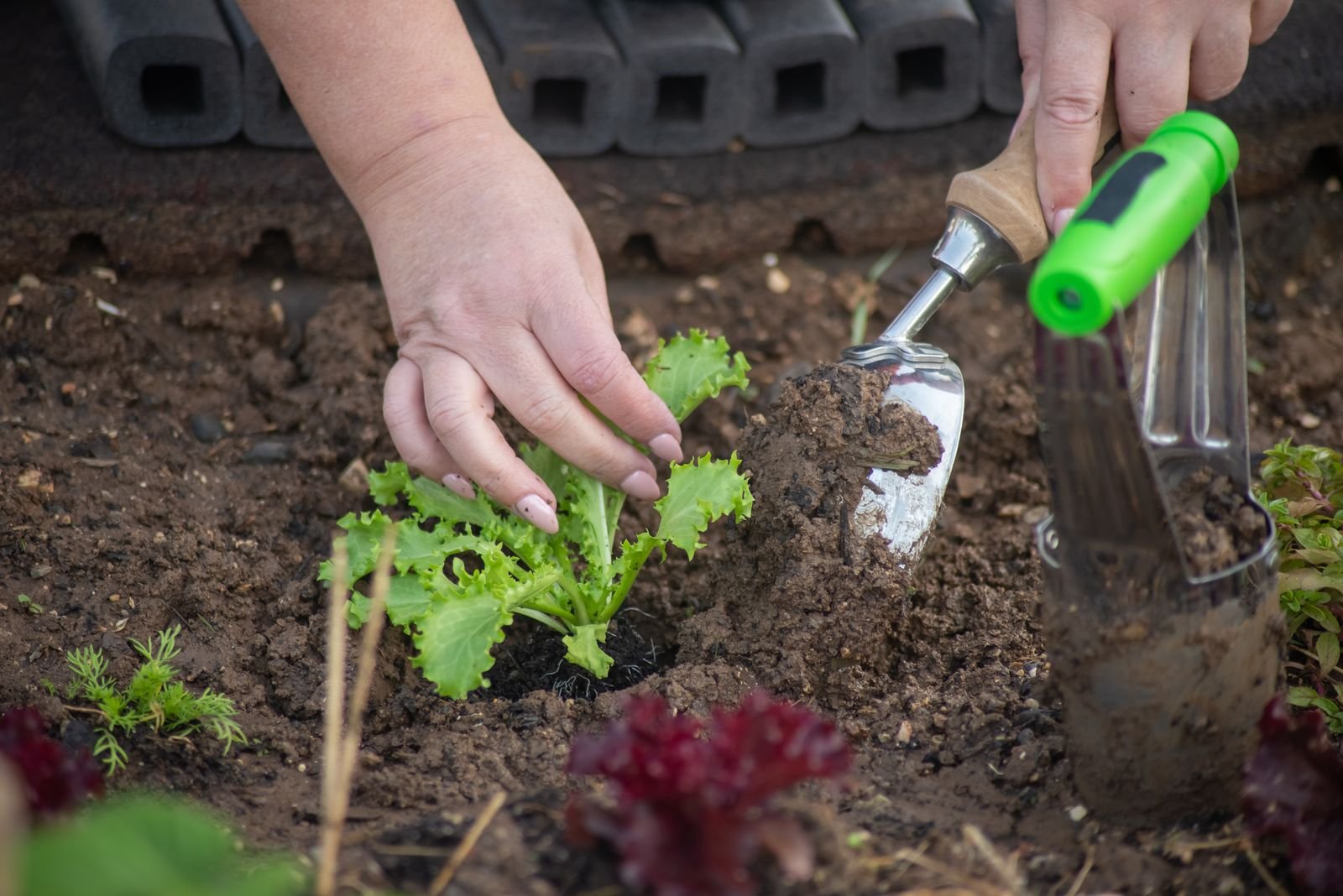
Crowded plants compete for light, water and air, and that is where most mildew and disappointing yields start. The spacing on a seed packet is the distance each plant needs from its neighbours on every side. Enter your bed dimensions and that spacing, and this tool works out how many plants fit in a straight grid and in a staggered one, so you can plan before you buy or sow.
Please enter a bed length, width and plant spacing, all above zero.
How this works
Each plant needs a square of space equal to the spacing distance on every side. The tool converts your bed and spacing to the same units, then divides the bed area by the space one plant occupies. A staggered layout, where every second row is offset by half a step, lets rows sit a little closer because the gaps interlock, so it fits a little over fifteen per cent more plants in the same bed. Both figures are rounded down to whole plants.
Which layout to use
A straight grid is simplest to plant, weed and harvest, and suits rows you walk between. A staggered layout squeezes more into a fixed raised bed and shades the soil sooner, which helps hold moisture, though it can be fiddlier to tend. Use the spacing meant for the plant at full size, not as a seedling, and resist the urge to plant tighter than the packet says; the gaps you leave now become airflow and root room later.
Important note
This is a planning estimate for an open rectangular bed. It does not subtract room for paths, supports or edging, so leave a margin if your plants sprawl or if you need access down the middle. For plants grown in rows with a wider gap between rows than between plants, follow the row spacing your packet gives instead.
Scientific basis
Plant spacing and intensive bed layout, University of Maryland Extension: extension.umd.edu. Geometry of square versus triangular (offset) spacing, standard horticultural practice.
Pair this with my other free tools
Check your seed is worth the space with the Seed Germination Rate Calculator, time your sowing with the Seed Starting Calculator, and work out the mulch to top it off with the Mulch & Compost Calculator.
Disclaimer: This calculator gives a general educational planting estimate for an open rectangular bed and does not account for paths, supports or irregular shapes.
